Nukewatch

Working for a nuclear-free future since 1979

  • Issues
    • Direct Action
    • Environmental Justice
    • Nuclear Power
      • Chernobyl
      • Fukushima
    • Nuclear Weapons
    • On The Bright Side
    • Radiation Exposure
    • Radioactive Waste
    • Renewable Energy
    • Uranium Mining
    • US Bombs Out of Germany
  • Quarterly Newsletter
    • Quarterly Newsletter
    • Newsletter Archives
  • Resources
    • Nuclear Heartland Book
    • Fact Sheets
    • Reports, Studies & Publications
      • The New Nuclear Weapons: $1.74 Trillion for H-bomb Profiteers and Fake Cleanups
      • Nuclear Power: Dead In the Water It Poisoned
      • Thorium Fuel’s Advantages as Mythical as Thor
      • Greenpeace on Fukushima 2016
      • Drinking Water at Risk: Toxic Military Wastes Haunt Lake Superior
    • Nukewatch in the News
    • Links
    • Videos
  • About
    • About Nukewatch
    • Contact Us
  • Get Involved
    • Action Alerts!
    • Calendar
  • Donate

August 1, 2026 by Nukewatch Leave a Comment

Unavailable, Unethical, Unhinged: U.S. H-bomb Unit in Germany Should be First to Go

Anti-nuclear activists placed sunflowers, a symbol of nuclear disarmament, in the fence at Germany’s Büchel air base Thur., July 24, marking the 30th anniversary of protests at the base. Photo by Luthar Lange.

For the last four years, the U.S. hydrogen bombs stationed in Germany have been stranded at Büchel Air Force Base, southeast of Cologne, unavailable to the fighter jets and pilots that are rehearsed and ready to detonate them against Russia. These WMD have been unusable for nuclear attacks or threats — i.e. ‘deterrence’ — since 2022 because the base is getting a makeover.

The deterrence that the U.S. and Germany say the nuclear weapons provide disappeared in 2022 when massive remodeling of the base began. A total rebuild of its runway and more forced the base’s 46 Tornado fighter jets to be moved to Nörvenich Air Base, 28 miles away, to practice their take-offs, attacks, and landings.

Because the base’s reconstruction has left the ‘nuclear deterrent’ unavailable for years, the unoccupied and redundant U.S. Air Force’s 702d Munitions Support Squadron (or MUNSS) should be the first unit withdrawn from Germany under Trump’s recent orders.

The Department of War says the 702d MUNSS is needed because it ‘receives, stores, maintains, controls, and employs war reserve munitions in support of [Büchel’s] 33rd Tactical Air Wing’s role in NATO’s strike mission.’ This, of course, has been mission impossible for at least four years, a pause that means relief from the self-destructive threat of nuclear strike missions aimed at Russia.

The ‘Commander’s Welcome Letter’ for new arrivals, on Büchel’s website, explains: ‘The 702d consists of approximately 170 personnel across 26 different Air Force Specialties, responsible for maintaining, operating, and securing $6B [billion] in Protection Level-1 assets….’ And according to a Shaw Air Force Base manual, ‘Protection Level 1’ resources ‘include nuclear weapons and … systems critical to the success of active nuclear missions….’

Büchel’s nuclear mission involves twenty U.S. B61 H-bombs — the only remaining nuclear weapons in Germany — which are polished on base by the 702d MUNSS. This arsenal is the crux of a so-called ‘nuclear sharing’ arrangement between the United States and Germany (and four other NATO countries). But neither ‘active nuclear missions’ nor any other kind have flown out of Büchel since 2022, leaving the 702d on holiday.

Declaring he would reduce Germany’s U.S. military presence, Trump said May 2, “We are going to cut way down, and we’re cutting a lot further than 5,000.” Liana Fix reported for the Council on Foreign Relations that 5,000 troops were about one-seventh of the roughly 38,000 GIs currently stationed in Deutschland. Secretary Hegseth promptly had the Pentagon claim that the decision on withdrawals had followed a ‘thorough review of the force posture in Europe.’

The actual fatuous reason for the potential drawdown was a Trump tantrum over German Chancellor Friedrich Merz’s derisive public assessment that the U.S. was being ‘humiliated’ by Iran. Merz said to students last April, ‘[T]he Iranians are … letting the Americans travel to Islamabad and then leave again without any result. An entire nation is being humiliated by the Iranian leadership’, The Guardian reported. Trump’s reactionary fit opens a door to the long-sought-after removal of U.S. nuclear weapons from Germany, something that the Parliament/Bundestag — moved by mass public pressure — formally instructed the government to pursue in March 2010.

For decades, Tactical Air Force Wing 33 has reportedly been operating 46 Tornado jet fighters. The Tornados are flown by German pilots who train to carry the U.S. H-bombs and to detonate them against Russia if a U.S. president so orders. While the Tornados returned to Büchel this year, the first F-35s are set to replace them starting in 2027.

Indeed, the two billion Euros being spent on the Büchel rebuild (widening taxiways and airfield intersections; new runway; new cargo apron; and a new so-called fighter jet ‘campus’), is in preparation for the delivery of new U.S. ‘B61-model 12’ thermonuclear bombs, and the arrival of new F-35A fighter-jets to carry them.

The F-35s from Lockheed Martin cost Germany over ten billion euros, or $11.4 billion, according to Aero.de, Dec. 12, 2022. And Aero reported June 24, 2025, that the F-35s are ‘intended to support Germany’s so-called “nuclear sharing” program — a NATO deterrence strategy under which allies have access to U.S. nuclear weapons in the event of war.’

If there is any seriousness to Trump’s erratic outburst about troop withdrawals from Germany, nothing could be more reassuring, more stabilizing, and more de-escalatory than throwing out the 702d MUNSS along with its nuclear suicide mission.


John LaForge is a Co-director of Nukewatch, a peace and environmental justice group in Wisconsin, and edits its newsletter.

Filed Under: Direct Action, Military Spending, Nuclear Weapons, Social Issues, US Bombs Out of Germany, War

June 21, 2026 by Nukewatch Leave a Comment

No More ‘New START’ Nuclear Weapons Numbers Treaty May Have Been Worse than Useless

By Ray Acheson

Yoshito Matsushige - Alchetron, The Free Social Encyclopedia
The atomic bomb dropped on Hiroshima, Japan, August 6, 1945 by the United States destroyed 140,000 civilians. It had only a fraction of the explosive and incendiary force of “tactical” warheads being built by the United States as a part of the Obama Administration’s trade-off for Senate ratification of the 2010 New START treaty. Photo by newspaper photographer Yoshito Matsushige.

On Feb. 5, 2026, New Strategic Arms Reduction Treaty (New START), the last remaining nuclear arms control agreement between Russia and the United States, officially expired. In September 2025, the Russian government offered to continue implementing the Treaty for another year if the U.S. government agreed, but the Trump regime did not formally respond to that offer. Instead, his administration has insisted on nuclear arms control talks with China, which has a much smaller arsenal than either Russia or the United States and has so far refused to engage in such negotiations.

The expiration of New START means that Russia and the United States could increase their deployed warheads substantially within a matter of months. New START, agreed to in 2010, obligated Russia and the United States to reduce their operationally deployed, “strategic” nuclear warheads to:

• 700 deployed intercontinental and submarine-launched ballistic missiles and heavy bombers assigned to nuclear missions;
• 1,550 nuclear warheads deployed on those platforms; and
• 800 launchers (both deployed and non-deployed).

The Treaty also included mechanisms for compliance and verification, twice-yearly exchanges of data, ongoing mutual notification about the movement of strategic nuclear forces, short-notice, on-site inspections of missiles, warheads, and launchers covered by the Treaty, and a bilateral consultative commission and clear procedures to resolve questions or disputes.

The cost of New START, however, was very high

The Obama administration agreed to a massive [$1.7 trillion] nuclear weapon modernization program in exchange for ratification by the U.S. Senate. This modernization program continues today, with the U.S. government spending billions every year to “upgrade” its nuclear arsenal, delivery systems, and related facilities. Thus, as ICAN Australia [Int’l Campaign to Abolish Nuclear Weapons] notes, U.S. ratification of New START “has arguably done more harm by entrenching the United States’ possession of nuclear weapons and thwarting prospects for disarmament.” Fifteen years later, we still have the modernization program, but not the treaty for which it was bargained.

Russia has also been modernizing its nuclear arsenal over the past years, and has threatened to use nuclear weapons in the context of its war in Ukraine. In 2024, Russia spent about $8.1 billion on its nuclear weapon program, while the U.S. spent about $56.8 billion. The Trump regime has suggested it might restart explosive nuclear testing, and has engaged in several unlawful military actions over the past year, including in Iran and Venezuela. Both Russia and the U.S. are in violation of many international laws and have shown disdain for any attempt to restrain their violence. In this context, prospects for nuclear arms control, let alone disarmament, look grim.

However, it’s important to recognize that the failure of Russia and the United States to extend New START or negotiate a new arms control agreement does not mark the beginning of a new nuclear arms race. The arms race has been underway for many years already. While the expiration of New START marks another development along this path, it is a path both countries were already on. Furthermore, New START itself, while limiting certain deployments, did not lead to denuclearization. Instead, it led to further expansion of nuclear arsenals. Whatever comes next must be substantially different — it must advance disarmament, not arms control; it must lead to abolition, not retrenchment of the weapons and systems that have led us further to destruction.

The Treaty on the Prohibition of Nuclear Weapons (TPNW) was developed exactly for this purpose. Supported by the majority of countries in the world, the TPNW offers a clear path to the end of nuclear weapons and the dangerous game being played by states that are gambling with all our lives. As ICAN says, “The dire international security environment at present, rather than serving as an excuse for inaction, must spur urgent action on disarmament…. Joining the TPNW is an important step that all countries can take to press for disarmament in these dangerous times.”

Reaching Critical Will urges:

• Russia and the United States to stick to the limits of New START and continue or restart the other measures of New START while they engage in good faith negotiations to end the arms race and achieve nuclear disarmament, as they and other nuclear-armed states are obligated to do under the Non-Proliferation Treaty’s Article VI;

• All nuclear-armed states to join the TPNW and end their nuclear weapon programs — and in the meantime, to stop their nuclear weapon modernization programs, refrain from expanding or sharing their arsenals, and not develop and deploy “missile defense” or nuclear space systems; and

• All states to reverse course from violating and dismantling international law, to instead pursue security through disarmament and diplomacy.

— Ray Acheson is Director of WILPF’s disarmament program Reaching Critical Will, provides intersectional feminist analysis and advocacy at international disarmament forums, and is the author of Abolishing State Violence: A World Beyond Bombs, Borders, and Cages and Banning the Bomb, Smashing the Patriarchy.

Filed Under: Newsletter Archives, Nuclear Weapons, Quarterly Newsletter

June 21, 2026 by Nukewatch Leave a Comment

Biggest Arms Dealers Break Sales Record

Anti-war protesters block access to Lockheed Martin subsidiary in St ...

In December 2025, the Stockholm International Peace Research Institute (SIPRI) issued its 2024 list of the biggest arms producers. SIPRI’s data shows that annual revenue from sales of weapons and military services by the 100 top war profiteers rose in 2024 to a record $679 billion, “the highest level ever recorded by SIPRI,” said Lorenzo Scarazzato of SIPRI’s Military Expenditure and Arms Production Program. In 2024, the combined arms revenues of 39 U.S. companies in the top 100 reached $334 billion. These weapons dealing giants include Lockheed Martin (F-35 jet fighter), Northrop Grumman (Sentinel intercontinental ballistic missiles), and General Dynamics (Columbia class ballistic missile submarines). The three Israeli arms companies in the ranking increased their combined arms revenues to $16.2 billion. “The growing backlash over Israel’s actions in Gaza seems to have had little impact on interest in Israeli weapons,” said Zubaida Karim, researcher with the SIPRI Military Expenditure and Arms Production Program. — The new data is available from SIPRI, www.sipri.org.

Filed Under: Military Spending, Newsletter Archives, Nuclear Weapons, Quarterly Newsletter

June 21, 2026 by Nukewatch Leave a Comment

China Reaffirms Nuclear No-First-Use Policy

Last November, China re-affirmed its policy of no-first-use of nuclear weapons and called on other nuclear-armed states to follow suit. Chinese Foreign Ministry spokesperson Lin Jian said in Beijing, “China firmly adheres to a no-first-use nuclear weapons policy and upholds a nuclear strategy of self-defense.”

How much China's economy has grown over the last 70 years

The Foreign Ministry issued a white paper in December also noting, “…China has always committed to its policy of no-first-use of nuclear weapons, firmly upheld a nuclear strategy of self-defense, and promoted the modernization of its nuclear forces to safeguard China’s own strategic security and overall global strategic stability.

“The adoption of a no-first-use policy is a practical move to reduce the role of nuclear weapons in national security policies and achieve the goal of nuclear disarmament. If the five nuclear-weapon states — China, France, Russia, the UK, and the U.S. — could reach a consensus on mutual no-first-use of nuclear weapons, it would be conducive to reducing strategic risks, avoiding nuclear arms races, and promoting global strategic balance and stability.”
— Reuters, Dec. 23; Chinese Ministry of Foreign Affairs, Nov. 27, 2025, and July 23, 2024

Filed Under: Newsletter Archives, Nuclear Weapons, Quarterly Newsletter

June 21, 2026 by Nukewatch Leave a Comment

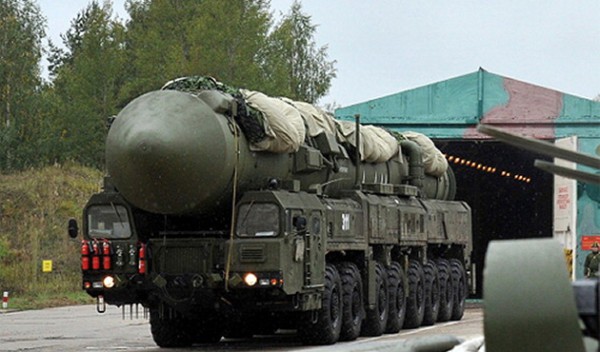
Russian Nuclear-capable Oreshnik Missiles in Belarus

The Russian Federation’s Defense Ministry confirmed Dec. 30, 2025 that Russian Oreshnik mobile intermediate-range ballistic missile systems have been deployed in the forests of Belarus, the Atlantic Council reported Jan. 11, 2026.Here's why Russia's humongous new missile is worth worrying about

Belarusian President Alexander Lukashenko said earlier in December that the missiles had arrived in the country. Lukashenko said that up to ten such missile systems will be stationed in Belarus, according to PBS Newshour. Russia previously deployed air-dropped nuclear weapons in Belarus, whose territory it used to launch a military invasion of Ukraine in February 2022. President Lukashenko has said that his country has several dozen Russian nuclear weapons, a “nuclear sharing” program similar to the U.S. stationing of about 100 thermonuclear gravity bombs at six NATO air bases in Europe. — Atlantic Council, Jan. 11, 2026; and PBS Newshour, Dec. 30, 2025

Filed Under: Newsletter Archives, Nuclear Weapons, Quarterly Newsletter, War

  • 1
  • 2
  • 3
  • …
  • 98
  • Next Page »

Stay Connected

  • Facebook
  • Twitter

Subscribe

Donate

Categories

  • B61 Bombs in Europe
  • Chernobyl
  • Counterfeit Reactor Parts
  • Depleted Uranium
  • Direct Action
  • Environment
  • Environmental Justice
  • Fukushima
  • Lake Superior Barrels
  • Military Spending
  • Newsletter Archives
  • North Korea
  • Nuclear Power
  • Nuclear Weapons
  • Office News
  • On The Bright Side
  • Photo Gallery
  • Protect the Water Close Xcel's Monticello Reactor
  • Quarterly Newsletter
  • Radiation Exposure
  • Radioactive Waste
  • Renewable Energy
  • Social Issues
  • Sulfide Mining
  • Through the Prism of Nonviolence
  • Uncategorized
  • Uranium Mining
  • US Bombs Out of Germany
  • War
  • Weekly Column

Contact Us

(715) 472-4185
nukewatch1@lakeland.ws

Address:
740A Round Lake Road
Luck, Wisconsin 54853
USA

Donate To Nukewatch

News & Information on Nuclear Weapons,
Power, Waste & Nonviolent Resistance

Stay Connected

  • Facebook
  • Twitter

© 2026 · Nukewatch