The Canadian Coalition for Nuclear Responsibility (CCNR) has formally criticized the Canadian Nuclear Safety Commission regarding the inadequacy of its “Regulatory Oversight Report on Nuclear Power Generating Sites” for the year 2024.
CCNR’s President, Gordon Edwards, Ph.D., drafted the group’s critical submission to the Safety Commission, titled “Overlooking Offsite Impacts.”
The CCNR’s “intervention” includes a list of six proposed improvements that speak not just to Canada’s reactor operations, but to regulatory agencies everywhere that oversee permitted or accidental releases of radioactive materials to the air and water. Routine emissions of radioactive pollution from nuclear generating stations are permitted because governments have been convinced by nuclear power promoters that their pollution is not overly dangerous. Nuclear reactors cannot operate without releasing large volumes of contaminated water and gases, the venting of which helps to control the temperature, pressure, and coolant volume in operating systems.
We are sharing the paper’s six major recommendations ⸺ which follow ⸺ because they apply equally well to industry proposals and regulatory agencies anywhere in the world that are considering new nuclear reactor construction.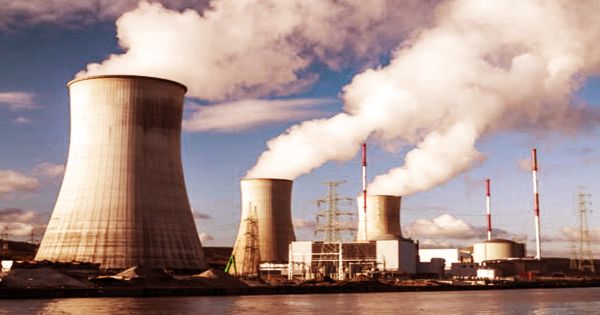
Canadian Coalition for Nuclear Responsibility recommends:
* The Canadian Nuclear Safety Commission (CNSC), as an agency legally bound to disseminate objective scientific information to the public, should publicly set the record straight by saying quite simply that nuclear power is not altogether clean. Alternatively, CNSC should either cease describing itself as a science-based organization, or issue a clear science-based explanation of how one may logically reconcile large routine emissions of radioactive poisons into the environment with the notion of nuclear power as ‘clean energy’;
* The CNSC should require its nuclear generating station licensees to post on the internet real-time data on radioactive emissions from the plant as they occur, and to give advance warning when elevated emissions are likely to result from planned outages or other planned activities such as overnight tritium purges;
* The CNSC should require its nuclear generating station licensees to calculate the collective dose to the population within five miles of the plant, based on annual emissions;
* The CNSC should require its nuclear generating station licensees to work to reduce their annual environmental emissions of tritium, carbon-14, iodine-131, and particulates of alpha-emitting and beta-emitting radionuclides by several orders of magnitude;
*The CNSC should immediately adopt a provisional Relative Biological Effectiveness (RBE) of ‘2’ for tritium exposures, with the expectation that the RBE for tritium may be revised upwards as new evidence becomes available; and
* The CNSC should publish a science-based explanation and justification of the existing Canadian standard for the maximum permissible concentration of tritium in drinking water….
⸺ To read CCNR’s full written intervention, see: www.ccnr.org/CCNR_ROR_Report_2026.pdf
Leave a Reply