Nukewatch

Working for a nuclear-free future since 1979

  • Issues
    • Direct Action
    • Environmental Justice
    • Nuclear Power
      • Chernobyl
      • Fukushima
    • Nuclear Weapons
    • On The Bright Side
    • Radiation Exposure
    • Radioactive Waste
    • Renewable Energy
    • Uranium Mining
    • US Bombs Out of Germany
  • Quarterly Newsletter
    • Quarterly Newsletter
    • Newsletter Archives
  • Resources
    • Nuclear Heartland Book
    • Fact Sheets
    • Reports, Studies & Publications
      • The New Nuclear Weapons: $1.74 Trillion for H-bomb Profiteers and Fake Cleanups
      • Nuclear Power: Dead In the Water It Poisoned
      • Thorium Fuel’s Advantages as Mythical as Thor
      • Greenpeace on Fukushima 2016
      • Drinking Water at Risk: Toxic Military Wastes Haunt Lake Superior
    • Nukewatch in the News
    • Links
    • Videos
  • About
    • About Nukewatch
    • Contact Us
  • Get Involved
    • Action Alerts!
    • Calendar
  • Donate

June 21, 2026 by Nukewatch Leave a Comment

Monticello Reactor Leaks Oil to Mississippi while Shut Down for Repairs

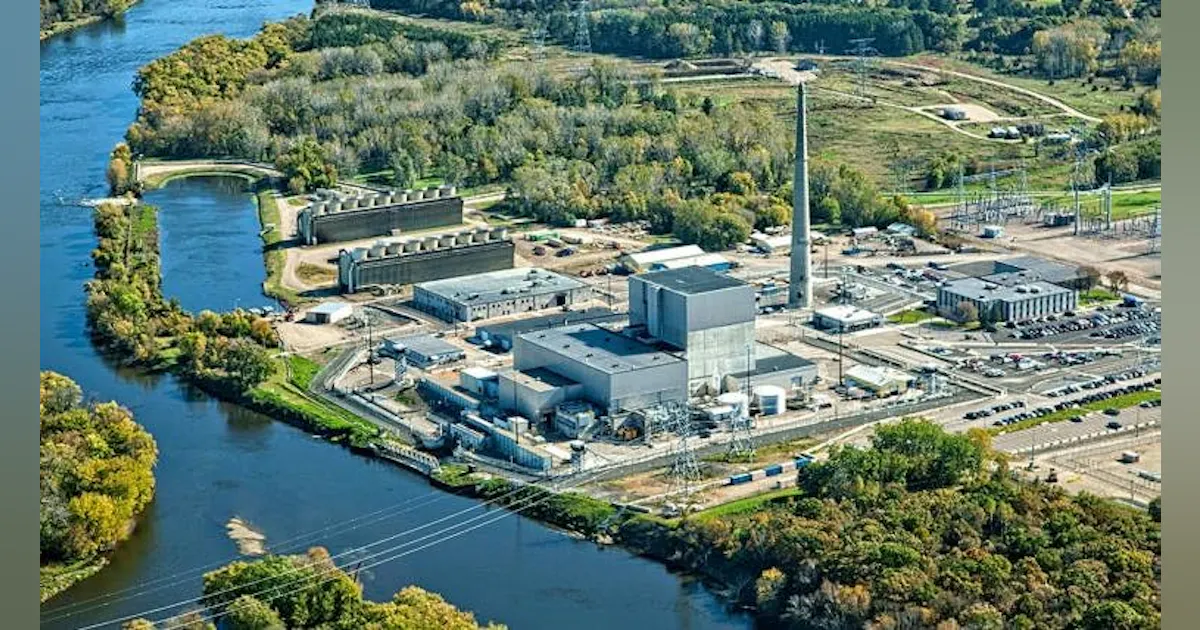
The 55-year-old Monticello nuclear reactor owned by Xcel Energy was unexpectedly shut down February 20, 2026 to “perform maintenance” and to “determine appropriate repairs,” according to The Monticello Times. The reactor was restarted on April 3 after being offline 43 days.

No Minneapolis, regional, or national news service made mention of the reactor outage in spite of the “over 1 million users” that rely on its electricity (according to Xcel’s website). The reasons for the outage were not made public by the company, which did not name the equipment or sorts of systems that need repair.

The Nuclear Regulatory Commission also made no announcement of the shutdown, and its regional Public Affairs Officer Victoria Mitlyng wrote in an email to Nukewatch February 26, “The shutdown at Monticello was a planned maintenance shutdwon (sic) and did not require formal notifications. It’s a routine practice for nuclear plants.” The lack of a public NRC notification may explain why news services made no mention of the shutdown.

According to Xcel spokesperson Theo Keith, who spoke to The Monticello Times, the shutdown “is not related to the tritium leak” from the reactor and made public in 2023. Tritium is the radioactive form of hydrogen, and Mr. Keith’s reference is to the leak of 829,000 gallons of highly radioactive coolant that contaminated groundwater under the reactor site, some of which eventually reached the Mississippi River, a drinking water source for Minneapolis, St. Paul, and millions more downstream.

Xcel explained to the press that the regional electrical power grid draws from multiple generators across the Midwest, and that the mix of providers allows uninterrupted service even when individual systems are taken offline.

Myths Busted by Monticello Reactor Shutdown

Monticello’s unplanned 43-day shutdown debunks two myths endlessly repeated in nuclear propaganda: that it produces electricity 24/7, 365 days a year; and that nuclear’s electricity generation is needed.

First, the myth that nuclear power provides uninterrupted electric generation is boasted about on the Nuclear Energy Institute’s website, where its page-1 slogan is: “Only nuclear has the power to deliver 24/7/365.” But as the NRC’s Mitlyng emailed Nukewatch, “It’s a routine practice” for nuclear reactors to shut down. They are taken offline regularly and repeatedly by emergencies, by unexpected repair work, by refueling outages, and by emergencies and accidents that plague the industry. Historically, major nuclear reactor accidents occur early on following their start up, and late in their operational lives. At 55, Monticello is the sixth oldest of 94 reactors in the United States.

Second, promoters of commercial nuclear reactors say their electricity “is needed to keep the lights on.” This is BS again, as Xcel told the press that it “does not anticipate any impact to electric service while the plant is offline.”

Imagine a nuclear-free Mississippi River watershed. Xcel’s Monticello reactor isn’t needed to keep the lights on, and it’s so old that it can’t operate without major equipment repairs severe enough to gut Xcel’s profit-taking for months at a time.

Filed Under: Environment, Newsletter Archives, Nuclear Power, Protect the Water Close Xcel's Monticello Reactor, Quarterly Newsletter

June 21, 2026 by Nukewatch Leave a Comment

Mississippi River Coalition Commemorates 15 Years Since Fukushima Reactor Meltdowns

By John LaForge

On Wed., March 11, the Coalition for a Nuclear- Free Mississippi River commemorated the 15th anniversary of the triple reactor meltdowns in Fukushima, Japan by hosting a “No More Fukushimas! Close the Monticello Nuclear Reactor” rally on the walkway of the large Lake Street Bridge over the Mississippi River in Minneapolis/St. Paul.

The rally piggybacked on the very long-running weekly anti-war vigil on the bridge, which was launched in 2003 by Women Against Military Madness, or WAMM.

The effort to raise awareness of Monticello’s relationship to Fukushima succeeded in bringing out the local news. With signs and banners demanding protection of the public drinking water the Mississippi provides, several rally participants spoke to a reporter from local KARE 11 News, and Nukewatch’s John LaForge ended up in a segment of the evening news calling for the reactor’s shutdown.

Xcel Energy’s 55-year-old Monticello reactor ― 35 miles northwest of Minneapolis/St. Paul ― has the same design as the three devastated Fukushima units.

Two people drove to the rally from the city of Monticello and reported that they’d taken photos of an oil slick on the surface of the Mississippi, which resulted from a leak of lubricating oil from the reactor which began March 9. While Xcel Energy first announced that the oil would not reach the river, the company was forced to admit later that it had.

Local organizations representing thousands of residents in the Twin Cities and surrounding communities, including Monticello, launched the Coalition to raise awareness of the dangers of nuclear power following the massive 829,000-gallons leak of cooling water from the reactor in 2022. The Fukushima nuclear disaster of March 2011 is often ignored by the media.

At Fukushima, three reactors suffered complete core meltdowns and hydrogen explosions. It was the world’s worst industrial disaster and the second-worst accidental radiation release in history ― after Chernobyl. Following the March 11, 2011 earthquake (Japan’s worst ever) and its resulting tsunami, Fukushima’s GE “Mark-1” boiling water reactors ― identical to the Monticello unit ― suffered smashed reactor foundations, and a station black-out, or total loss of electric power.

A station black-out is a severe reactor crisis, because it stops the circulation of cooling water. This loss of cooling, if not reversed, causes fuel melting, massive radioactive releases, and ⸺ from Fukushima and from Chernobyl ⸺ radioactive “fallout” which spreads around the world.

Several common natural disasters could lead to a station blackout at Monticello: severe thunderstorms, tornadoes, and straight-line windstorms (derechos); floods, wildfires, and blizzards ― or some combination ― could cut power to the station. Back-up emergency generators are on hand to power cooling water circulation, but they are also subject to failure, as happened in Fukushima.

To learn more, see nuclearfreemississippi.wordpress.com or write to the Coalition at nuclearfreemississippi@zohomail.com.

Filed Under: Environment, Fukushima, Newsletter Archives, Nuclear Power, Office News, Protect the Water Close Xcel's Monticello Reactor, Quarterly Newsletter, Radiation Exposure

June 21, 2026 by Nukewatch Leave a Comment

From the archives: 1971 Monticello Reactor Releases Led to Mpls Water Shutoff

Editor’s note: A look into archives of Minneapolis papers from the 1970s shows that the Monticello reactor has poisoned the Mississippi River in the past, and one of its spills was so radioactive that Minneapolis shut down its drinking water intake from the river. Verbatim transcripts from the papers follow.

Xcel Energy to Extend Operations of Monticello Nuclear Generating Plant ...

NSP to delay atom discharges

The Minneapolis Star, Wed., Nov. 24, 1971, p.23

Northern States Power Co. [now Xcel] has tentatively agreed to hold up on any future unexpected discharge of radioactive water from its Monticello nuclear power plant until state agencies can analyze the water, a Minnesota Health Department official said today.

Russell Frazier, chief of the laboratory analytical services of the department, said the agreement with NSP on future procedures was made after what he termed “the high drama which accompanied the release of a minor amount of radioactivity from the Monticello reactor.”

Frazier said NSP has tentatively agreed to notify the state health department and the Minnesota Pollution Control Agency.

He said that there was confusion and a lack of data last weekend when NSP decided to drain about 50,000 gallons of low-level radioactive water from the Monticello plant into the Mississippi to permit the repair of a loose baffle.

Fraizer said a “purely precautionary decision” was made by health officials and the Minneapolis Water Department to shut down the city water intake pump, which supplies drinking water to the city at a point about 30 miles downstream from Monticello.

“The action is no way a measure of the importance to be attached to the Monticello release,” he said.

Radioactive discharge fits state standards

The Minneapolis Star Tribune, Tue., Dec. 21, 1971, p.16

Northern States Power (NSP) Company’s Monticello nuclear plant Monday discharged 8,500 gallons of radioactive water that met state standards for the isotope cesium 137.

The 4 p.m. release, object of a week-long dispute between the firm and the Minnesota Pollution Control Agency (PCA), was analyzed twice by PCA and Minnesota Health Department scientists.

First it was found to contain 4.1 microcuries of cesium 137, and then 5.7 microcuries. But an average of the two tests, 4.9 microcuries, fell below the state’s weekly maximum limit of 5.3 microcuries for the isotope, said Grant Merritt, PCA director.

The discharge came after NSP exchanged the water within the plant to produce a “cleaner” release. Earlier, PCA measurement had shown the cesium 137 to be about twice the amount allowed by the disputed state standards, although well below limits set by the U.S. Atomic Energy Commission (AEC).

PCA technicians today hope to sample a second batch of about 6,500 gallons that NSP says also must be discharged as part of a maintenance procedure.

Since NSP earlier said it would not discharge within 48 hours after a sample is taken, PCA officials said the second batch isn’t expected to be released before Thursday.

An NSP spokesman confirmed yesterday’s release but would not answer questions about the sampling or timing of the second discharge.

Merritt maintains that NSP earlier committed itself to meeting state standards, even though federal courts thus far have held that only AEC regulations apply to nuclear plants. The state restrictions on cesium 137 are from 100,000 to 100 million times more stringent than those of the AEC.

A-water released by NSP

The Minneapolis Star, Wed., Dec. 29, 1971, p.29

Five thousand gallons of radioactive water were released from the Monticello nuclear power plant into the Mississippi River today, according to a spokesman for the Northern States Power Co.

A Minnesota Pollution Control Agency spokesman said tests of the water showed that the levels of radioactive cesium-137 were 45 percent below state standards.

The PCA spokesman said overall radiation in the water was even lower than that.

The water is the second of two discharges NSP said it needed to make because of modification and maintenance work being done at the nuclear plant.

PCA officials had managed to get the first discharge delayed while they investigated radiation levels.

By splitting the discharge into two batches and waiting a week before letting the second one go, NSP was able to keep radiation levels below rigid state weekly standards.

Today’s discharge began at 6 a.m. and an [NSP] spokesman said it normally would take five hours.


Filed Under: Environment, Newsletter Archives, Nuclear Power, Protect the Water Close Xcel's Monticello Reactor, Quarterly Newsletter, Radiation Exposure

March 2, 2026 by Nukewatch Leave a Comment

Monticello Reactor is Down for Repairs Until at Least March 20

The Boiling Water Reactor (BWR) | Nuclear Regulatory Commission

The 55-year-old Monticello nuclear power reactor, a General Electric designed boiling water reactor like the melted and exploded Fukushima reactors in Japan, leaked almost 1-million gallons of highly radioactive cooling water into the ground under the reactor complex and some of the radioactive tritium reached the Mississippi River which is used for drinking water.

By John LaForge

The 55-year-old Monticello nuclear reactor owned by Xcel Energy was unexpectedly shut down Friday, Feb. 20, and the Monticello Times reports the reactor will be offline for at least 30 days, maybe more to “perform maintenance” and to “determine appropriate repairs.”

No regional or national news service made mention of Xcel’s reactor outage in spite of the “over 1 million users” that rely on its electricity, according to Xcel’s website. The reasons for the embarrassing outage were not made public by the company, which did not name the equipment that is in need of repair.

Further, the Nuclear Regulatory Commission made no announcement of the shutdown, and NRC Sr. Public Affairs Officer Viktoria Mitlyng wrote to Nukewatch Feb. 26 that, “The shutdown at Monticello was a planned maintenance shutdwon (sic) and did not require formal notifications. It’s a routine practice for nuclear plants.” The lack of an NRC notification might explain why not a single state-wide Minnesota news service made mention of the outage.

According to Xcel spokesperson Theo Keith, who spoke to editor Lauren Flaum of The Monticello Times, the shutdown “is not related to the tritium leak discovered at the facility in 2023.” Tritium is the radioactive form of hydrogen, and Mr. Keith’s reference is to the leak of nearly one-million gallons of highly radioactive coolant that contaminated groundwater under the reactor site, groundwater that reached the Mississippi River which is a drinking water source for Minneapolis and St. Paul.

Xcel explained to the press that the regional electrical power grid draws from multiple generators across the Midwest, and that the mix of providers allows uninterrupted service even when individual systems are taken offline.

Myths busted by Monticello shutdown

The shutdown debunks two principal myths endlessly repeated by the nuclear industry.

First, that nuclear reactors provide uninterrupted generation of electricity. The Nuclear Energy Institute’s website page-1 slogan is: “Only nuclear has the power to … deliver 24/7/365.” Let’s call BS. As the NRC’s Mitlyng said, “It’s a routine practice” for nuclear plants to shut down. Nuclear reactors are taken offline regularly and repeatedly by unplanned emergencies, by unexpected repair work, by refueling outages, and by emergencies and accidents that plague the youngest and the oldest reactors. Monticello is the sixth oldest in the United States.

Second: Promoters of commercial nuclear reactors say their electricity “is needed to keep the lights on.” This is BS again, as Xcel told the press that it “does not anticipate any impact to electric service while the plant is offline.”

Imagine a nuclear-free Mississippi River watershed. Xcel’s Monticello reactor isn’t needed to keep the lights on, and it’s so old that it can’t operate without major equipment repairs severe enough to gut Xcel’s profit-taking for thirty days. ###

Filed Under: Environment, Environmental Justice, Fukushima, Nuclear Power, Protect the Water Close Xcel's Monticello Reactor, Weekly Column

February 4, 2026 by Nukewatch Leave a Comment

The Double-Threat: New Nuclear Power and the Data Center Boom

Graphic by Rise and Repair Alliance, riseandrepair.org

By Lindsay Potter

Small modular and so-called “advanced” nuclear technology is riding the coat tails of yet another capitulation to the seemingly unstoppable march of
“progress.” Progress not in feeding or housing families, lighting or heating homes, or providing jobs and education, but in the unchecked development of computer technology and artificial intelligence.

In the face of soaring cancer rates over the last five decades, despite consistent proof of the connection between nuclear power and nuclear weapons proliferation, despite the generations-long objections of indigenous communities bearing the burden of uranium mining, and the more than seventy years of reactor operations without a true high-level radioactive waste storage solution — tech billionaires are personally financing the next wave of nuclear energy infrastructure.

But why? Renewable energy sources are growing at a remarkable rate. Scientists and researchers have shown that current and projected grid loads through 2030 and 2050 can be met using renewable sources without nuclear. Renewable energy costs less. According to Forbes, nuclear is the most expensive way to generate electricity. Renewable sources can be built in a fraction of the time it takes to construct new nuclear. However, the goliaths of computer and technology innovation insist small modular nuclear reactors (SMNRs) are the only way to generate enough power for their coming wave of new data centers.

What are SMNRs?

There are many different reactor designs out there, with different fuel sources and parent companies, but a small modular nuclear reactor is typically any reactor producing between 20-300 megawatts of electricity. There are no commercially operational SMNRs in the United States. Many SMNR designs require fuel different from conventional reactors and those experimental fuel sources are still under development and not scaled commercially. Companies such as Oklo, already permitted to proceed with a SMNR design at the Idaho National Lab site, would be unable to produce fuel until at least 2030. According to Reuters, the U.S. Department of Energy estimates the domestic demand for certain new types of SMNR fuel could reach 50 metric tons per year by 2035. However, the only U.S. maker of the fuel produced 900 kilograms in 2024. All of this takes enormous amounts of funding to develop and test. This fuel processing infrastructure still requires mining of new uranium and leaves additional radioactive waste — from the reprocessing of waste fuel into new fuel.

The first SMNR project approved in the U.S. was cancelled when the cost per megawatt hour ballooned 53% and subscribers pulled out. The four SMNRs that are operating — in China, Russia, and Argentina — cost 3-7 times more than predicted. The capital costs per kilowatt hour for SMNRs are 41% higher than for large reactors. A 2022 study found that SMNRs increase the volume of nuclear waste by a factor of 2-30 times over conventional reactors.

In nuclear reactor operator Xcel Energy’s current 2024-2040 resource plan, its own modeling EnCompass software did not choose an SMNR when given the option to select one among future sources of energy generation. This proves even Xcel’s own software, when confronted with projected energy demands, cannot justify the cost of new nuclear infrastructure.

The data center connection

Nukewatch joins other water protectors and environmental groups at the Rise and Repair Rally Day at the Minnesota capitol to protest the proposed repeal of the state’s 31-year-old nuclear moratorium.

Data centers, used to power A.I. computing technology, can require an entire large-scale commercial reactor’s output equivalent. New nuclear reactors are not necessary to address the climate crisis, to cut out fossil fuels, or to meet the needs of the average person. New nuclear is being green washed and promoted because it is the silver bullet for the data center boom’s astronomical energy appetite.

The largest data centers can use as much electricity as the entire city of Minneapolis. If the total number of data centers proposed in Minnesota are built, they would require as much electricity as every home in Minnesota, or roughly 2.3 million houses. Many regulators and local governments do not have oversight in place for how to track and vet these data center projects. Georgia Power anticipates that data center growth will cause electricity demands to triple in the next decade.

But some communities are fighting back. In Tucson, Arizona, local leaders voted down Amazon’s Project Blue data center proposal. In Missouri, the St. Charles City Council unanimously adopted a year-long moratorium for data center proposals in the area. In Denver, local resistance and the city council halted a SMNR 48 hours after it was proposed.

Hundreds of millions of taxpayer dollars are being handed out as subsidies to experimental SMNR developers. Additionally, Amazon, Google, Meta, and Microsoft are directly investing in or are in negotiations to purchase power from SMNR startups. Such tech figureheads as Bill Gates, OpenAI’s Sam Altman, Peter Thiel (a co-founder of PayPal and Palantir Technologies), Unity software’s David Helgason, and Amazon’s “Climate Pledge Fund” are privately funding SMNR research and development.

Why the moratorium matters

Despite opposition from the Prairie Island Indian Community — the closest reservation to a nuclear reactor and temporary waste storage in the U.S. — and environmental groups, the 1994 Minnesota state legislature passed a law permitting nuclear waste storage onsite at the Prairie Island reactors. This 1994 law included the nuclear moratorium — which bans consideration of proposed new nuclear reactors. Xcel requested additional waste storage at Prairie Island in 2003, 2005, 2008, 2023, and 2024. Over the last 55 years, the Prairie Island Indian Community has received only a fraction of the hundreds of millions of dollars given to other towns or communities near the reactors.

A few stalwart pro-nuclear legislators have tried over the last thirty years to repeal the moratorium. Several bills failed in 2025 and are likely to be introduced in the next session. The moratorium is a crucial point in keeping SMNRs and more data centers out of the state of Minnesota and protecting fresh water. While a hyperscale data center can require millions of gallons of water a year, a small modular reactor can consume on average 1.5 billion gallons of water per-year for cooling, depending on the design and size of the reactor.

The severe health and environmental risks posed by highly radioactive nuclear fuel waste was at the heart of the creation of the moratorium in
Minnesota, and that problem remains unresolved, especially in the face of a new nuclear boom.

The U.S. has more than 95,000 metric tons of high-level radioactive used nuclear fuel and has no long-term storage solution. The only attempted storage site at Yucca Mountain, Nevada had an estimated cost of $96 billion. After spending $8 billion and eighteen years, the project failed. Any repository would need to isolate radioactive waste from the environment for hundreds of thousands of years, requiring engineering beyond anything existing today and incurring maintenance costs generations beyond the operational life of any nuclear reactor.

According to Brice Smith, in his report for the Institute for Energy and Environmental Research, in the scenario of proposed expansion of nuclear power through 2050, in order to keep up with the production of high-level radioactive nuclear waste fuel, a new Yucca Mountain repository would need to open every three to six years to store the waste.

It is crucial now, more than ever, that states such as Minnesota maintain their nuclear moratoriums. These are the only guardrails to slow down data centers and the wholesale deployment of untested new nuclear technology. Without the moratoriums, there is an imminent threat that much of the funding meant to help transition the grid to renewable energy will be spent on nuclear infrastructure that is designed to serve the needs of tech giants, not the needs of the people.

Some, such as Minnesota Senator Spencer Igo, sponsoring legislation to repeal the moratorium, have suggested that the moratorium is impeding innovation in the nuclear power sector. To the contrary, according to a Congressional Budget Office report examining funding from 1948-2018, nuclear received three times more research and development funding than renewables and twice as much as fossil fuels. With the wealthiest and most technologically resourced people on the planet — and the federal government and U.S. military backing this industry it is hard to imagine any impediment.

Igo and others insist that removing the moratorium would only be in the service of using ‘all the tools in the toolbox’ and that regulators can be trusted to ensure only infrastructure that serves the public interest will be built. But time and again the NRC and Minn. Public Utilities Commission have been found to cater to the wealth of corporate utility shareholders who heavily lobby regulators. These regulators almost never deny applications.

Those who stand to gain from new nuclear deployment will scheme to see data centers and small reactors in towns across the country ahead of any large movement to stop them. Communities have already risen up to protect local water, the right to affordable energy, and the right to fight further consolidation of wealth. People everywhere must join the call to keep nuclear moratoriums, in fact to increase the number of them nationwide, in a stand against the railroading of the public by the wealthiest few. Just as Exxon lied about climate change science, the Silicon Valley influencers have been pushing nuclear as green in order to stage this very play, and now their aims are being laid bare.

Sources: U.S. Dept. of Energy; TechCrunch; Sierra Club; Forbes; Arjun Makhijani and Brice Smith, Institute for Energy and Environmental Research; Ed Lyman, Union of Concerned Scientists; Mark Jacobson, Stanford University; Reuters; National Academy of Sciences; Scientific American; S.F. No. 1706, Minnesota Session Laws; MPR News; KJZZ News; KCUR News, NRDC

Filed Under: Environment, Newsletter Archives, Nuclear Power, Protect the Water Close Xcel's Monticello Reactor, Quarterly Newsletter, Radiation Exposure, Radioactive Waste, Renewable Energy, Uncategorized

  • 1
  • 2
  • 3
  • …
  • 6
  • Next Page »

Stay Connected

  • Facebook
  • Twitter

Subscribe

Donate

Categories

  • B61 Bombs in Europe
  • Chernobyl
  • Counterfeit Reactor Parts
  • Depleted Uranium
  • Direct Action
  • Environment
  • Environmental Justice
  • Fukushima
  • Lake Superior Barrels
  • Military Spending
  • Newsletter Archives
  • North Korea
  • Nuclear Power
  • Nuclear Weapons
  • Office News
  • On The Bright Side
  • Photo Gallery
  • Protect the Water Close Xcel's Monticello Reactor
  • Quarterly Newsletter
  • Radiation Exposure
  • Radioactive Waste
  • Renewable Energy
  • Social Issues
  • Sulfide Mining
  • Through the Prism of Nonviolence
  • Uncategorized
  • Uranium Mining
  • US Bombs Out of Germany
  • War
  • Weekly Column

Contact Us

(715) 472-4185
nukewatch1@lakeland.ws

Address:
740A Round Lake Road
Luck, Wisconsin 54853
USA

Donate To Nukewatch

News & Information on Nuclear Weapons,
Power, Waste & Nonviolent Resistance

Stay Connected

  • Facebook
  • Twitter

© 2026 · Nukewatch