Nukewatch

Working for a nuclear-free future since 1979

  • Issues
    • Direct Action
    • Environmental Justice
    • Nuclear Power
      • Chernobyl
      • Fukushima
    • Nuclear Weapons
    • On The Bright Side
    • Radiation Exposure
    • Radioactive Waste
    • Renewable Energy
    • Uranium Mining
    • US Bombs Out of Germany
  • Quarterly Newsletter
    • Quarterly Newsletter
    • Newsletter Archives
  • Resources
    • Nuclear Heartland Book
    • Fact Sheets
    • Reports, Studies & Publications
      • The New Nuclear Weapons: $1.74 Trillion for H-bomb Profiteers and Fake Cleanups
      • Nuclear Power: Dead In the Water It Poisoned
      • Thorium Fuel’s Advantages as Mythical as Thor
      • Greenpeace on Fukushima 2016
      • Drinking Water at Risk: Toxic Military Wastes Haunt Lake Superior
    • Nukewatch in the News
    • Links
    • Videos
  • About
    • About Nukewatch
    • Contact Us
  • Get Involved
    • Action Alerts!
    • Calendar
  • Donate

August 6, 2024 by Nukewatch Leave a Comment

“Picking Losers:” Choosing nuclear over renewables and efficiency will make climate crisis worse

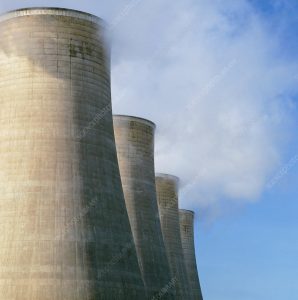
Photo: medium.com
By Giles Parkinson

One of the world’s leading energy experts, and the man dubbed the “Einstein of energy efficiency,” has debunked the claims that nuclear energy is essential to meet climate goals, saying that choosing nuclear over renewables and energy efficiency will make the climate crisis worse.

“Carbon-free power is necessary but not sufficient; we also need cheap and fast,” says Amory Lovins, the co-founder of the Rocky Mountain Institute (RMI), who has been advising governments and companies on energy efficiency for half a century.

“We therefore need to count carbon and cost and speed. At actual market prices and deployment speeds, new nuclear plants would save many-fold less carbon per dollar and per year than cheaper, faster efficiency or modern renewables, thus making climate change worse. The more urgent you think climate change is, the more vital it is to buy cheap, fast, proven solutions — not costly, slow, speculative ones.”

[B]oosters in the media and so-called think tanks argue that nuclear is the best way to get to net zero by 2050, ignoring the pleas and warnings from climate scientists who say that unless emissions cuts are accelerated, the planet has little chance of keeping average global warming below 2.0° or even 2.5°C.

A common refrain is that nuclear should be included as part of an “all of the above” strategy. “That makes climate change worse,” Lovins says. “No proposed changes in size, technology, or fuel cycle would change these conclusions: they’re intrinsic to all nuclear technologies.”

He noted that renewables add as much capacity every few days as global nuclear power adds in a whole year. “Nuclear is a climate non-solution (that) isn’t worth paying for.

“Nuclear power has no business case or operational need. It offers no benefits for grid reliability or resilience justifying special treatment. In fact, its inflexibility and ungraceful failures complicate modern grid operations, and it hogs grid and market space that cheaper renewables are barred from contesting.”

Lovins says that grids in Europe have shown that renewable dominated grids can be run with great reliability “like a conductor with a symphony orchestra” with comparatively little storage, and little is needed if politicians and grid operators embraced the full potential of energy efficient and demand site incentives.

— Giles Parkinson is founder and editor of Renew Economy, and is also the founder of One Step Off The Grid and founder/editor of the EV-focused The Driven. He is the co-host of the weekly Energy Insiders Podcast. This article was published in Renew Economy, May 15, 2024
Filed Under: Environment, Newsletter Archives, Nuclear Power, Quarterly Newsletter

August 6, 2024 by Nukewatch Leave a Comment

Nuclear Power: Ill-Advised

By George Crocker

Certain Minnesota legislators are interested in new nuclear power plants to address problems resulting from climate change.

Perhaps these politicians have recent and exciting new information about how to overcome the multitude of economic problems that cause new commercial reactors to be much too expensive. It would be good to find that out, because back in July 2018, for one example, Proceedings of the National Academy of Sciences concluded that nuclear fission power is just too expensive relative to the competition. A new reactor would start out costing about $13.61 million per megawatt and go up from there. New solar costs about $1 million per megawatt, with wind at about $2 million per megawatt, and wind and solar costs continue dropping.

Perhaps these politicians have also figured out how to manage high-level nuclear waste for the required 240,000 years, now that Yucca Mountain, the nation’s only proposed high-level nuclear waste repository has been shut down and abandoned for years, and U.S. federal courts recently stopped the nuclear industry from developing a dump to hold 100,000 metric tons of spent fuel on top of the Ogallala Aquifer in eastern New Mexico. These politicians probably also have a time machine to manage the fact that climate chaos is upon us as you read these words, but even in Nuclear Magic Land, if history teaches anything, new reactors will take upward of ten years to construct. There’s also the CO 2 from burning the coal to boil the uranium to refine nuclear fuel to acceptable levels of U-235.

If the Legislature were actually interested in combating climate chaos, it could pass legislation that enables the development of more than 8,000 megawatts in Minnesota of new renewable energy capacity, plus energy storage, that can be immediately installed and commissioned on the low-voltage side of virtually every load-serving substation in the state. Strategically sizing this new renewable energy capacity will allow it to come online immediately, because all the electricity will get consumed within the footprint of the substation and no new transmission would be needed.

— George Crocker is executive director of the North American Water Office. Letter originally published in Minneapolis Star Tribune on April 10, 2024.

Filed Under: Environment, Newsletter Archives, Nuclear Power, Protect the Water Close Xcel's Monticello Reactor, Quarterly Newsletter, Radioactive Waste

August 6, 2024 by Nukewatch Leave a Comment

Hundreds of Groups for Climate Action Reject Nuclear Power

Excerpted from a press release by Climate Action Network Canada

More than 600 civil society groups across the globe working on climate action launched a declaration in Brussels, Belgium, stating that nuclear power expansion is not a solution to the climate crisis.

The groups made their declaration at the pro-nuclear Summit in Brussels where countries met to bolster the industry’s claim that investing in new nuclear must be a priority to save the climate. The International Atomic Energy Agency (IAEA), whose principle mandate is to promote nuclear expansion, co-hosted the event along with Belgium, which ironically passed a law in 2003 – still on the books – to phase out nuclear power completely.

Greenpeace activists blocked roads and
disrupted a pro-nuclear summit in Brussels,
Belgium in March, co-hosted by the IAEA.


Graphic by Greenpeace Nuclear Fairytales campaign, declaring nuclear energy a distraction and an illusion, not a climate crisis solution.

The global nuclear power industry has been in steep decline for the last quarter century. Cost overruns and lengthy delays have plagued the industry, whose contribution to global electricity supply has fallen from 17.5 percent in 1997 to only 9.2 percent today. Consequently, the nuclear industry has organized itself to grab as much money as it can from funds earmarked by governments to fight climate change.

At last year’s Climate Conference, COP-28, the resolution to triple renewable energy and double energy efficiency worldwide by 2030 was enthusiastically adopted by all parties, while a statement sponsored mainly by nuclear vendors, to triple nuclear power by 2050, was supported by only a small minority.

Brussels Summit Declaration, drafted by Climate Action Network Europe:

The international nuclear lobby, at the invitation of the IAEA and the Prime Minister of Belgium, will hold a nuclear energy summit in Brussels on 21 March 2024. The nuclear lobby camouflages itself beneath a climate-friendly facade, hoping to divert massive sums of money away from real climate solutions, at the expense of people and the planet. The world faces multiple social, environmental, and economic crises. People are worried about the cost of living, extreme weather events linked to climate change, and their energy bills. Lobbyists and politicians at the nuclear energy summit will present building new nuclear power plants as the answer, but this does not pass a basic reality check.

New nuclear power is too slow to tackle the climate emergency.

Nuclear power plants under development have been severely delayed and won’t be able to meaningfully contribute to cutting carbon emissions this decade. Whereas greenhouse gas emissions must be drastically cut by 2030 to limit global temperature rise to less than 1.5 degrees, any new nuclear plants announced today would not be connected to the grid until well past this deadline. New nuclear power plants are a distraction which slows down the energy transition. A rapid shift away from fossil fuels should instead focus on building a 100% renewable energy system coupled with energy efficiency and measures to avoid excessive energy use. Together, these steps can meet the world’s energy needs in a way that is fair, environmentally friendly, and achievable.

Nuclear energy is much more expensive than renewables.

While nuclear projects face huge budget overruns and cancellations due to sky-rocketing costs, renewables are cheaper than ever before, declining sharply in relative costs compared to nuclear. New nuclear power plants are up to nearly four times as expensive as wind power, according to the 2023 World Nuclear Industry Status Report. Governments need to invest in proven climate solutions, such as home insulation, public transport, and renewable energy, rather than expensive experiments like small modular reactors, which have no guarantees of actually delivering.

Nuclear power is dangerous.

From mining for uranium to radioactive waste, nuclear power production is a risk to people’s health, safety, and the environment. Nuclear power can be used as military targets and increase the risk of spreading nuclear weapons across the world, the use of depleted uranium, and atomic bombs. The climate crisis also increases the risks involved in nuclear power, as increased heatwaves, droughts, storms, and flooding all pose significant threats to the plants themselves and to the systems that aim to prevent nuclear accidents. We are living in a climate emergency. Time is precious, and too many governments are wasting it with nuclear energy fairy tales. What we demand is a just transition towards a safe, renewable, and affordable energy system that secures jobs and protects life on our planet.

Filed Under: Environment, Environmental Justice, Newsletter Archives, Nuclear Power, Quarterly Newsletter

August 6, 2024 by Nukewatch Leave a Comment

Monticello Draft EIS Ignores Climate Change, Federal Law

Xcel Energy’s Monticello Nuclear Reactor on the Mississippi River in Monticello, Minn.
By Nukewatch Staff

Reactor operations expert Paul Gunter at Beyond Nuclear, reports in written comments to the Nuclear Regulatory Commission (NRC) that its Draft Environmental Impact Statement (DEIS) regarding Xcel Energy’s license renewal application for its Monticello, Minn. reactor should be withdrawn because it ignores the likely impact of climate change on nuclear accident risks, particularly the chances of Mississippi River flooding. Ignoring climate issues in the DEIS, Gunter says, violates requirements of the U.S. National Environmental Policy Act (NEPA).

NEPA mandates that federal agencies take a “hard look” at environmental impacts for all major federal actions, but the NRC’s DEIS disregards climate risks saying they “are outside the scope of the NRC staff’s … environmental review.”

However, binding NRC regulations now require that, “If new information about changing environmental conditions (such as rising sea levels or potential flooding…) becomes available, the NRC will evaluate the new information.”

Such new information was presented on April 2, 2024, by the Government Accounting Office, an investigative arm of Congress, in its report, “Nuclear Power Plants: NRC Should Take Action to Fully Consider the Potential Impacts of Climate Change.” The report singles out Monticello in an appendix, finding that as the unit is located in the flood plain of the Mississippi River, the reactor’s “Exposure for Selected Natural Hazards” includes “Flood Hazard” which it rates as “High.”

Filed Under: Environment, Environmental Justice, Newsletter Archives, Nuclear Power, Protect the Water Close Xcel's Monticello Reactor, Quarterly Newsletter

August 6, 2024 by Nukewatch Leave a Comment

Environmental Group Issues Demands on Monticello License Extension Process

Trumpeter Swans on the Mississippi River in Monticello, Minn.
By Nukewatch Staff

In June, the Rainbow Warrior Collective filed a 16-page complaint to the Nuclear Regulatory Commission (NRC), Minnesota state regulatory agencies, Minnesota Attorney General Keith Ellison, and the Environmental Protection Agency. The Collective calls for the withdrawal of the NRC’s Draft Environmental Impact Statement (DEIS) for Xcel Energy’s Monticello reactor license extension, and for an investigation into the 829,000 gallon leak of cooling water. Authored by Kelsey Beaumaster, Vanessa Friedhoff, and John Miller, the comprehensive review of the NRC’s DEIS concludes with these specific demands:

[1] Given the extensive scope of information that needs to be considered and the substantial public interest, we urge the NRC to re-establish and extend the public comment period for the DEIS.

[2] Mandate the creation and enforcement of a legally binding agreement between Xcel and all relevant regulatory bodies to address past, present, and future contamination of drinking water, including a thorough assessment and remediation plan, transparent public reporting, funding for significant research, and independent oversight, with all costs borne by the polluter or the entity applying for a license extension.

[3] Investigate the allegations regarding the evaporation of tritiated water and disclose all relevant dose calculations and health risk assessments. Require funding of independent research to prove such operations are “as safe” as alleged by Xcel Energy.

[4] Ensure accountability for the manipulation of scientific data, silencing of public concerns, and the cover-up of environmental incidents, all of which constitute a deliberate deception of the public.

[5] Consider appointing a Special Prosecutor to handle the investigation into the tritium leak and nuclear moratorium matters, involving the public utilities commission. This ensures transparency and impartiality, aligning with legal protocols in Minnesota.

— For the full report contact nukewatch1@lakeland.ws.

Filed Under: Environment, Environmental Justice, Newsletter Archives, Nuclear Power, Protect the Water Close Xcel's Monticello Reactor, Quarterly Newsletter

  • « Previous Page
  • 1
  • …
  • 11
  • 12
  • 13
  • 14
  • 15
  • …
  • 67
  • Next Page »

Stay Connected

  • Facebook
  • Twitter

Subscribe

Donate

Categories

  • B61 Bombs in Europe
  • Chernobyl
  • Counterfeit Reactor Parts
  • Depleted Uranium
  • Direct Action
  • Environment
  • Environmental Justice
  • Fukushima
  • Lake Superior Barrels
  • Military Spending
  • Newsletter Archives
  • North Korea
  • Nuclear Power
  • Nuclear Weapons
  • Office News
  • On The Bright Side
  • Photo Gallery
  • Protect the Water Close Xcel's Monticello Reactor
  • Quarterly Newsletter
  • Radiation Exposure
  • Radioactive Waste
  • Renewable Energy
  • Social Issues
  • Sulfide Mining
  • Through the Prism of Nonviolence
  • Uncategorized
  • Uranium Mining
  • US Bombs Out of Germany
  • War
  • Weekly Column

Contact Us

(715) 472-4185
nukewatch1@lakeland.ws

Address:
740A Round Lake Road
Luck, Wisconsin 54853
USA

Donate To Nukewatch

News & Information on Nuclear Weapons,
Power, Waste & Nonviolent Resistance

Stay Connected

  • Facebook
  • Twitter

© 2026 · Nukewatch