Nukewatch

Working for a nuclear-free future since 1979

  • Issues
    • Direct Action
    • Environmental Justice
    • Nuclear Power
      • Chernobyl
      • Fukushima
    • Nuclear Weapons
    • On The Bright Side
    • Radiation Exposure
    • Radioactive Waste
    • Renewable Energy
    • Uranium Mining
    • US Bombs Out of Germany
  • Quarterly Newsletter
    • Quarterly Newsletter
    • Newsletter Archives
  • Resources
    • Nuclear Heartland Book
    • Fact Sheets
    • Reports, Studies & Publications
      • The New Nuclear Weapons: $1.74 Trillion for H-bomb Profiteers and Fake Cleanups
      • Nuclear Power: Dead In the Water It Poisoned
      • Thorium Fuel’s Advantages as Mythical as Thor
      • Greenpeace on Fukushima 2016
      • Drinking Water at Risk: Toxic Military Wastes Haunt Lake Superior
    • Nukewatch in the News
    • Links
    • Videos
  • About
    • About Nukewatch
    • Contact Us
  • Get Involved
    • Action Alerts!
    • Calendar
  • Donate

February 4, 2026 by Nukewatch Leave a Comment

Wisconsin: Ten Years without a Nuclear Moratorium

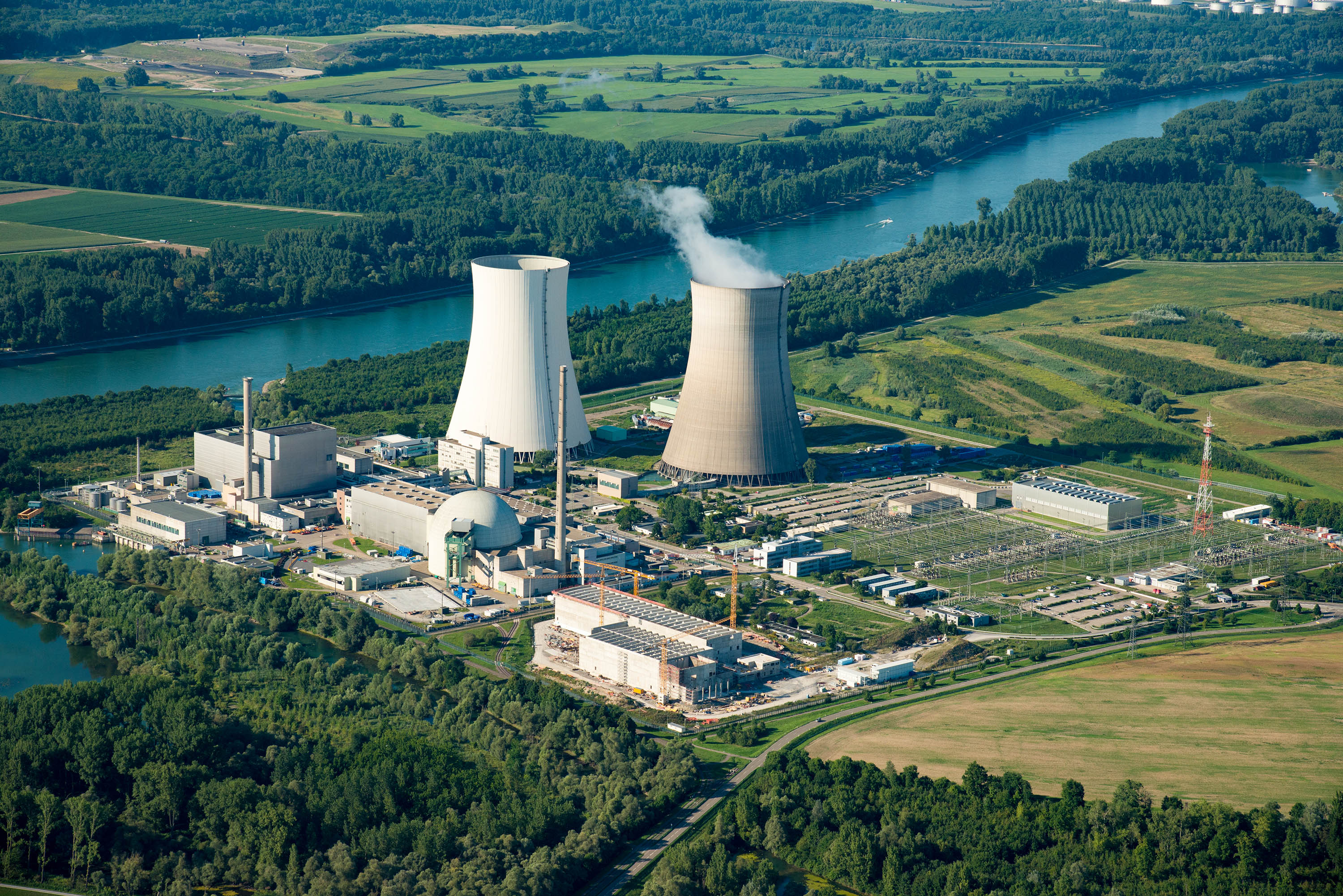
The Kewaunee nuclear power station, that recently applied to the NRC for permitting to build new nuclear reactors at its site in Wisconsin. (Photo: EnergySolutions)

By Kelly Lundeen

The pendulum has come full swing in the ten short years since the dairy state went from guarding against further radioactive waste production to actively promoting nuclear power with taxpayer money. Between 1983 and 2016 Wisconsin was shielded from any new commercial nuclear reactors by a moratorium against reactor construction. Without the moratorium the red carpet has been laid down for a nuclear industry gala. The year 2025 saw state approval of pro-nuclear legislation and the first application to the Nuclear Regulatory Commission (NRC) for a small modular nuclear reactor, not to mention a license extension for the state’s only operating nuclear power facility (see “Wisconsin Reactors Approved to Run Til 80” on p.6).

Over the last five years Wisconsin has seen proposals for small modular nuclear reactors (SMNR) come, go, and pop up again. In 2021 Wisconsin-based Dairyland Electric Cooperative signed an agreement with NuScale Power to explore the potential deployment of NuScale’s so-called “advanced” reactor design. A similar proposal failed in Idaho when projected costs doubled and local stakeholders called off the deal. Policy director of Columbia Riverkeeper Kelly Campbell commented, “After losing their customer, NuScale’s stock plunged, it laid off nearly a third of its workforce, and it was sued by its investors and investigated for investor fraud. Then its CEO sold off most of his stock shares.” Even though the Wisconsin Dairyland-NuScale agreement has yet to be formally rescinded, the plan has faded away.

Other optimistic SMNR developers apparently don’t expect the same failure. Along the Lake Michigan shoreline sits the Kewaunee Power Station, Wisconsin’s most recently shuttered nuclear reactor. It closed in 2013 and is now undergoing decommissioning. A new plan could see a return to production of radioactive waste on Kewaunee grounds, along with a little electricity, potentially to be gobbled up by an adjacent data center. A SMNR has been proposed at the site after its owner EnergySolutions signed an agreement with the Canadian company Terrestrial Energy in December 2024 to explore deployment of its Integral Molten Salt nuclear reactor design. Molten salt explodes when exposed to air and reactors cooled with it have all failed. In April 2025, EnergySolutions submitted an early site permit to the NRC for a SMNR in partnership with WEC Group, parent company of WE Energies. The earliest projections for producing a bit of electricity are for 2038.

The future of incredibly expensive nuclear power depends on enormous government taxpayer handouts. Wisconsin’s legislature and governor have put bipartisan support behind this corporate welfare. Last summer the state approved “two bills to advance the state’s nuclear energy innovation by requiring a study of nuclear energy opportunities and potential nuclear power and fusion sites in Wisconsin and creating a Nuclear Power Summit Board designed to help advance nuclear power… and showcase Wisconsin’s leadership in the nuclear industry,” according to a press release from the office of Democratic governor Tony Evers. That means more subsidies to create a supply of unnecessary energy that will arrive to the market too expensive and too late when alternatives to fossil fuels are needed now.

The nuclear moratorium was a protection from the onslaught of radioactive threats facing the state today. Without a moratorium, states across the country like Wisconsin are left fighting on multiple fronts. Currently under review in the state legislature is a bill that would funnel taxpayer funds into building a new nuclear reactor. This kind of taxpayer bailout for the nuclear industry would have been impossible in Wisconsin a decade ago.

— WMTV15, Oct. 15; Wisconsin Public Radio, May 14; EnergySolutions, May 13, 2025; Oregon Capital Chronicle, Oct. 29, 2024
Filed Under: Environment, Newsletter Archives, Nuclear Power, Quarterly Newsletter, Uncategorized

February 4, 2026 by Nukewatch Leave a Comment

Harvard Study Confirms Reactor Radionuclides in Soil and House Dust Near Pilgrim Reactor

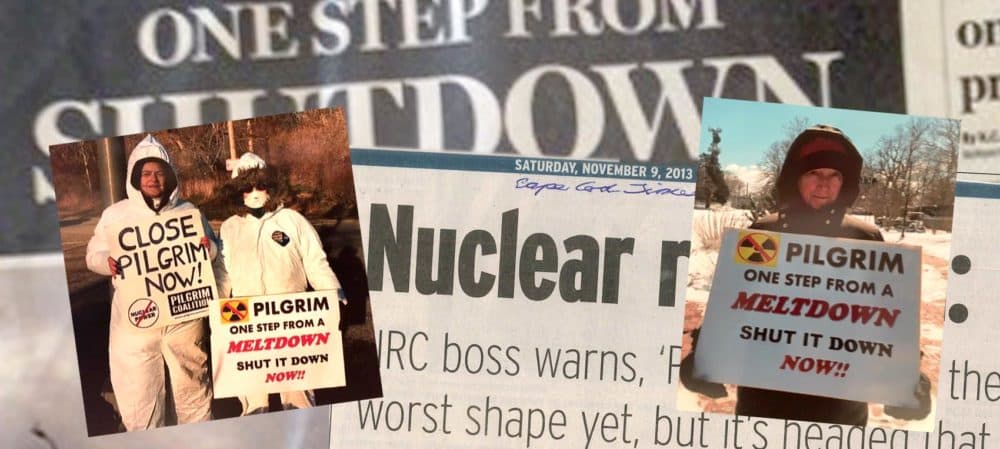
A recently published study by the Harvard School of Public Health and Dr. Marco Kaltofen looked at samples of soil and house dust from within 8.1 miles of the Pilgrim nuclear reactor, now closed, on Cape Cod Bay in Mass. The study found radionuclides only produced by reactor operations — such as cesium-137. At 0.6 miles from the reactor, cesium-137 and lead-210 were at 20 times the so-called ‘background’ levels. These findings are not surprising after decades of reactor operations and the spread of contamination from decommissioning, yet this may prompt a larger study. In 1996, the Mass. Dept. of Health documented rates of adult leukemia were four times higher in people living or working closer to Pilgrim. The study is available from Environmental Engineering Science at the following link: https://www.liebertpub.com/doi/abs/10.1177/15579018251371131. — Southeastern Mass. Health Study, Archives of Environmental Health, Vol. 51, July-August 1996

(Robin Lubbock/WBUR)

Decades of resistance to the Pilgrim Reactor. Photo and story: WBUR.

Filed Under: Environment, Newsletter Archives, Nuclear Power, Quarterly Newsletter, Radiation Exposure, Radioactive Waste, Uncategorized

February 4, 2026 by Nukewatch Leave a Comment

German Government to Weaken Criticism of Nuclear Power

At a Ministerial Council meeting in France last August, French and German delegates declared support for the “equal treatment” of both nuclear power and renewable electricity sources within the European Union (EU). The news came as a shock to environment and policy observers, because Germany has strenuously opposed nuclear power for years. The reversal was noticed in May when German Chancellor Merz and French President Macron agreed to “end discrimination” against nuclear power at the EU level, and in June when German Energy Minister Katherina Reiche attended a meeting of pro-nuclear states. Ms. Reiche, a former gas industry lobbyist, said she intends to slow the pace and reduce promotion of renewable energy expansion. Even Germany’s anti-nuclear Environment Minister Carsten Schneider has been silent on the turnaround.

EU negotiations on its multi-annual financial “framework” (for the years 2028 to 2034) are ongoing, but in June a first draft was issued which, for the first time, allows the funding of research on mini reactors, and permits the construction of new nuclear reactors to be directly eligible for funding. Such funding would reverse the EU’s current policy, and, in Germany, taxpayers’ money would flow to international nuclear power projects in spite of the country’s complete reactor phase-out. Without clear opposition from Germany, support for nuclear power will increase, and investments in wind and solar projects will become less attractive. — Broadcast, newsletter of Together Against Nuclear Energy, Germany, October 2025, https://www.ausgestrahlt.de/

Photo: Clean Energy Wire

Filed Under: Environment, Newsletter Archives, Nuclear Power, Quarterly Newsletter, Renewable Energy

February 2, 2026 by Nukewatch Leave a Comment

First Nation Stalls Planned Canadian Radioactive Waste Dump Near Ottawa River

According to the Journal de Montréal, the 365 Anishinabeg residents of the Kebaowek First Nation reserve in Abitibi-Témiscamingue, have halted the multi-million-dollar Canadian radioactive waste dump sited on their homelands. The intended permanent abandonment site, which would hold up to one-million cubic meters of radioactive and other toxic wastes including plutonium, was conceived of by a consortium of multinational corporations hired by the federally-owned corporation Atomic Energy of Canada. The proposal would sandwich the waste in a mound of clay, sand, and an insufficient membrane close to the surface and near the Ottawa River, drinking water for many downstream. The mound is engineered to last 550 years, but Gordon Edwards of the Canadian Coalition for Nuclear Responsibility points out that 19 of the 29 radioactive substances destined for the dump have half-lives of more than 5,500 years. In February, Federal Courts ruled that the Canadian Nuclear Safety Commission did not obtain free, prior, and informed consent of affected Indigenous communities — required by the United Nations Declaration on the Rights of Indigenous Peoples — before green-lighting construction. In March, Federal Courts found the dump threatens several at-risk species. The proposed dump is opposed by 130 Quebec municipalities. — Gordon Edwards, Canadian Coalition for Nuclear Responsibility, Sept. 22; Journal de Montréal, Sept.19, 2025

We the Nuclear Free North – Join us to oppose nuclear waste burial in ...

We the Nuclear Free North – Join us to oppose nuclear waste burial in Northwestern Ontario

Filed Under: Environment, Environmental Justice, Newsletter Archives, Nuclear Power, On The Bright Side, Quarterly Newsletter, Radioactive Waste

December 18, 2025 by Nukewatch Leave a Comment

Fukushima Radioactive Waste Problems Metastasize

By John LaForge

The Tokyo Electric Power Company, Tepco, has said that two specially designed and newly installed robots will need three years to remove 3,000 sandbags from the basements of the three destroyed nuclear reactor buildings at Fukushima-Daiichi, in Japan.

The sandbags were used in the initial, panic-driven days of the site’s triple reactor meltdowns of March 2011, when highly radioactive water gushed into the reactor basements and had to be diverted. Interesting Engineering reported that the sandbags are in areas “with lethal radiation levels” too hazardous for manual work.

The robots will be operated remotely due to the sandbags’ fierce radioactivity, because of the large bulk of the bags which weigh a total of 41 metric tonnes, and because of the chaotic wreckage inside the destroyed reactors’ basements.
The project is expected to take at least until March 2028, according to Tepco.

News reports did not specify the kind of radioactivity that contaminates the deadly sandbags, but the melted reactor No. 3 was using fuel made partially of plutonium, the most toxic material known to science, which is radioactively hazardous for 240,000 years. Deadly isotopes in addition to plutonium inside the high radiation zones too hot for humans include strontium-90, cesium-137 and -134, iodine-131, cobalt-60, carbon-14, tritium, technetium, neptunium, americium, and others.

Tepco says the deadly sandbags will be “sealed in dedicated containers” and moved to “temporary storage.” The company’s plan for long-term containment of this radioactive waste was not outlined and Tepco was not compelled by the press or the government to explain its long-term strategy.

In Tokyo, the Citizens Nuclear Information Center (CNIC) reports that the sandbags have deteriorated, and cannot be recovered with the bags intact, forcing engineers to consider pumping them out together with the basement’s stagnant water, and then enclosing it all in containers.

Waste storage systems at risk from quakes

Until at least 2027, the sandbags, in addition to tons of highly radioactive sludge produced by filtering contaminated cooling water, have to be kept in an area still at risk of flooding from potential earthquakes and tsunamis, the CNIC reported.

A March 2025 report by Japan’s Cabinet Office’s Disaster Management Working Group said that a long-predicted “mega-quake” ⸺ if it occurs, as anticipated, along the Nankai Trough off Japan’s southwest Pacific coast ⸺ would likely trigger huge tsunamis, destroy thousands of buildings, spawn mass fires, cost Japan $1.81 trillion, and potentially kill 300,000 people. Under the government report’s worst-case scenario, a magnitude-9 earthquake could see 1.23 million evacuees fleeing the area, or about 10% of its population.

The Nankai trough is where the Philippine Sea Plate is subducting under the Eurasian Plate and accumulating tectonic pressure that can snap. The magnitude 9 undersea tectonic eruption of March 11, 2011 — Japan’s worst ever recorded earthquake whose power smashed reactor foundations at Fukushima Daiichi and flooded the site with tsunami waves — moved the island of Honshu, Japan’s largest, eastward an astounding eight feet.

Japan is one of the earth’s most earthquake-prone areas, and because of Fukushima’s daily accumulation of contaminated cooling water, some 1.3 million tonnes of this highly radioactive liquid waste is held in 1,000 giant 1,000-tonne tanks near the coast. So, the sludge containers, the sandbags, and the wastewater tanks are all vulnerable to daily tremors and the dreaded mega-quake, which can potentially send much of this radioactive waste into the Pacific Ocean.

“Dirty, dangerous, and bank-busting” is so negative. Let’s call nuclear power “Clean, safe, too cheap to meter.”

John LaForge is a Co-director of Nukewatch, a peace and environmental justice group in Wisconsin, and edits its newsletter.

Filed Under: Environment, Fukushima, Nuclear Power, Radioactive Waste, Weekly Column

  • « Previous Page
  • 1
  • …
  • 4
  • 5
  • 6
  • 7
  • 8
  • …
  • 67
  • Next Page »

Stay Connected

  • Facebook
  • Twitter

Subscribe

Donate

Categories

  • B61 Bombs in Europe
  • Chernobyl
  • Counterfeit Reactor Parts
  • Depleted Uranium
  • Direct Action
  • Environment
  • Environmental Justice
  • Fukushima
  • Lake Superior Barrels
  • Military Spending
  • Newsletter Archives
  • North Korea
  • Nuclear Power
  • Nuclear Weapons
  • Office News
  • On The Bright Side
  • Photo Gallery
  • Protect the Water Close Xcel's Monticello Reactor
  • Quarterly Newsletter
  • Radiation Exposure
  • Radioactive Waste
  • Renewable Energy
  • Social Issues
  • Sulfide Mining
  • Through the Prism of Nonviolence
  • Uncategorized
  • Uranium Mining
  • US Bombs Out of Germany
  • War
  • Weekly Column

Contact Us

(715) 472-4185
nukewatch1@lakeland.ws

Address:
740A Round Lake Road
Luck, Wisconsin 54853
USA

Donate To Nukewatch

News & Information on Nuclear Weapons,
Power, Waste & Nonviolent Resistance

Stay Connected

  • Facebook
  • Twitter

© 2026 · Nukewatch