Nukewatch

Working for a nuclear-free future since 1979

  • Issues
    • Direct Action
    • Environmental Justice
    • Nuclear Power
      • Chernobyl
      • Fukushima
    • Nuclear Weapons
    • On The Bright Side
    • Radiation Exposure
    • Radioactive Waste
    • Renewable Energy
    • Uranium Mining
    • US Bombs Out of Germany
  • Quarterly Newsletter
    • Quarterly Newsletter
    • Newsletter Archives
  • Resources
    • Nuclear Heartland Book
    • Fact Sheets
    • Reports, Studies & Publications
      • The New Nuclear Weapons: $1.74 Trillion for H-bomb Profiteers and Fake Cleanups
      • Nuclear Power: Dead In the Water It Poisoned
      • Thorium Fuel’s Advantages as Mythical as Thor
      • Greenpeace on Fukushima 2016
      • Drinking Water at Risk: Toxic Military Wastes Haunt Lake Superior
    • Nukewatch in the News
    • Links
    • Videos
  • About
    • About Nukewatch
    • Contact Us
  • Get Involved
    • Action Alerts!
    • Calendar
  • Donate

February 4, 2026 by Nukewatch Leave a Comment

Mystery Test of Submarine-Launched Missile Raises Questions

The Navy's Columbia-Class Ballistic Missile Submarine Has a Very ...

In September, the Caribbean Astronomy Society detected an unattributed “military test” when either a U.S. or U.K. nuclear-powered submarine fired a 130,000-pound Trident missile from near Puerto Rico. The missile, a Trident II D5, is an intercontinental-range ballistic missile with a yield of 7 to 95 kilotons. Regularly, the U.S. military publicly announces its missile tests in advance. In January, Lockheed Martin won a $383 million contract for the Trident II D5 Life Extension program to “modernize” the Trident arsenal, providing missiles for the Navy’s new Columbia-class submarines and the U.K.’s Dreadnought-class submarines. Each of the Trident II D5 missiles currently built by Lockheed Martin costs about $30.9 million and each missile can carry up to 12 independently targeted warheads. The Trident II D5 is described by the U.S. Navy as “the planet’s most lethal, accurate, and reliable sea-based strategic deterrent.” Fourteen Ohio-class submarines in the U.S. Navy and four Vanguard-class British submarines each carry 20 and 16 of these missiles per sub respectively. — Interesting Engineering, Sept. 22, 2025; Hans Kristensen & Matt Korda, “United States nuclear forces, 2019,” Bulletin of the Atomic Scientists, April 29, 2019, https://nuclearcompanion.com/data/trident-ii-d-5-missile/

Photo: The National Interest
Filed Under: Military Spending, Newsletter Archives, Nuclear Weapons, Quarterly Newsletter

February 4, 2026 by Nukewatch Leave a Comment

German Government to Weaken Criticism of Nuclear Power

At a Ministerial Council meeting in France last August, French and German delegates declared support for the “equal treatment” of both nuclear power and renewable electricity sources within the European Union (EU). The news came as a shock to environment and policy observers, because Germany has strenuously opposed nuclear power for years. The reversal was noticed in May when German Chancellor Merz and French President Macron agreed to “end discrimination” against nuclear power at the EU level, and in June when German Energy Minister Katherina Reiche attended a meeting of pro-nuclear states. Ms. Reiche, a former gas industry lobbyist, said she intends to slow the pace and reduce promotion of renewable energy expansion. Even Germany’s anti-nuclear Environment Minister Carsten Schneider has been silent on the turnaround.

EU negotiations on its multi-annual financial “framework” (for the years 2028 to 2034) are ongoing, but in June a first draft was issued which, for the first time, allows the funding of research on mini reactors, and permits the construction of new nuclear reactors to be directly eligible for funding. Such funding would reverse the EU’s current policy, and, in Germany, taxpayers’ money would flow to international nuclear power projects in spite of the country’s complete reactor phase-out. Without clear opposition from Germany, support for nuclear power will increase, and investments in wind and solar projects will become less attractive. — Broadcast, newsletter of Together Against Nuclear Energy, Germany, October 2025, https://www.ausgestrahlt.de/

Photo: Clean Energy Wire

Filed Under: Environment, Newsletter Archives, Nuclear Power, Quarterly Newsletter, Renewable Energy

February 4, 2026 by Nukewatch Leave a Comment

$80 Billion U.S. Gov’t Deal with Westinghouse for Ten New Reactors

VC-Summer-Nov-20-2020-RMI00137-CU-scaled.jpg
Westinghouse’s project in South Carolina that cost taxpayers $9 billion and generated no electricity – shutting down construction after bankrupting the company. Now, riding the coattails of the White House and Big Tech’s “nuclear renaissance,” Westinghouse is trying to forget its failed reactor project. Photo: FITS News

In October, the U.S. government signed on to an $80 billion deal with Westinghouse Electric Company to construct ten new large nuclear reactors. The plan hopes to see all ten reactor projects break ground by 2030 featuring the Westinghouse AP1000 design. The deal is sweetened for the U.S. through the promise of a 20% stake in Westinghouse after the company doles out an initial $17.5 billion to private shareholders. AI, Big Tech, and the military-industrial complex are all behind this administration’s push to bring the U.S. to the “forefront of the nuclear renaissance” — as Commerce Secretary Howard Lutnick put it. — Trading View, Oct. 28, 2025

Filed Under: Newsletter Archives, Nuclear Power, Quarterly Newsletter

February 4, 2026 by Nukewatch Leave a Comment

Global Majority of Countries Now Signed onto UN Nuclear Ban Treaty

As of September 26, Kyrgyzstan has signed, and Ghana has ratified the Treaty on the Prohibition of Nuclear Weapons (TPNW), raising the number of states that have acceded, signed, or ratified the treaty to a global majority. Now, 99 out of 197 eligible states have taken legal action under the treaty. This is a key milestone for what is still a young treaty which was adopted by the UN just over 8 years ago and only entered into force 5 years ago. The TPNW outlaws nuclear weapons and all activities associated with them, including production, possession, testing, threats or use. As we know from the evidence from the United States’ nuclear attacks on Hiroshima and Nagasaki 80 years ago, the effects of nuclear weapons are uniquely cruel and inhumane because of the indiscriminate, lasting, intergenerational harm they cause. The fact that a global majority of states now respect and heed the treaty sends a strong signal to the nuclear-armed states and their allies which support the use of nuclear weapons in their military strategies that they are the minority and increasingly regarded by the international community as irresponsible actors threatening global security. — ICAN Sept. 26, 2025. This article was originally published by ICAN, and has been shortened for space.

ICAN - International Campaign to Abolish Nuclear Weapons

Filed Under: Newsletter Archives, Nuclear Weapons, On The Bright Side, Quarterly Newsletter

February 4, 2026 by Nukewatch Leave a Comment

Wisconsin Reactors Approved to Run Until 80 Years Old

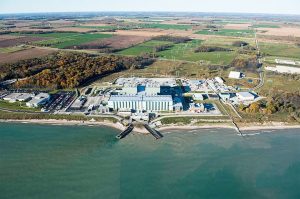
Point Beach Reactor, on Lake Michigan, in Wisconsin. In September, the two reactors on site were awarded license extensions to run until 2050 and 2053. Photo: reddit

On September 29, the Nuclear Regulatory Commission announced the much-delayed approval of the license renewals for Point Beach nuclear reactors, units 1 and 2. They are located in Manitowoc County near Two Rivers, Wisc. on the shore of Lake Michigan. The license renewal included a generic Environmental Impact Statement (EIS) without addressing current and future climate impacts at the Point Beach site in violation of the National Environmental Policy Act, as pointed out in a lawsuit filed by several non-profit organizations. A public pressure campaign by Physicians for Social Responsibility-Wisconsin and other groups, including Nukewatch, raised serious concerns with aging at the facility and the daily release of 915 million gallons of heated water into Lake Michigan. In 2013, the NRC designated Point Beach unit 2 as one of the most embrittled reactors in the country. Being one of the most likely to crack did not stop the renewal of the license. NextEra submitted an updated EIS in April 2025, and five months later Point Beach units 1 and 2 were licensed to operate through 2050 and 2053, respectively, when they will reach their 80th birthday. — Fox 11 TV, Sept. 29; Physicians for Social Responsibility-WI, Apr. 14, 2025

Filed Under: Newsletter Archives, Nuclear Power, Quarterly Newsletter

  • « Previous Page
  • 1
  • …
  • 10
  • 11
  • 12
  • 13
  • 14
  • …
  • 222
  • Next Page »

Stay Connected

  • Facebook
  • Twitter

Subscribe

Donate

Categories

  • B61 Bombs in Europe
  • Chernobyl
  • Counterfeit Reactor Parts
  • Depleted Uranium
  • Direct Action
  • Environment
  • Environmental Justice
  • Fukushima
  • Lake Superior Barrels
  • Military Spending
  • Newsletter Archives
  • North Korea
  • Nuclear Power
  • Nuclear Weapons
  • Office News
  • On The Bright Side
  • Photo Gallery
  • Protect the Water Close Xcel's Monticello Reactor
  • Quarterly Newsletter
  • Radiation Exposure
  • Radioactive Waste
  • Renewable Energy
  • Social Issues
  • Sulfide Mining
  • Through the Prism of Nonviolence
  • Uncategorized
  • Uranium Mining
  • US Bombs Out of Germany
  • War
  • Weekly Column

Contact Us

(715) 472-4185
nukewatch1@lakeland.ws

Address:
740A Round Lake Road
Luck, Wisconsin 54853
USA

Donate To Nukewatch

News & Information on Nuclear Weapons,
Power, Waste & Nonviolent Resistance

Stay Connected

  • Facebook
  • Twitter

© 2026 · Nukewatch