Nukewatch

Working for a nuclear-free future since 1979

  • Issues
    • Direct Action
    • Environmental Justice
    • Nuclear Power
      • Chernobyl
      • Fukushima
    • Nuclear Weapons
    • On The Bright Side
    • Radiation Exposure
    • Radioactive Waste
    • Renewable Energy
    • Uranium Mining
    • US Bombs Out of Germany
  • Quarterly Newsletter
    • Quarterly Newsletter
    • Newsletter Archives
  • Resources
    • Nuclear Heartland Book
    • Fact Sheets
    • Reports, Studies & Publications
      • The New Nuclear Weapons: $1.74 Trillion for H-bomb Profiteers and Fake Cleanups
      • Nuclear Power: Dead In the Water It Poisoned
      • Thorium Fuel’s Advantages as Mythical as Thor
      • Greenpeace on Fukushima 2016
      • Drinking Water at Risk: Toxic Military Wastes Haunt Lake Superior
    • Nukewatch in the News
    • Links
    • Videos
  • About
    • About Nukewatch
    • Contact Us
  • Get Involved
    • Action Alerts!
    • Calendar
  • Donate

June 21, 2026 by Nukewatch Leave a Comment

Reviving nuclear power in Vermont — or anywhere — would be a health hazard

By Joseph Mangano

Vermont is a model for future energy generation. The Vermont Yankee nuclear plant has closed and now over 99 percent of the state’s electricity is from hydroelectric, wind, solar, and biomass — renewable sources.

Sources like coal, oil, nuclear, and natural gas — which cause climate change and pollute the environment — were major sources of electrical power for a long time, but are a thing of the past, at least in Vermont.

But recently, Governor Phil Scott proposed changing a current law to include nuclear power as a renewable source of electricity. Some believe that if bill H601 becomes law, nuclear power might make a comeback in the Green Mountain State.

Why would nuclear power be considered renewable? Virtually all reactors in the world today use radioactive uranium-235 atoms to generate power. U-235 is found in rocks, soil, and water, and will eventually run out.

Along with “renewable,” supporters of nuclear power often claim it is “emission-free” or “zero-emission.” While reactors routinely release less climate-changing gas than coal, oil, or gas plants, they do release some (like carbon-14). And preparing uranium-235 for reactor [fuel] requires mining, milling, fabrication, enrichment, and purification — each emitting large amounts of greenhouse gas.

Reactors release their own environmental emissions. Over 100 radioactive chemicals are created after splitting U-235 atoms — the same as atomic bomb explosions. Even if reactors don’t experience meltdowns like Chernobyl and Fukushima, they must routinely release some of the 100-plus chemicals into the local environment. These waste products enter the body through breathing, food, and water, raising risk of cancer, birth defects, and other diseases.

Vermont’s experience with health hazards of reactors should be proof of why nuclear power should not be part of its future. Vermont Yankee’s shutdown in late 2014 was part of a movement that reduced the number of reactors in New England from nine to three since the early 1990s.

Vermont Yankee is situated in the town of Vernon, where counties in three states converge. Windham (Vermont) county, Cheshire (New Hampshire) county, and Franklin (Massachusetts) county are all close to the site; the large majority of the 195,000 residents of these three counties live under 25 miles from the reactor.

According to the Centers for Disease Control statistics, the infant death rate in these three local counties in the most recent period (2021-2025) fell 39% from a decade earlier, when Vermont Yankee was still operating. The decline was only 22% elsewhere in the three states, and 8% in the U.S. asl a whole. Previous research has identified declines in local infant deaths after reactor shutdowns, as the fetus and infant are most sensitive to radiation exposure.

In neighboring New York state, Governor Kathy Hochul has proposed adding up to $33 billion in electric bills to pay maintenance costs needed to keep the state’s four aging reactors in operation until 2049. She also has proposed building five large new nuclear stations. If New York’s plans become reality, it will increase the chance that some of this power could end up in Vermont.

Vermont leaders should reject H601 for public health reasons, and maintain the state’s current electricity mix as an example for other states.

— Joseph Mangano, MPH MBA, executive director of the Radiation and Public Health Project, based in New Jersey, wrote this piece for the Brattleboro Reformer, March 16, 2026

Springfield Nuclear Power Plant - Wikisimpsons, the Simpsons Wiki
Photo: simpsonswiki.com

Letter: Nuclear not affordable or clean

To the Editor, Bennington Banner (Vermont):

Governor Scott, Lt. Governor Rodgers, and Republican legislative leadership are all on record promoting new nuclear power for Vermont. Phil Scott continues to push for legislation labeling nuclear as clean and seeking to remove the requirement that the General Assembly must approve any new nuclear power.

The Trump Administration has been surprisingly clear about its energy policy for the nation. “Drill Baby Drill,” regarding fossil fuels. “Beautiful Clean Coal,” signaling a revival for coal burning power plants. As for nuclear, Trump is calling for the reduction of “red tape” like environmental and safety testing for proposed small modular reactors, all the while attacking renewable energy and energy efficiency programs. Of course, Trump’s energy policy labels climate change as a hoax.

Recently it was reported that the State of Vermont has spent 530 million ratepayer dollars cleaning up the Vermont Yankee nuclear [reactor] site in Vernon. It has also been reported that, to date, the site has filled 1,462 rail cars of low-level radioactive waste, most of which has been shipped to a dump in Andrews County, Texas. Down in Andrews many of the locals are not happy about being dumped on by Vermont. What remains at the site in Vernon are 58 giant casks of high-level radioactive waste sitting on the banks of the Connecticut River with nowhere to go. Nuclear is not affordable or clean.

Going backwards is not a good policy path for Vermont. We must demand better from our leaders.

— Chris Williams, Hancock, Addison County, VT

Filed Under: Environment, Newsletter Archives, Nuclear Power, Quarterly Newsletter

June 21, 2026 by Nukewatch Leave a Comment

A History of Scientists’ Warnings About Radiation Exposures

Cindy Folkers and Ian Fairlie have published an essential book:

The Scientists Who Alerted Us to the Dangers of Radiation (Ethics International Press, 2024) presents the findings of 39 scientists who have studied and raised alarms over the health effects of radiation exposure and who often suffered severe harassment from government and industry insiders. The scientists showed that from the beginning of the atomic age radiation risks have “consistently been underestimated.” The authors report:

“[R]ecent epidemiology findings indicate that these radiation scientists were correct … but by larger margins than we had thought. For example, increased radiogenic risks are routinely ignored, the protections of children and women are not addressed, large dose/risk uncertainties are passed by, internal radiation exposures remain largely unexamined, cardiovascular risks ignored, and the hazards of common radionuclides are systematically minimized.”

Nine of the radiation scientists profiled in the book “observed increased incidences of childhood leukemias and solid cancers near U.S. nuclear facilities.”

“Indeed,” the authors note, “a strong pattern of epidemiological evidence indicates increased leukemia and solid cancer risks near all reactors world-wide, not just those in the U.S.”

Nuclear power plant steaming cooling towers. Air pollution power ...
Photo: videohive.net

The most important study on this matter was the German government’s 2008 KiKK study.*

“This found a 120% increase in leukemias and a 60% increase in all cancers among infants and children under 5 years old living within 5 km of all German NPPs” (nuclear power plants).

“KiKK was a large well-conducted study; its findings were scientifically rigorous; its evidence was particularly strong; and the German government’s radiation protection agency (the BfS) which commissioned the study, confirmed its findings. A BfS-appointed expert group stated:

“The present study confirms that in Germany there is a correlation between the distance of the home from the nearest NPP [nuclear power plant] at the time of diagnosis and the risk of developing cancer (particularly leukemia) before the 5th birthday.”

“The KiKK study refrained from discussing the reasons for its findings. However one hypothesis is that the infant leukemias were a teratogenic effect of in utero exposures from intakes of radionuclides during fetal development in pregnancies. The risks to embryos and fetuses that are exposed near NPPs were apparently much larger than currently estimated. For example, blood-forming tissues are considerably more radio-sensitive in embryos and fetuses than in adults. The combined immaturity of children’s nervous and blood-forming systems makes them particularly vulnerable to chronic radiation exposures from NPPs.”

(This highly influential study, followed three years later by the Fukushima-Daiichi triple reactor disaster in Japan, moved Germany’s government to phase out all 17 of its nuclear power reactors.)

The authors note that official organizations find it difficult to accept that cancer increases near NPPs may be due to radioactive emissions. Their view is that exposures to radioactive emissions from NPPs are too small to explain the increases. They assume: 1) that official risk models are correct; and 2) that official dose estimates are without uncertainties.

However, the UK government’s 2005 “Report of the Committee Examining Radiation Risks of Internal Emitters” found that “the models used to estimate radiation doses from nuclear plants are now known to be highly uncertain and unreliable.”

* German KiKK study: “Childhood Cancer in the Vicinity of Nuclear Power Plants,” P. Kaatsch et al (2008), International Journal of Cancer, #122; and “Case-control study on childhood cancer in the vicinity of nuclear power plants in Germany 1980 – 2003,” C. Spix et al (2008), European Journal of Cancer, #44 — JL

Filed Under: Newsletter Archives, Nuclear Power, Quarterly Newsletter, Radiation Exposure

June 21, 2026 by Nukewatch Leave a Comment

Fukushima Meltdowns 15 Years On

By John LaForge

Bailed-out Again, Operator Still Flailing

Tokyo Electric Power Company Holdings (Tepco) — whose reactors went into catastrophic triple meltdowns at Fukushima-Daiichi in 2011 — has taken another major financial blow. In January, it reported a “substantial extraordinary loss” $5.7 billion for 2025, “due to newly anticipated expenses” covering disaster response, according to the financial investment service TipRanks.

Tepco was effectively nationalized following the meltdowns and the disaster’s major releases of radioactive gases and liquids. The company was bailed out by a government infusion of $12.5 billion in 2012.

Costs are still skyrocketing as the 15-year-long and ongoing process of recovery, decontamination, and radiation dispersal work continues. (The company continues to pump radioactive wastewater into the Pacific Ocean after used to cool the reactors’ wreckage.) The latest financial hit comes from exploding costs of developing and testing never-before-used methods of analyzing, grasping, and possibly removing roughly 880 tonnes of melted reactor fuel from below the three rubblized, explosion-destroyed reactor buildings.

The melted fuel still lost under the reactors consists of a mix of ferociously hot, radioactive, and unapproachable uranium and plutonium debris. While most reactors run on uranium fuel alone, Unit 3 at Fukushima also used plutonium, the most toxic material known to science.

Additionally, Tepco’s “financials remain heavily influenced” by disaster damage compensation costs, reported TipRanks. The company won government approval of a secondary bailout to cover a recent $443 million increase in its required compensation payments to relocated families.

Fukushima Daiichi nuclear disaster - Alchetron, the free social ...
Photo: alchetron.com

Radioactive Contamination Persists

Because forests in the region were hard hit by radioactive fallout from the out-of-control reactors in 2011, some of the contamination persists. Residential areas, school yards, parks, and some farm land had tons of contaminated topsoil scraped up, bagged up, and removed. According to the German Federal Office for Radiation Protection’s report, “Environmental impact of the Fukushima accident: Radiological situation in Japan,” “Huge quantities of [cesium-137] contaminated soil (around 20 million cubic meters in total), primarily from the decontamination of gardens [and school yards], as well as organic waste such as leaves and branches were stored temporarily in situ in plastic bags.”

However, forests remain widely contaminated. According to the Journal of Radiation Research, forest areas cover 68-70% of Fukushima Prefecture, and the forests accumulated 72% of the air borne cesium-137 that fell in the . The radioactive, gamma-ray emitting cesium-137 persists in the environment for 300 years.

Under a federal law adopted after the disaster began, Tepco must decontaminate and restore affected areas to their pre-accident state, but the law left contamination in forests and other areas outside of its clean-up mandate.

The Journal of Environmental Radioactivity has reported that because the radioactivity can remain stored in forest canopies, in vegetative litter on the ground, or in the soil, rainfall can re-suspend cesium-137 (and other radioisotopes), carry it downhill, and “contaminate downstream areas, even areas that did not receive fallout or may have been decontaminated” — areas including creeks, streams, and rivers, farm lands, ditches, gutters, and storm drains.

Tetsuji Imanaka, a nuclear engineering specialist at Kyoto University, wrote for Kyodo News March 27 that the government should create hazard maps showing compliance with these standards and provide the maps to residents as a basis for decision-making to avoid unnecessary exposure.

Thousands Rally in Tokyo Against Re-start of Old Power Reactors

More than 8,000 people took to Tokyo’s streets on Saturday March 7 protesting the government’s push to restart aging nuclear reactors, demanding it and Tepco address ongoing problems of lingering contamination, resettlement of evacuees, and compensation claims.

“It’s been 15 years … and there’s still no clear plan for how to resolve these issues. I find this extremely dangerous and frightening,” said one protester, according to China’s online news source BastillePost.

“I don’t think the government or Tepco have any real intention to solve these problems. Actually, there’s no long-term plan at all. Yet they talk about restarting and even building new nuclear plants. It’s utterly absurd,” said another participant. “Now my wife and I live together in Chiba [174 miles away from home]. We only return to our hometown once or twice a year. It’s basically impossible to go back.”

About 26,000 people were still living as evacuees as of February.

Film: “Fukushima: A Nuclear Nightmare”

Lee Clark Zumpe reviewed the new Fukushima documentary that highlights heroes, and criticizes corporate blunders for Tampa Bay, Florida newspapers, and wrote in part:

“The HBO original documentary ‘Fukushima: A Nuclear Nightmare,’ details the disaster timeline while bringing to light the individuals who worked selflessly to try to minimize the threat to surrounding communities. It is a distressing yet imperative depiction of a catastrophe. The film is directed by both James Jones — the award-winning documentarian who directed ‘Chernobyl: The Lost Tapes’ — and Megumi Inman.

“Though only 90 minutes long, ‘Fukushima: A Nuclear Nightmare’ moves at a… slow pace, highlighting the mounting pressures the plant’s workers faced. The film captures the atmosphere of anxiety and fear, but it also unabashedly praises the commitment of the workers who fought courageously” to restore offsite power, and to patch up emergency cooling water delivery. “The directors also include commentary that shows Tepco was unprepared to deal with a disaster of [such] magnitude and that its failure to respond appropriately in the first few days likely exacerbated the grim situation.”

Book: Return to Fukushima

Return to Fukushima (OR Books, 2024) by Thomas Bass, a professor of English and journalism at the State Univ. of New York in Albany, is the best, most easily read chronicle of the disaster and its aftermath. Professor Amory Lovins of Stanford says, “Return to Fukushima clearly, calmly, and crisply describes this vast nuclear, social, and environmental disaster, its preventable causes, its continuing misrepresentation.” Cindy Folkers of Beyond Nuclear writes, “Bass brings poetic prose, incisive analysis, and a deeply ethical lens to a subject often buried under technical jargon and political spin.” Bass’s short text (196 pages) is a must-read for anyone interested in knowing the causes and effects of the world’s worst industrial accident and the worst radioactive contamination of the ocean in history.

For a boiled-down, magazine-length consideration, see Bass’s article “Fukushima at 15: Living with radioactive hot spots and stigma as Japan’s government pushes for more reactors,” in the March 9 Bulletin of the Atomic Scientists, where he writes: “The world’s worst industrial accident took place in an advanced industrial country with 54 nuclear reactors, supplying a third of Japan’s electricity. The final bill for containing the destroyed reactors, storing the waste, and rebuilding parts of the nuclear exclusion zone could [be] over $1 trillion. This is one quarter of Japan’s annual economy.”

Filed Under: Environment, Fukushima, Newsletter Archives, Nuclear Power, Quarterly Newsletter, Radiation Exposure

June 21, 2026 by Nukewatch Leave a Comment

Mississippi River Coalition Commemorates 15 Years Since Fukushima Reactor Meltdowns

By John LaForge

On Wed., March 11, the Coalition for a Nuclear- Free Mississippi River commemorated the 15th anniversary of the triple reactor meltdowns in Fukushima, Japan by hosting a “No More Fukushimas! Close the Monticello Nuclear Reactor” rally on the walkway of the large Lake Street Bridge over the Mississippi River in Minneapolis/St. Paul.

The rally piggybacked on the very long-running weekly anti-war vigil on the bridge, which was launched in 2003 by Women Against Military Madness, or WAMM.

The effort to raise awareness of Monticello’s relationship to Fukushima succeeded in bringing out the local news. With signs and banners demanding protection of the public drinking water the Mississippi provides, several rally participants spoke to a reporter from local KARE 11 News, and Nukewatch’s John LaForge ended up in a segment of the evening news calling for the reactor’s shutdown.

Xcel Energy’s 55-year-old Monticello reactor ― 35 miles northwest of Minneapolis/St. Paul ― has the same design as the three devastated Fukushima units.

Two people drove to the rally from the city of Monticello and reported that they’d taken photos of an oil slick on the surface of the Mississippi, which resulted from a leak of lubricating oil from the reactor which began March 9. While Xcel Energy first announced that the oil would not reach the river, the company was forced to admit later that it had.

Local organizations representing thousands of residents in the Twin Cities and surrounding communities, including Monticello, launched the Coalition to raise awareness of the dangers of nuclear power following the massive 829,000-gallons leak of cooling water from the reactor in 2022. The Fukushima nuclear disaster of March 2011 is often ignored by the media.

At Fukushima, three reactors suffered complete core meltdowns and hydrogen explosions. It was the world’s worst industrial disaster and the second-worst accidental radiation release in history ― after Chernobyl. Following the March 11, 2011 earthquake (Japan’s worst ever) and its resulting tsunami, Fukushima’s GE “Mark-1” boiling water reactors ― identical to the Monticello unit ― suffered smashed reactor foundations, and a station black-out, or total loss of electric power.

A station black-out is a severe reactor crisis, because it stops the circulation of cooling water. This loss of cooling, if not reversed, causes fuel melting, massive radioactive releases, and ⸺ from Fukushima and from Chernobyl ⸺ radioactive “fallout” which spreads around the world.

Several common natural disasters could lead to a station blackout at Monticello: severe thunderstorms, tornadoes, and straight-line windstorms (derechos); floods, wildfires, and blizzards ― or some combination ― could cut power to the station. Back-up emergency generators are on hand to power cooling water circulation, but they are also subject to failure, as happened in Fukushima.

To learn more, see nuclearfreemississippi.wordpress.com or write to the Coalition at nuclearfreemississippi@zohomail.com.

Filed Under: Environment, Fukushima, Newsletter Archives, Nuclear Power, Office News, Protect the Water Close Xcel's Monticello Reactor, Quarterly Newsletter, Radiation Exposure

June 21, 2026 by Nukewatch Leave a Comment

From the archives: 1971 Monticello Reactor Releases Led to Mpls Water Shutoff

Editor’s note: A look into archives of Minneapolis papers from the 1970s shows that the Monticello reactor has poisoned the Mississippi River in the past, and one of its spills was so radioactive that Minneapolis shut down its drinking water intake from the river. Verbatim transcripts from the papers follow.

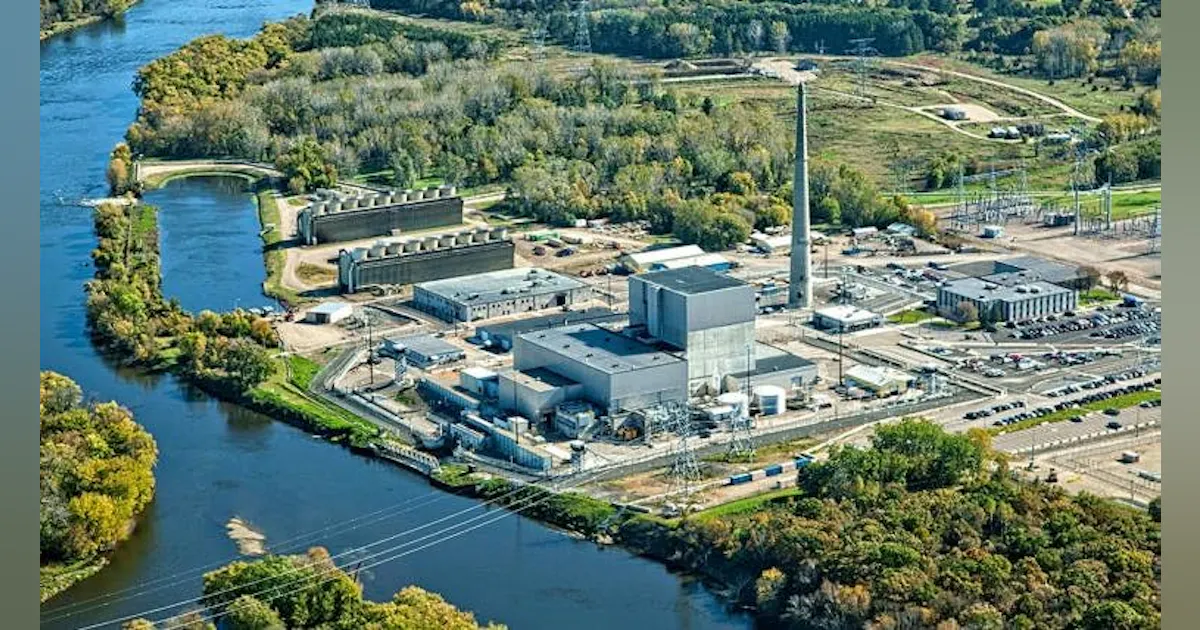
Xcel Energy to Extend Operations of Monticello Nuclear Generating Plant ...

NSP to delay atom discharges

The Minneapolis Star, Wed., Nov. 24, 1971, p.23

Northern States Power Co. [now Xcel] has tentatively agreed to hold up on any future unexpected discharge of radioactive water from its Monticello nuclear power plant until state agencies can analyze the water, a Minnesota Health Department official said today.

Russell Frazier, chief of the laboratory analytical services of the department, said the agreement with NSP on future procedures was made after what he termed “the high drama which accompanied the release of a minor amount of radioactivity from the Monticello reactor.”

Frazier said NSP has tentatively agreed to notify the state health department and the Minnesota Pollution Control Agency.

He said that there was confusion and a lack of data last weekend when NSP decided to drain about 50,000 gallons of low-level radioactive water from the Monticello plant into the Mississippi to permit the repair of a loose baffle.

Fraizer said a “purely precautionary decision” was made by health officials and the Minneapolis Water Department to shut down the city water intake pump, which supplies drinking water to the city at a point about 30 miles downstream from Monticello.

“The action is no way a measure of the importance to be attached to the Monticello release,” he said.

Radioactive discharge fits state standards

The Minneapolis Star Tribune, Tue., Dec. 21, 1971, p.16

Northern States Power (NSP) Company’s Monticello nuclear plant Monday discharged 8,500 gallons of radioactive water that met state standards for the isotope cesium 137.

The 4 p.m. release, object of a week-long dispute between the firm and the Minnesota Pollution Control Agency (PCA), was analyzed twice by PCA and Minnesota Health Department scientists.

First it was found to contain 4.1 microcuries of cesium 137, and then 5.7 microcuries. But an average of the two tests, 4.9 microcuries, fell below the state’s weekly maximum limit of 5.3 microcuries for the isotope, said Grant Merritt, PCA director.

The discharge came after NSP exchanged the water within the plant to produce a “cleaner” release. Earlier, PCA measurement had shown the cesium 137 to be about twice the amount allowed by the disputed state standards, although well below limits set by the U.S. Atomic Energy Commission (AEC).

PCA technicians today hope to sample a second batch of about 6,500 gallons that NSP says also must be discharged as part of a maintenance procedure.

Since NSP earlier said it would not discharge within 48 hours after a sample is taken, PCA officials said the second batch isn’t expected to be released before Thursday.

An NSP spokesman confirmed yesterday’s release but would not answer questions about the sampling or timing of the second discharge.

Merritt maintains that NSP earlier committed itself to meeting state standards, even though federal courts thus far have held that only AEC regulations apply to nuclear plants. The state restrictions on cesium 137 are from 100,000 to 100 million times more stringent than those of the AEC.

A-water released by NSP

The Minneapolis Star, Wed., Dec. 29, 1971, p.29

Five thousand gallons of radioactive water were released from the Monticello nuclear power plant into the Mississippi River today, according to a spokesman for the Northern States Power Co.

A Minnesota Pollution Control Agency spokesman said tests of the water showed that the levels of radioactive cesium-137 were 45 percent below state standards.

The PCA spokesman said overall radiation in the water was even lower than that.

The water is the second of two discharges NSP said it needed to make because of modification and maintenance work being done at the nuclear plant.

PCA officials had managed to get the first discharge delayed while they investigated radiation levels.

By splitting the discharge into two batches and waiting a week before letting the second one go, NSP was able to keep radiation levels below rigid state weekly standards.

Today’s discharge began at 6 a.m. and an [NSP] spokesman said it normally would take five hours.


Filed Under: Environment, Newsletter Archives, Nuclear Power, Protect the Water Close Xcel's Monticello Reactor, Quarterly Newsletter, Radiation Exposure

  • « Previous Page
  • 1
  • …
  • 7
  • 8
  • 9
  • 10
  • 11
  • …
  • 222
  • Next Page »

Stay Connected

  • Facebook
  • Twitter

Subscribe

Donate

Categories

  • B61 Bombs in Europe
  • Chernobyl
  • Counterfeit Reactor Parts
  • Depleted Uranium
  • Direct Action
  • Environment
  • Environmental Justice
  • Fukushima
  • Lake Superior Barrels
  • Military Spending
  • Newsletter Archives
  • North Korea
  • Nuclear Power
  • Nuclear Weapons
  • Office News
  • On The Bright Side
  • Photo Gallery
  • Protect the Water Close Xcel's Monticello Reactor
  • Quarterly Newsletter
  • Radiation Exposure
  • Radioactive Waste
  • Renewable Energy
  • Social Issues
  • Sulfide Mining
  • Through the Prism of Nonviolence
  • Uncategorized
  • Uranium Mining
  • US Bombs Out of Germany
  • War
  • Weekly Column

Contact Us

(715) 472-4185
nukewatch1@lakeland.ws

Address:
740A Round Lake Road
Luck, Wisconsin 54853
USA

Donate To Nukewatch

News & Information on Nuclear Weapons,
Power, Waste & Nonviolent Resistance

Stay Connected

  • Facebook
  • Twitter

© 2026 · Nukewatch