By Lindsay Potter
The U.S. Department of Energy (DOE) and private Big Tech investors have spent billions of dollars, and side-stepped decades of safety regulation work, to jump-start the small modular and “advanced” new nuclear reactors that the Trump White House dreams will deliver a “nuclear renaissance.” The DOE even declared in a press release that the “Golden Era of American Nuclear Energy has Arrived.”
There were 15 projects chosen for an expedited DOE approval process as a pilot program, and five have now achieved “criticality,” or a sustained nuclear reaction, most without producing electricity.
With its zero-power criticality demonstration, the company Antares Nuclear, Inc.’s reactor design, the Mark-0, was the first. The demonstration took place June 5 at the Idaho National Laboratory (INL) under DOE authorization.
The test reactor demonstration was conducted in partnership with DOE, INL, and BWX Technologies, Inc. ⸺ supplier of the TRISO fuel used to power the reactor ⸺ and with support from the U.S. Army, which is seen as a future end user of the reactor.
The Antares TRISO fuel comes from scrap materials provided by the DOE’s nuclear weapons program, the National Nuclear Security Administration.
The criticality demonstration represents a key step toward deploying electricity-producing micro-reactors for U.S. military installations “by the end of September 2028,” Antares said.
Other Criticalities and Milestones this Summer
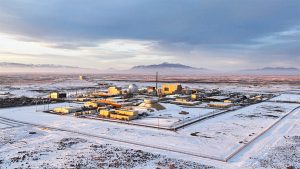
Valar Atomics’ “Ward 250” reactor ⸺ the size of a minivan ⸺ is the first of the DOE-approved reactors that was not constructed at a national lab. Under the DOE pilot program, it reached criticality on June 18, 2026, and powered up to 10 kilowatts as of June 22.
Deployable Energy, Inc’s reactor, a helium-cooled high-temperature gas, 1-megawatt micro-reactor called the “Unity Nuclear Battery,” also at INL, was the third to reach criticality.
The fourth reactor in the program, Aalo Atomic’s reactor “Aalo-X” reached zero-power criticality on July 4, again at INL.
The “Groves Isotope Test Reactor,” developed by Oklo, and Atomic Alchemy, became the first reactor on private land using fully commercially available fuel, to reach criticality.
Where do we go from here?
What all these new criticalities mean, beyond validating the fanfare of Trump’s Executive Order 14301, remains to be seen. The road from criticality to producing electricity ⸺ and from there to being commercial viability and utility scale ⸺ is long. It does, however, mean that this administration and the Big Tech firms that have so vehemently wooed it, are pushing hard ⸺ with their collective trillions ⸺ toward realizing new reactor ambitions, largely in hopes of powering AI data centers, surveillance, and imperial military outposts. It is no coincidence that most of these reactor designs are being tested at national labs and military sites, skirting Nuclear Regulatory Commission rules for civilian licensing and safety regulation.
Antares CEO Jordan Bramble put it this way: “We said criticality in 2026, electricity production in 2027, and power to the war fighter in 2028 … That doesn’t happen by accident. … It also doesn’t happen without decades of DOE investment …. Idaho National Laboratory and DOE-Idaho provided the design, regulatory, and facilities support that enabled this schedule.”
As an all-star cast of Big Tech heavyweights appeared before Congress for a hearing this September ⸺ imploring the federal government to finally regulate rollout of new artificial intelligence technology ⸺ it is worth remembering that the same lineup of suits has spent ten years privately funding development of small modular “advanced” nuclear reactors and lobbying Congress to repeal federal regulation of commercial reactor licensing, construction, and operation.
⸺ World Nuclear News, June 5; MSN, July 2; Forbes, July 2; Real Clear Energy, July 14; U.S. Department of Energy “Fact Sheet,” July 25; goingcritical.org, Sept.
Leave a Reply