Nukewatch

Working for a nuclear-free future since 1979

  • Issues
    • Direct Action
    • Environmental Justice
    • Nuclear Power
      • Chernobyl
      • Fukushima
    • Nuclear Weapons
    • On The Bright Side
    • Radiation Exposure
    • Radioactive Waste
    • Renewable Energy
    • Uranium Mining
    • US Bombs Out of Germany
  • Quarterly Newsletter
    • Quarterly Newsletter
    • Newsletter Archives
  • Resources
    • Nuclear Heartland Book
    • Fact Sheets
    • Reports, Studies & Publications
      • The New Nuclear Weapons: $1.74 Trillion for H-bomb Profiteers and Fake Cleanups
      • Nuclear Power: Dead In the Water It Poisoned
      • Thorium Fuel’s Advantages as Mythical as Thor
      • Greenpeace on Fukushima 2016
      • Drinking Water at Risk: Toxic Military Wastes Haunt Lake Superior
    • Nukewatch in the News
    • Links
    • Videos
  • About
    • About Nukewatch
    • Contact Us
  • Get Involved
    • Action Alerts!
    • Calendar
  • Donate

April 18, 2024 by Nukewatch Leave a Comment

Trouble on the Water

By John LaForge

Xcel Energy owns the Monticello nuclear reactor on the Mississippi River, 40 miles upstream of Minneapolis. This 54-year-old General Electric reactor, one of the three oldest in the country, was originally designed and built to last 40 years. It should have been decommissioned in 2010.

On Nov. 22, 2022, Xcel reported to the Nuclear Regulatory Commission (NRC) that radioactivity was found in groundwater from an onsite monitoring well. Xcel’s notice said nothing about the leak’s volume, its source, or its level of radioactivity, but it did claim without evidence that, “There was no impact on the health and safety of the public or plant personnel.” The public was not informed of this “harmless” radioactive pollution until March 2023, four months later. Xcel then said that 400,000 gallons contaminated with radioactive tritium had leaked from underground pipes into the groundwater.

Placement of steel underground “groundwater barrier” built at Xcel’s Monticello nuclear reactor on the Mississippi River. Graphic: Xcel Energy 9/28/23.

The company said the concentration of tritium in its leakage was “five million picocuries-per-liter,” a very high concentration at the level of primary reactor coolant. Very few tritium leaks from U.S. nuclear reactors had more tritium per liter.

At 400,000 gallons (1,761,953 liters), with five million picocuries of tritium per liter, the leak contained roughly eight curies of radioactivity. This is no small matter. The partial reactor meltdown at Three Mile Island, one of the worst in U.S. history, released 14 curies of radioactive iodine-131. As noted below, 14 curies of tritium is now Xcel’s latest radioactive pollution estimate.

This tritium is a direct threat to the Mississippi River and the people and animals that rely on it, because, as the NRC says: “After a radioactive leak or spill … tritium travels as a form of water through the soil faster than other radionuclides.”

Leak Estimate Doubled

On Dec. 18, 2023, Xcel reported to the NRC that its first leak estimate was grossly in error. Xcel now estimates that 829,000 gallons of radioactive water has leaked into the ground — not 400,000. Xcel also reported the leaking started earlier than originally thought. Xcel noted that its estimate of radioactivity leaked into the groundwater is now 14 curies.

In a May 10, 2023 letter to the NRC, Xcel also confirmed that more radioactive materials than tritium were in the 829,000-gallon leak. Xcel wrote that samples from Monticello’s laboratory “detected iodine-131, iodine-133, iodine-135, xenon-133, and xenon-135 in [monitoring well-9a].”

Uninspected 54-year-old, Corroded Pipes Leak

The wastewater leaked from two old underground pipes between the reactor building and the turbine building, which were later replaced. The company announced in March 2023 that the leak had been stopped. Later, it admitted that the fix failed when a collection system overflowed, dumping tritium-contaminated water into the ground again.

In a Nov. 9, 2023 letter to the NRC, Xcel reported that “The visual examination of the removed [carbon steel] piping sections showed that both of the CRD [control rod drive] pipes experienced severe corrosion of the external surfaces in the regions exposed to the ground water present between the buildings” and “[b]oth CRD pipes … were replaced with uncoated stainless-steel piping.” The same letter reports on Xcel’s plans for inspecting thousands of Monticello’s other underground pipes. Xcel says it “will inspect the underground stainless-steel piping … once every 10 years.”

In January 2023, two months after the original leak, Xcel applied to the NRC for an operating license extension to run Monticello until it is 80, even though the company would wait another two months before notifying the public of this pollution catastrophe and 12 months before reporting the true volume of the spill. This GE Mark I reactor is identical to the three melted and exploded Fukushima units in Japan. With Xcel’s stellar record of never endangering anyone’s health and safety, the NRC ought to rubber stamp the application, right?

— Originally published online on Feb. 2, 2024 at Counterpunch.org.

Filed Under: Environment, Environmental Justice, Newsletter Archives, Nuclear Power, Protect the Water Close Xcel's Monticello Reactor, Quarterly Newsletter, Radiation Exposure

April 18, 2024 by Nukewatch Leave a Comment

A Strategy of Concealment Pro-Nuclear Agencies Write & Control Accident Narratives

Fukushima Unit 3 has been dismantled but the other destroyed units are still in danger of collapse. (Photo: IAEA Imagebank)
Excerpted from the article by Kolin Kobayashi
published by Beyond Nuclear International.

This year marks the 13th year since the Fukushima disaster began, yet the path to its conclusion is by no means clear. The declaration of a state of emergency still cannot be lifted because of the various dangers and difficulties that have arisen. Despite this, Prime Minister Kishida’s government is doing more than ever to promote nuclear power as a basic energy source. This approach is similar to that of the French administration, which is also trying to promote nuclear energy as a dual-use nuclear weapon.

The international nuclear lobby, which represents only a minority, has the influence and money to dominate the [view of nuclear power among the] world’s population, and has now united the world’s minority nuclear community into one big galaxy. Many of the citizens who have experienced the world’s three most serious civil nuclear accidents have clearly realized that nuclear energy is too dangerous. These citizens are so divided and conflicted that they feel like a helpless minority.

Current Situation in Fukushima

Let’s start with the total amount of radiation that the Fukushima-Daiichi nuclear power plant still contains today. The spent fuel at the site contains 85 times more cesium-137 than Chernobyl and 50,000 to 100,000 times more than the Hiroshima bomb. The fuel is still stored in pools on the top floor of the reactor buildings (30 meters above ground), with the exception of Unit 3.

Now, although 13 years have passed, the precise program for decommissioning is unclear. While the approximate overall radiation levels are known, the buildings and reactors themselves, where the decommissioning and dismantling work will take place, are highly radioactive and cannot be easily approached by workers. The true extent of the accident is not known, nor is the exact state of dispersed and molten nuclear fuel rods in the reactor core. In Unit 1, for example, it is clear from the images taken by a robot that many parts of the circular concrete foundation supporting the core have been damaged. There is a significant risk of collapse in the event of a strong earthquake, and if the 440-tonne unit collapses, it could hit the waste storage pool. If this pool is damaged another major disaster could occur.

Release of Contaminated Water

The amount of contaminated water is increasing all the time, as water continues to flow to cool the corium. Currently, around 90 tonnes of contaminated water are being added to the tanks every day. There are currently more than 1,000 tanks, and Tepco [Tokyo Electric Power] says they will be full by February next year.

Tepco had promised not to release water without the consent of local communities and fishermen, but this promise was broken. The International Atomic Energy Agency (IAEA) dispatched a team of experts to investigate whether the radioactivity levels of the contaminated water treated by Tepco met the international safety standards set by the IAEA, and its final report was submitted to the government on July 4. On the basis of this report, the Japanese government decided to release the wastewater and began discharging into the Pacific Ocean on August 24, releasing 7,800 tons in 17 days.

However, the IAEA does not have the scientific authority to make reference to the ecological impacts of this discharge, nor has it carried out any such long-term assessments. It is more of a political decision than a scientific one.

Tepco and the Japanese government have said that releasing contaminated water is essential for decommissioning work, but there are still places to build storage facilities. There are also methods other than releasing the waste in the ocean, such as solidifying it in mortar and storing it on the surface.

The [government and Tepco] claimed to have considered five solutions: geological injection, hydrogen release, underground burial, evaporation, and ocean release. In the end, they chose the cheapest method.

What is the International Nuclear Lobby?

Today, the nuclear industry is globally interwoven. The raw material needed — uranium — as well as nuclear technology and radiation protection standards, cannot be managed by a single country.

First of all, nuclear energy is the dark side of the atomic bomb. Reactors designed to produce electricity were originally machines built to produce plutonium for atomic bombs. So it was only natural that French president Emmanuel Macron should advocate the complementary nature of civil nuclear reactors and nuclear weapons. “Without civilian nuclear energy there is no military use of this technology — and without military use there is no civilian nuclear energy,” Macron said in 2020.

The realpolitik of the atomic bomb led to the creation of the IAEA in 1957. The five nuclear-weapon states on the UN Security Council promoted nuclear energy and encouraged its development in order to monopolize nuclear weapons, and they made the IAEA a supervisory agency. [The IAEA’s stated purpose is, by law, “to accelerate and enlarge the contribution of atomic energy to peace, health and prosperity throughout the world,” not to protect public health and safety.]

The IAEA oversees nuclear power operations throughout the world. But this international organization is neither objective nor impartial, nor does it conform absolutely to scientific facts. It is a highly political institution.

Ordinary citizens trust international organizations simply because they hear about them in UN reports. But the IAEA is constantly working to promote nuclear power. The effects of radiation are trivialized or denied, as if they are not a problem, merely a manageable danger for nuclear reactors.

The effects of radiation are grossly underestimated. The data base on which the IAEA relies is that of Hiroshima and Nagasaki survivors, collected by the Atomic Bomb Casualty Commission. These data are totally incomplete. They do not take into account people who were exposed to radiation more than 2 kilometers from the hypocenters, people who entered the cities after the bombs were dropped, and people who were exposed to radiation from black rain in distant areas. In other words, low-dose radiation exposure is completely ignored.

The French nuclear leaders at the heart of this international lobby are engaged in a communication strategy that consists of minimizing, trivializing, or denying the effects of radiation, and insisting that it is possible to live with radiation in contaminated areas. In other words, a strategy of concealment.

The famous Ethos project, which ran in Belarus from 1996 to 2001, ten years after the Chernobyl accident, seemed to be helping the population, but in fact it was consolidating the theory of acceptance of radiation. Jacques Lochard, former director of [France’s national reactor evaluation agency] CEPN, who carried out this project, showed up in Fukushima in November 2011 and implemented the same strategy in a different form.

Lochard is the perfect example of the revolving door between nuclear industry and the agencies that regulate radiation protection. These [conflicts of interest] are totally unknown to ordinary citizens.

The CEPN is an association with only four members: [the CEA – Atomic Energy and Alternative Energies Commission, EDF – Electricity of France, Areva/Orano, and the IRSN – Institute for Radiological Protection]. In other words, CEPN is the embodiment of the French nuclear lobby and manages the lobby’s communication on radiation protection.

The Chernobyl Ethos project and the CORE and SAGE projects that followed it were organized and carried out by Lochard — now retired but appointed as a visiting professor at the Institute of Atomic Bomb Disease at Nagasaki University —and his right-hand man, Thierry Schneider. They have become respectable points of reference for the European Commission as a means of dealing with a nuclear accident.

The methods initiated by this minority of promoters will be imposed, with authority and money, on those who are victims of a future serious nuclear accident in Europe. According to this philosophy, there is no need to evacuate. We can live happily with radiation, even in contaminated areas.

In this way, the French nuclear lobby, in cooperation with the International Commission on Radiological Protection, the IAEA-UNSCEAR (UN Scientific Committee on the Effects of Atomic Radiation) and others, can assure us that we can overcome a serious nuclear accident, by simply adapting to radiation exposure. The phrase “let’s hope people have the strength to bounce back” is repeated. The word “resilience” has become a key word in this milieu.

But in Belarus and Ukraine, 37 years after the Chernobyl nuclear disaster, 60% to 80% of children are still ill from the radiation resulting from Chernobyl. In Fukushima too, there are 300 or more cases of thyroid cancer. The Japanese authorities still insist that in the case of Fukushima, the causal relationship between cancer and radiation is not yet known. It can therefore be said that at Chernobyl, as at Fukushima, the reality of the effects of radiation caused by the accidents is still not officially recognized.

President Macron has insisted that a total of 15 [new] nuclear reactors will be built by 2050. Japan has also declared that it will continue to develop nuclear reactors in collaboration with France.

However, if we continue to develop nuclear reactors, radioactive waste will continue to accumulate. At present, the storage pools at every reactor site — whether in Japan or France — are approaching the limit of their capacity. Yet no reliable method for the final disposal of high-level nuclear waste has yet been established.

In this way, the lessons of Chernobyl and Fukushima are not being applied at all, but rather, the actual health hazards are being covered up. Any so-called cleanup projects are being carried out for the sake of immediate interests only. In the end, they are forcing the victims to endure radiation exposure and, ultimately, abandoning them. This is because of the cover-up strategy of the international nuclear lobby.

— Kolin Kobayashi is a Tokyo-born France-based anti-nuclear activist and retired freelance journalist. He is president of the non-profit organization Echo-Echanges.

Filed Under: Environment, Fukushima, Newsletter Archives, Nuclear Power, Quarterly Newsletter, Radiation Exposure, Radioactive Waste

April 18, 2024 by Nukewatch Leave a Comment

Nuclear Phaseouts

rtve.es
By John LaForge

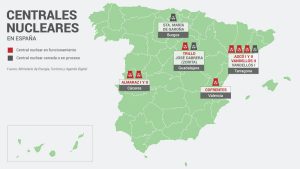
In Spain, “the future for nuclear is looking bleak” according to reporter Paige Lambermont. In 2019 the government decided to phase out the country’s seven nuclear reactors. Prime Minister Pedro Sánchez of the Spanish Socialist Workers’ Party formed a new government coalition last fall that quickly reaffirmed its once-stalled commitment to closing Spain’s reactors. On December 26, the Council of Ministers (the main decision-making body of Spain’s government) approved the Seventh General Plan for Radioactive Waste, which includes a final schedule for decommissioning the reactors. The first shutdown will occur in 2027, and the last in 2035.


— Competitive Enterprise Institute, Jan. 21, 2024

Filed Under: Environment, Newsletter Archives, Nuclear Power, Quarterly Newsletter, Renewable Energy

April 18, 2024 by Nukewatch Leave a Comment

St. Lucie Reactor Coolant System Leak

By Lindsay Potter

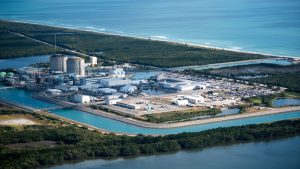
On January 3, staff at Florida Power and Light’s St. Lucie nuclear power station on Hutchinson Island north of West Palm Beach, reported moving reactor Unit 2 to cold shutdown after showing signs of a coolant system leak that “rendered both trains of high-pressure safety injection inoperable,” according to the Nuclear Regulatory Commission incident summary. The incident report attributes the leak to the “degraded condition” of the reactor. The two reactors began operating in 1976 and 1983. In 2003, they were both granted 20-year license renewals, extending operation until 2036 and 2043. Both units are currently in the process of seeking another 20-year extension that would bring their operating lifetime up to 80 years — double the 40-year lifespan originally prescribed for nuclear reactors — whose many parts are subject to degradation by corrosion, heat, vibration, embrittlement, and irradiation. The NRC has yet to issue the current request for a license extension and the Draft Environmental Impact Statement and Safety Review processes are still underway. — nrc.gov, Jan. 4, 2024

tcpalm.com

Filed Under: Environment, Newsletter Archives, Nuclear Power, Quarterly Newsletter

April 18, 2024 by Nukewatch Leave a Comment

Dirty Reactors Financed by Dirty Politics

By John LaForge

Touted by PR hucksters as a crucial element to fight climate change, today’s lying about “clean nuclear” is easy to debunk if people only hear the facts. Nuclear waste remains toxic for eons and must be containerized at a cost that can’t even be estimated. And the dirty business begins long before reactors operate, with uranium mining, milling, and fuel fabrication all leaving water pollution to poison their surroundings for — here’s that word again — eons. Dirty mechanics and waste products aren’t the nuclear industry’s only nastiness. It turns out the inside players need the dirtiest of politics to keep their reactors both “popular” and running-while-bankrupt.

In Ohio, former executives of FirstEnergy corporation have finally been indicted in the state’s famous $60-million bribery scandal. The giant swindle has already seen former speaker of the Ohio House of Representatives Larry Householder and former state republican party chair Matt Borges sent to prison. The politicians used the bribes to pass reactor bail-out legislation that kept retirement-age reactors operating in Ohio though they couldn’t compete against renewables.

“Former Public Utilities Commission of Ohio Chairman Sam Randazzo, left, and former FirstEnergy CEO Charles “Chuck” Jones in Summit County Court attend an arraignment hearing.” © PHIL MASTURZO, AKRON BEACON JOURNAL

As Taylor Giorno reported for The Hill, FirstEnergy paid a $230 million fine and fired some executives, but this is the first time anyone from FirstEnergy has faced criminal charges in the bribery investigation. Former FirstEnergy CEO Charles Jones and former VP Michael Dowling are accused of joining a “largescale covert scheme to corrupt the chair of the Ohio Public Utilities Commission (PUCO), steal millions of dollars of cash from a large publicly traded electric utility, forge a spurious contract to conceal a cash ‘side deal’ in a PUCO ratemaking case, steal millions of dollars from a non-profit trade group representing large industrial energy users, and tamper with government records involving financial public disclosures and disclosures of the identities of paid lobbyists,” according to the indictment.

Former PUCO chair Sam Randazzo was also indicted by a federal grand jury last year. “This indictment is about more than one piece of legislation. It is about the hostile capture of a significant portion of Ohio’s state government by deception, betrayal, and dishonesty,” said Ohio attorney general Dave Yost.

How much bribery has been involved at other points on the nuclear fuel chain, we can only imagine. When Nukewatch worked with Canadian activists fighting a waste dump next to Lake Ontario, the locals said they lived “in the bribery zone.” Maybe we all do. — The Hill and AP, Feb. 12, 2024

Filed Under: Newsletter Archives, Nuclear Power, Quarterly Newsletter

  • « Previous Page
  • 1
  • …
  • 21
  • 22
  • 23
  • 24
  • 25
  • …
  • 94
  • Next Page »

Stay Connected

  • Facebook
  • Twitter

Subscribe

Donate

Categories

  • B61 Bombs in Europe
  • Chernobyl
  • Counterfeit Reactor Parts
  • Depleted Uranium
  • Direct Action
  • Environment
  • Environmental Justice
  • Fukushima
  • Lake Superior Barrels
  • Military Spending
  • Newsletter Archives
  • North Korea
  • Nuclear Power
  • Nuclear Weapons
  • Office News
  • On The Bright Side
  • Photo Gallery
  • Protect the Water Close Xcel's Monticello Reactor
  • Quarterly Newsletter
  • Radiation Exposure
  • Radioactive Waste
  • Renewable Energy
  • Social Issues
  • Sulfide Mining
  • Through the Prism of Nonviolence
  • Uncategorized
  • Uranium Mining
  • US Bombs Out of Germany
  • War
  • Weekly Column

Contact Us

(715) 472-4185
nukewatch1@lakeland.ws

Address:
740A Round Lake Road
Luck, Wisconsin 54853
USA

Donate To Nukewatch

News & Information on Nuclear Weapons,
Power, Waste & Nonviolent Resistance

Stay Connected

  • Facebook
  • Twitter

© 2026 · Nukewatch