Nukewatch

Working for a nuclear-free future since 1979

  • Issues
    • Direct Action
    • Environmental Justice
    • Nuclear Power
      • Chernobyl
      • Fukushima
    • Nuclear Weapons
    • On The Bright Side
    • Radiation Exposure
    • Radioactive Waste
    • Renewable Energy
    • Uranium Mining
    • US Bombs Out of Germany
  • Quarterly Newsletter
    • Quarterly Newsletter
    • Newsletter Archives
  • Resources
    • Nuclear Heartland Book
    • Fact Sheets
    • Reports, Studies & Publications
      • The New Nuclear Weapons: $1.74 Trillion for H-bomb Profiteers and Fake Cleanups
      • Nuclear Power: Dead In the Water It Poisoned
      • Thorium Fuel’s Advantages as Mythical as Thor
      • Greenpeace on Fukushima 2016
      • Drinking Water at Risk: Toxic Military Wastes Haunt Lake Superior
    • Nukewatch in the News
    • Links
    • Videos
  • About
    • About Nukewatch
    • Contact Us
  • Get Involved
    • Action Alerts!
    • Calendar
  • Donate

June 21, 2026 by Nukewatch Leave a Comment

From the archives: 1971 Monticello Reactor Releases Led to Mpls Water Shutoff

Editor’s note: A look into archives of Minneapolis papers from the 1970s shows that the Monticello reactor has poisoned the Mississippi River in the past, and one of its spills was so radioactive that Minneapolis shut down its drinking water intake from the river. Verbatim transcripts from the papers follow.
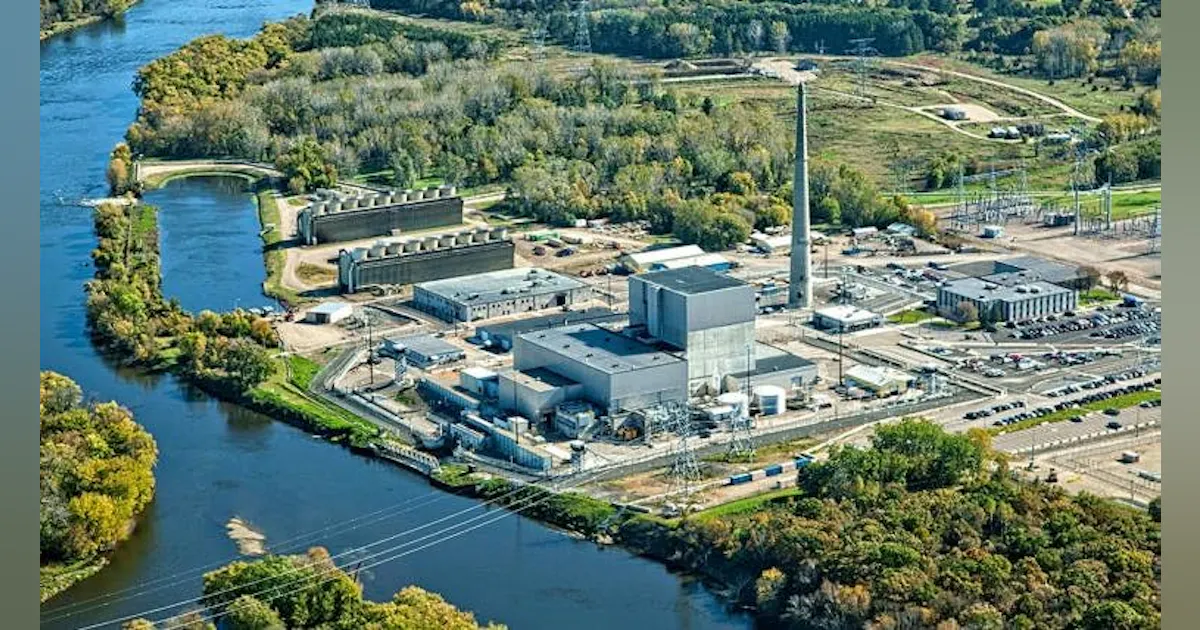
Xcel Energy to Extend Operations of Monticello Nuclear Generating Plant ...

NSP to delay atom discharges

The Minneapolis Star, Wed., Nov. 24, 1971, p.23

Northern States Power Co. [now Xcel] has tentatively agreed to hold up on any future unexpected discharge of radioactive water from its Monticello nuclear power plant until state agencies can analyze the water, a Minnesota Health Department official said today.

Russell Frazier, chief of the laboratory analytical services of the department, said the agreement with NSP on future procedures was made after what he termed “the high drama which accompanied the release of a minor amount of radioactivity from the Monticello reactor.”

Frazier said NSP has tentatively agreed to notify the state health department and the Minnesota Pollution Control Agency.

He said that there was confusion and a lack of data last weekend when NSP decided to drain about 50,000 gallons of low-level radioactive water from the Monticello plant into the Mississippi to permit the repair of a loose baffle.

Fraizer said a “purely precautionary decision” was made by health officials and the Minneapolis Water Department to shut down the city water intake pump, which supplies drinking water to the city at a point about 30 miles downstream from Monticello.

“The action is no way a measure of the importance to be attached to the Monticello release,” he said.

Radioactive discharge fits state standards

The Minneapolis Star Tribune, Tue., Dec. 21, 1971, p.16

Northern States Power (NSP) Company’s Monticello nuclear plant Monday discharged 8,500 gallons of radioactive water that met state standards for the isotope cesium 137.

The 4 p.m. release, object of a week-long dispute between the firm and the Minnesota Pollution Control Agency (PCA), was analyzed twice by PCA and Minnesota Health Department scientists.

First it was found to contain 4.1 microcuries of cesium 137, and then 5.7 microcuries. But an average of the two tests, 4.9 microcuries, fell below the state’s weekly maximum limit of 5.3 microcuries for the isotope, said Grant Merritt, PCA director.

The discharge came after NSP exchanged the water within the plant to produce a “cleaner” release. Earlier, PCA measurement had shown the cesium 137 to be about twice the amount allowed by the disputed state standards, although well below limits set by the U.S. Atomic Energy Commission (AEC).

PCA technicians today hope to sample a second batch of about 6,500 gallons that NSP says also must be discharged as part of a maintenance procedure.

Since NSP earlier said it would not discharge within 48 hours after a sample is taken, PCA officials said the second batch isn’t expected to be released before Thursday.

An NSP spokesman confirmed yesterday’s release but would not answer questions about the sampling or timing of the second discharge.

Merritt maintains that NSP earlier committed itself to meeting state standards, even though federal courts thus far have held that only AEC regulations apply to nuclear plants. The state restrictions on cesium 137 are from 100,000 to 100 million times more stringent than those of the AEC.

A-water released by NSP

The Minneapolis Star, Wed., Dec. 29, 1971, p.29

Five thousand gallons of radioactive water were released from the Monticello nuclear power plant into the Mississippi River today, according to a spokesman for the Northern States Power Co.

A Minnesota Pollution Control Agency spokesman said tests of the water showed that the levels of radioactive cesium-137 were 45 percent below state standards.

The PCA spokesman said overall radiation in the water was even lower than that.

The water is the second of two discharges NSP said it needed to make because of modification and maintenance work being done at the nuclear plant.

PCA officials had managed to get the first discharge delayed while they investigated radiation levels.

By splitting the discharge into two batches and waiting a week before letting the second one go, NSP was able to keep radiation levels below rigid state weekly standards.

Today’s discharge began at 6 a.m. and an [NSP] spokesman said it normally would take five hours.


Filed Under: Environment, Newsletter Archives, Nuclear Power, Protect the Water Close Xcel's Monticello Reactor, Quarterly Newsletter, Radiation Exposure

June 5, 2026 by Nukewatch Leave a Comment

Radiation Exposure Rule Changes to Increase Cancer Rates

PLEASE SEND COMMENTS TO THE NUCLEAR REGULATORY COMMISSION

John LaForge

Image by Dan Meyers.

Among the hundreds of Trump White House executive orders (EO), No. 14300 directs the Nuclear Regulatory Commission (NRC) to weaken its long-standing radiation exposure rule, “Standards for Protection Against Radiation.

Based on the EO, an upcoming NRC rule change calls for setting a radiation exposure “threshold” or level below which your exposure to ionizing radiation “would not count” or would be considered “never to have occurred.”

The proposed NRC exposure rules will be 5-100 times less protective than current law, and will likely be based on the archaic “Reference Man” standard, the grossly outdated radiation risk model. “Reference Man” represents a young adult male, and so the standard both ignores and denies the greater harm exposure to the fetus, to infants, to children, and to women, done by a given radiation exposure.

The EO would impact people in thousands of communities surrounding the 94 operating nuclear reactors in the United States by increasing exposure to radiation from routine offsite emissions: from reactors, nuclear weapons facilities, nuclear material transport systems, and nuclear waste sites.

Forty citizen organizations, including the national nonprofit Physicians for Social Responsibility, wrote to federal officials warning of public health consequences of Trump’s EO. The joint letter points out sharply disproportionate impacts on women and children from weakening existing radiation exposure standards and calls for strengthening them.

But vested interests in the nuclear industry want to save money by attacking the basis of NRC regulation, the “Linear No Threshold” or LNT risk model.

Decades of published peer-reviewed research support the LNT model, including the authoritative National Academy of Sciences report “Biological Effects of Ionizing Radiation, VII Phase 2” (BEIR VII), as well as many studies of nuclear industry and nuclear weapons production workers.

One industry-sponsored “Petition for Rule-making” appealed to the NRC in 2015 and it triggered a formal review of the ‘no threshold” model. The NRC then soundly rejected the petition in a 2021 decision. In fact, the NRC reaffirmed the scientific basis and global consensus that no radiation exposure is so small as to carry no risk of harmful effects. Well-documented findings show that even exposures so small that they cannot be measured may, sometimes, result in fatal cancer. Reducing the risk to zero requires zero radiation exposure.

A detailed analysis of the proposed rule change and its dire consequences was published by Princeton’s Frank von Hippel in the May 27 Bulletin of the Atomic Scientists. For more about sending comments to the NRC, see:   www.nirs.org/radiation or  www.radiationproject.org/online .

NRC rule changes, and its abandonment of the no-threshold model, are scheduled to be issued as a proposal on June 8, 2026, marking the start of a 30-day public comment period. We must oppose this dangerous deregulation and demand more, not less, protection against radiation. ###

— A version of this article appeared at Counterpunch, June 5-7, 2026

Filed Under: Environment, Environmental Justice, Nuclear Power, Radiation Exposure, Radioactive Waste, Social Issues, Weekly Column

March 2, 2026 by Nukewatch Leave a Comment

Monticello Reactor is Down for Repairs Until at Least March 20

The Boiling Water Reactor (BWR) | Nuclear Regulatory Commission

The 55-year-old Monticello nuclear power reactor, a General Electric designed boiling water reactor like the melted and exploded Fukushima reactors in Japan, leaked almost 1-million gallons of highly radioactive cooling water into the ground under the reactor complex and some of the radioactive tritium reached the Mississippi River which is used for drinking water.

By John LaForge

The 55-year-old Monticello nuclear reactor owned by Xcel Energy was unexpectedly shut down Friday, Feb. 20, and the Monticello Times reports the reactor will be offline for at least 30 days, maybe more to “perform maintenance” and to “determine appropriate repairs.”

No regional or national news service made mention of Xcel’s reactor outage in spite of the “over 1 million users” that rely on its electricity, according to Xcel’s website. The reasons for the embarrassing outage were not made public by the company, which did not name the equipment that is in need of repair.

Further, the Nuclear Regulatory Commission made no announcement of the shutdown, and NRC Sr. Public Affairs Officer Viktoria Mitlyng wrote to Nukewatch Feb. 26 that, “The shutdown at Monticello was a planned maintenance shutdwon (sic) and did not require formal notifications. It’s a routine practice for nuclear plants.” The lack of an NRC notification might explain why not a single state-wide Minnesota news service made mention of the outage.

According to Xcel spokesperson Theo Keith, who spoke to editor Lauren Flaum of The Monticello Times, the shutdown “is not related to the tritium leak discovered at the facility in 2023.” Tritium is the radioactive form of hydrogen, and Mr. Keith’s reference is to the leak of nearly one-million gallons of highly radioactive coolant that contaminated groundwater under the reactor site, groundwater that reached the Mississippi River which is a drinking water source for Minneapolis and St. Paul.

Xcel explained to the press that the regional electrical power grid draws from multiple generators across the Midwest, and that the mix of providers allows uninterrupted service even when individual systems are taken offline.

Myths busted by Monticello shutdown

The shutdown debunks two principal myths endlessly repeated by the nuclear industry.

First, that nuclear reactors provide uninterrupted generation of electricity. The Nuclear Energy Institute’s website page-1 slogan is: “Only nuclear has the power to … deliver 24/7/365.” Let’s call BS. As the NRC’s Mitlyng said, “It’s a routine practice” for nuclear plants to shut down. Nuclear reactors are taken offline regularly and repeatedly by unplanned emergencies, by unexpected repair work, by refueling outages, and by emergencies and accidents that plague the youngest and the oldest reactors. Monticello is the sixth oldest in the United States.

Second: Promoters of commercial nuclear reactors say their electricity “is needed to keep the lights on.” This is BS again, as Xcel told the press that it “does not anticipate any impact to electric service while the plant is offline.”

Imagine a nuclear-free Mississippi River watershed. Xcel’s Monticello reactor isn’t needed to keep the lights on, and it’s so old that it can’t operate without major equipment repairs severe enough to gut Xcel’s profit-taking for thirty days. ###

Filed Under: Environment, Environmental Justice, Fukushima, Nuclear Power, Protect the Water Close Xcel's Monticello Reactor, Weekly Column

February 4, 2026 by Nukewatch Leave a Comment

Why a National Cancer Study Near U.S. Reactors Must be Conducted Before Any New Expansion of Nuclear Power

By Joseph Mangano and Robert Alvarez

Editor’s note: This article was published after the passing of Robert Alvarez. The draft manuscript was prepared by both authors. It was edited by and reprinted from the Bulletin of the Atomic Scientists.

Nuclear power reactors were introduced in the United States during the 1950s. Despite concerns about potential health hazards posed by routine radioactive emissions into the environment, few research articles have been published in professional journals. The only national study of cancer near reactors was conducted by federal researchers in the 1980s and found no association between proximity to reactors and cancer risk. But since then, articles on individual nuclear facilities have documented elevated cancer rates in local populations.

Current proposals to expand U.S. nuclear power, along with concerns about protracted exposures near aging reactors, make it imperative that an objective, current national study of cancer near existing reactors be conducted.

Members of the Coalition for a Nuclear-Free Mississippi River displayed this banner over Hwy I-94 on Nov. 20 near Monticello, Minnesota. The Coalition calls for the shutdown of the 54-year-old reactor licensed to run until 2050 despite a massive 2022 tritium leak that reached the Mississippi River.
Photo: Sarah Martin

Not required, not conducted.

The first U.S. commercial nuclear power reactor in Shippingport, near Pittsburgh, Pennsylvania, began operating in 1957. Eventually, 129 more reactors were built, 94 of which are still active today. From the outset, questions were raised about potential health hazards to people living near reactors, who were exposed to routine radioactive emissions into the air and water. Today, relatively little is known about the risk of cancer and other diseases from exposures to reactor emissions.

One explanation for this is the lack of regulations. Companies that operate nuclear reactors must measure and publicly report annual amounts of radioactive emissions into the environment, along with concentrations in air, water, and food. Keeping levels below “permissible limits” allows operators to retain their license. But no regulations have ever mandated that studies of local cancer rates be performed, or that cancer incidence or mortality does not exceed a particular rate.

The earliest analyses of cancer near U.S. reactors focused on nuclear weapons workers. In 1964, occupational health expert Thomas Mancuso received an Atomic Energy Commission (AEC) grant to study cancer in workers at five sites. When Mancuso published results showing that cancer death rates were higher than expected, even in workers exposed to low-level doses, the AEC terminated his grant, stating he had reached retirement age. (Mancuso had no plans to retire.)

In late 1974, Washington State’s Health Department compared the mortality of different occupations in the state and found that:

“Men who worked at the Atomic Energy Commission Hanford facility in Richland Washington showed increased mortality from cancer, especially in men under age 64 at death.” [1]

The state decided not to make these findings public after Hanford’s scientists quietly verified the state’s findings. The heavy-handed effort to suppress the work of Mancuso — and that of his colleagues, Alice Stewart and George Kneale — helped speed the removal of the AEC from the oversight of worker health studies.

In 1990, following an investigation by the Governmental Affairs Committee in which the Energy Department’s contractors destroyed 20 filing cabinets of Oak Ridge hospital records of exposed workers set aside by Mancuso, the Energy Department transferred funds and management to the National Institute for Occupational Safety and Health, the federal agency responsible for research and policy recommendations for the prevention of work-related health risks. By late 1999, in addition to Hanford, workers at 13 other nuclear facilities were found to be dying from cancers and other diseases following exposure to radiation and other hazardous substances. These data provided the evidence for the passage of the Energy Employees Occupational Illness Program Compensation Act in 2000. Currently, 109,000 nuclear workers have been awarded compensation for illnesses and deaths following exposure to ionizing radiation and other toxic substances.

Studies of nuclear weapons plant workers have continued. A 2023 journal article included 310,000 workers at American, British, and French nuclear weapons plants, tracking their health status for an average of 35 years. The article documented a significant association between protracted occupational exposures and the risk of dying of cancer, even among those with very low exposure levels — well below those who survived the atomic bombs at Hiroshima and Nagasaki.

Despite these findings, government officials have strongly resisted any evidence that radioactive exposures from nuclear reactors are associated with a higher risk of cancer. As a result, few academic-based researchers — many whose research funding was highly dependent on government grants — addressed the topic, fearful of professional repercussions. These factors denied the public knowledge about the accrued risk of cancer near nuclear power plants, even as more of them started operating.

Numerous studies have shown increased risk of cancer and death for those living near reactors. Photo: nuclearfreemississippi.wordpress.com

A single national study — and a cancelled one

One of the few independent research articles that analyzed cases of cancer near a U.S. nuclear plant was published in 1987 by Richard Clapp, a Boston University epidemiologist. The study documented elevated rates of leukemia among persons who lived near or worked at the Pilgrim nuclear power plant in Plymouth, Massachusetts. Results were reported in the media, and word reached Democratic Sen. Ted Kennedy of Massachusetts, who was chairing the Senate Committee on Labor and Human Resources.

In January 1988, Kennedy wrote James Wyngaarden, then-director of the National Institutes of Health (NIH). [2] Citing the 1979 partial reactor core meltdown at the Three Mile Island nuclear plant and Clapp’s recent Pilgrim study, Kennedy urged the NIH “to conduct an appropriate inquiry into this entire question” of whether releases from nuclear plants were a causal factor in cancer. Wyngaarden replied to Kennedy in January, stating the Pilgrim article and other such studies in the United Kingdom:

“has led us to initiate a large-scale evaluation of cancer deaths occurring among persons living near the over 100 reactors operating in the United States … from the 1950s through the early 1980s with reactor operations.” [3]

Wyngaarden’s assertion that the NIH had already initiated a comprehensive study probably surprised Kennedy, who just days earlier had called for such an effort to begin. Wyngaarden’s response also showed that he was skeptical about the possibility that reactor emissions could raise cancer risk:

“The most serious health impact of the Three Mile Island accident that can be identified with certainty is mental stress to those living closest to the plant, particularly pregnant women and those with teenagers and young children.”

The National Cancer Institute committee of researchers produced a report in July 1990. [4] It included cancer mortality data from 1950-1984 for home and adjacent counties near 10 weapons plants and 52 power plants, covering over 900,000 local cancer deaths.

The report’s introduction mentioned 31 peer-reviewed journal articles that had found elevated cancer rates near nuclear facilities — with only three from the United States: the Clapp study in The Lancet scientific journal, a follow-up letter to Lancet, and an article on the San Onofre plant in California. The National Cancer Institute committee concluded that “the survey has produced no evidence that an excess occurrence of cancer has resulted from living near nuclear facilities.”

The report, however, noted several limitations.

Many of the 62 plants had only been operating for a relatively small number of years, not enough time for the effects of radiogenic exposure to appear in workers and the nearby population. Moreover, cancer incidence data were only available for four plants, as most states did not have established cancer registries. Some cancers sensitive to radiation — such as childhood leukemia and thyroid cancer — have high survival rates, making incidence data more helpful than mortality.

In May 2009, the U.S. Nuclear Regulatory Commission (NRC) — a successor to the old AEC — issued a public announcement of its intention to conduct an updated analysis of cancer near US nuclear plants. Initially, the NRC selected the Oak Ridge Institute for Science and Education to conduct the study. But after concerns were raised with the selection, led by then-Democratic Rep. Ed Markey of Massachusetts, the NRC reassigned the project to the National Academy of Sciences.

The Academy held multiple meetings and heard testimony from scientists and citizens. It issued a first report recommending study designs and a feasibility study using seven nuclear plants. A second report addressed pilot planning and execution. But actual results were never produced, and in September 2015, the NRC cancelled the study, citing the $8 million required in federal funds and claiming that the levels of radioactive emissions were too low to raise cancer risk anyway:

“Continuing the work was impractical, given the significant amount of time and resources needed and the agency’s current budget constraints. The NRC continues to find U.S. nuclear power plants comply with strict requirements that limit radiation releases from routine operations. The NRC and state agencies regularly analyze environmental samples from near the plants. These analyses show the releases, when they occur, are too small to cause observable increases in cancer risk near the facilities.”

The abrupt halt of the study drew numerous comments opposing the move. A Boston Globe editorial stated that in killing the nuclear cancer study, the NRC acted “more like an industry booster than a watchdog.”

Studies on individual plants: Few in number, opposed by government.

Other than the 1990 National Cancer Institute study, little research on cancer near nuclear reactors has been published in scientific journals, and those studies that have been published often focused on a single plant. The most-studied plant was Three Mile Island, the site of a partial meltdown in 1979. But many journal articles on the meltdown’s health effects addressed stress-related illness and psychological suffering — not radiation-induced cancer.

It was not until 1990 that a peer-reviewed journal article was published on cancer near Three Mile Island. A Columbia University team reported that newly diagnosed cancer cases in the 10-mile radius around the plant had increased by 64 percent (1,722 to 2,831) in the five years after the meltdown. But the authors concluded there was no connection between these accrued cases of cancer and radioactive releases.

In 1997, a team from the University of North Carolina reanalyzed the data from the Columbia University study and did find an association between the meltdown’s releases and increased cancer risk. The Columbia University team blasted the University of North Carolina reanalysis, calling it “poor science … advocacy parading as science… full of misconceptions, misinterpretations, mistaken logic, and simple error.”

Since the late 1980s, the Radiation and Public Health Project research group — a New York-based nonprofit educational and scientific organization directed by one of the authors (Joseph Mangano) — published several dozen journal articles on radiation exposure and cancer, including trends and patterns in thyroid cancer near the Indian Point plant in New York, all cancers near the Salem plant in New Jersey, and childhood cancer near 14 plants in the Eastern United States. The research group also found a link between trends in child cancer and strontium-90 (a radioactive isotope produced during the fission of uranium-235 in reactors) in baby teeth near the Indian Point and Oyster Creek (New Jersey) plants. This is the only study to ever analyze in-body radioactivity levels in the population living near U.S. nuclear power plants.

In early 2024, Harvard University professor Petros Koutrakis and his research team launched two studies. The first study examined associations between cancer incidence in Massachusetts and proximity to nuclear power plants in New England. The second study involved collecting indoor dust particles and outdoor soil near the Pilgrim nuclear plant, where radioactive particles emitted by the facility were identified.

National study of cancer near reactors needed

Many plans for expanding U.S. nuclear power are now being proposed. The NRC has started granting life extension licenses for aging reactors for up to 80 years. Expansion plans also include restarting permanently closed reactors and building new reactors, including so-called “small modular” and “advanced” reactors. After the 2023 UN climate summit in Dubai, the United States and 21 other countries pledged to triple the global nuclear energy capacity by 2050. The federal government and some states have pledged billions of dollars in assistance to help achieve this goal.

These ambitious expansion plans are being proposed with little to no regard for the risks to human health from living and working near nuclear reactors. Many industry leaders and government officials proudly claim nuclear power to be an “emission-free” energy source, but they ignore the health risks that routine radioactive emissions from reactors pose to the public, including cancer and other diseases. To address these claims, a new national study of cancer trends around the 94 existing nuclear reactors (nearly half of which are now 45 years old or more) must be conducted before any further expansion of nuclear power in the United States.

Such a national study of the health risks posed by existing reactors should:

– At a minimum, update the findings from the 1990 National Cancer Institute study;

– Estimate the time and resources needed to produce the first findings in less than two years.

– Maximize the use of existing publicly available data sets; for instance, the Centers for Disease
Control and Prevention website includes county-specific mortality data from 1968 to 2024.

– Make results available to independent reviewers so they can reproduce the study;

– Be funded by the federal government, which regulates nuclear power reactors;

– Include only researchers who have no ties with the nuclear industry or the federal government, and are
experts on the health effects of reactor emissions, having published in peer-reviewed journals already;

– Make the results public by publishing them in peer-reviewed scientific journals and presenting them in public events alongside proposed plans for the expansion of nuclear power in the United States.

There can be no safe and publicly accepted expansion of nuclear power without an informed and transparent discussion over past and current health risks from U.S. reactors to the population.

For footnotes see https://thebulletin.org/2025/09/why-a-national-cancer-study-near-us-reactors-must-be-conducted-before-any-new-expansion-of-nuclear-power/

Filed Under: Newsletter Archives, Nuclear Power, Quarterly Newsletter, Radioactive Waste

February 4, 2026 by Nukewatch Leave a Comment

Radioactive Contamination of Shrimp, Cloves, Shoes, Zinc Powder

The U.S. Food and Drug Admin. issued a recall of shrimp contaminated with cesium-137 but the radioactive trail extends further. Photo: FDA.
Ultimate Source of Cesium-137 in Consumer Goods Still Unclear, Criminal Charges Pending

By John LaForge

The widespread cesium-137 contamination that spread far beyond an industrial area in Indonesia has led to radioactive contamination of exported shrimp, cloves, shoe parts, and concentrated zinc powder. The contaminated products were exported to the United States, the Netherlands, and possibly elsewhere.

The discovery of shipping containers contaminated with cesium-137 at several U.S. seaports last August led the U.S. Food and Drug Administration (FDA) to urge a recall of tons of the frozen shrimp. Recalls were then ordered by Walmart, Kroger and dozens of other grocers in as many as 29 states. At that time the source of the radioactivity was unknown and a matter of intense investigation.

Natural News reported Sep. 29 that “millions of pounds of contaminated shrimp were sold at major retailers before recalls, exposing a systemic failure in food safety.”

Cesium-137, or Cs-137 for short, is a dangerous, cancer-causing form of radioactive waste not found in nature. It is only produced inside operating nuclear reactor cores, bz the detonation of nuclear weapons, or in the processing of waste reactor fuel. If ingested, cesium 137 tends to concentrate in soft tissue and muscles where hot particles irridate surounding tissue.

Laboratory testing has found that the contaminated shrimp in the United States contained an Cs-137 activity concentration of 68.48 becquerels per kilogram (Bq/kg), well below the U.S. FDA’s arbitrary permitted maximum of 1,200 Bq/kg in general foodstuffs.  (Food Safety magazine, Oct. 6, 2025,

https://www.food-safety.com/articles/10757-indonesian-officials-find-cause-of-cs-137-contamination-behind-radioactive-shrimp )

The FDA’s allowable level Cs-137 in food is controversially 12 times higher than what’s permitted in Japan. Today the U.S. cesium contamination limit of 1,200 Bq/kg compares to Japan’s limit of 100 Bq/kg.  http://www.japanprobe.com/2011/12/27/japans-new-limits-for-radiation-in-food-20-times-stricter-than-american-and-eu-standards/

Cesium-137 emits harmful ionizing beta and gama radiation. When particles of Cs-137 are ingested they can spread through the bloodstream and distribute across muscle and other soft tissues where the radiation will bombard surrounding tissue. Interviewed by Tempo English, Professor of Nuclear Medicine at Padjadjaran University, Dr. Achmad Hussein Kartamihardja sais the radioactive half-life of Cs-137 is 30-years, so “It takes 30 years for half of the cesium to disappear from the body.” (https://en.tempo.co/read/2055242/what-happens-inside-the-body-contaminated-with-cesium-137)

Investigations and declarations of decontamination

Last September, investigators with Indonesia’s hastily assembled “Cesium-137 Radiation Hazard Management Task Force” reported that the Cs-137 contamination came from inside the 12-square-mile Modern Cikande Industrial Estate, or MCIE, on west end of the island of Java, 40 miles west of Jakarta (the world’s most populous city with 42 million). The  HYPERLINK “https://www.businesstimes.com.sg/international/asean/indonesia-races-determine-extent-radioactive-contamination-industrial-zone”  The complex includes 270 companies involved in everything from food processing and automitive components, to scrap metal smelting and materials production for construction and manufacturing.

The Asean Business Times reported Oct. 3 that Indonesian inspectors found ten spots of cesium-137 contamination inside the MCIE “with high levels of exposure.” Environment Minister Hanif Faisol Nurofiq said then, “We have declared PT PMT (Peter Metal Technology) as the epicenter [sic] with a 5 kilometer perimeter.”

On Oct. 15, Al Jazeera reported that the government’s investigation found cesium “contamination was spread through airborne dust from a smelting plant” and that authorities suspect it might “have been caused by scrap metal imports.” Tempo English noted Nov. 17  that the while the Cs-137 contamination originated from radioactive scrap metal used in PT PMT’s smelting process, and that “radioactive particles” were dispersed, it claimed in error that the Cs-137 was blown to other points “within the industrial area.”

The Indonesian news agency Antara reported Oct. 15 that Bara Hasibaun, head of communications for the cesium task force, confirmed that “Cs-137 contamination spread through the air from PT PMT’s facility.” Radiation levels at one site in the MCIE were recorded to be 875,000 times routine background (https://cbrneworld.com/news/cesium-137-contamination-spreads-with-levels-thousands-of-times-higher-than-normal ) radiation, and Indonesia’s Ministry of Industry identified a total of 24 factories in the MCIE that had been contaminated with the Cs-137.

Tempo news service in Indonesia reported that by Nov. 17 (HYPERLINK “https://en.tempo.co/read/2066429/all-22-cikande-factories-exposed-to-cesium-137-have-been-fully-decontaminated ) some 22 of the factories and 13 junkyards in the MCIE had been “decontaminated,” and that Rasio Ridho Sani, the chair of the Cs-137 Handling Task Force, said that decontamination efforts inside the MICE were ongoing.

“Up to this point, 975 tons of Cs-137 contaminated material have been successfully moved. The material is currently stored temporarily at the PT PMT” grounds Sani said, according to the Tempo Nov. 17. By Dec. 4, Tempo English was reporting that 1,136 tons had been collected and stored at PT PMT. (https://en.tempo.co/read/2071004/environment-ministry-seeks-additional-rp28bn-for-cesium-137-remediation)

[Indonesia’s collection of 1,000+ tons of material contaminated by the accidental dispersal of cesium-137 is a tiny echo of the unrelated and far greater decontamination project underway in Japan, where some 20-million tons of conataminated material have been collected in bags from around the devastated Fukushima-1 nuclear reactor complex.]

The head of Indonesia’s Nuclear Energy Research Organization at the National Research and Innovation Agency (BRIN), Syaiful Bakhri, told the press the contaminated material will be stored at the PT PMT company site inside the MCIE “until the radioactive contamination naturally decays,” Tempo reported Oct. 29. The BRINCs-137 is not “natural”  is only created in operating nuclear reactors or nuclear weapons blasts and that it persists in the environment for 300 years while it “naturally” decays.

Contaminated cloves, shoe soles, powdered zinc

An area far wider than the 12-square-mile industrial zone of the MCIE was evidently contaminated with the Cs-137 dispersed from the smoke stacks of  PT PMT’s smelting furnaces.

ABC News reported Oct. 15, 2025 — well after the August shrimp recall — that cesium-137 was found in cloves that were shipped to California in September from a clove plantation in far-removed Lampung province.

Lampung is not even on the island of Java, but the neighboring island of Sumatra, across the Sunda Strait, and over 15 miles west of the MCIE industrial zone. The discovery of the contaminated cloves from the plantation owned by PT Natural Java Spice moved the U.S. FDA to halt all imports of spices processed by the firm. Here again, the U.S., like Indonesia, firmly slammed the barn door after the horse escaped.

The 8/15/25 ABC News report also noted that Bara Hasibuan of the cesium task force declared in a written statement that “The government is moving quickly to localize this contamination so that it does not spread to other areas.”

This absurd assurance was made after the airborne plume of Cs-137 had apparently moved miles beyond the PT PMT smelting site, contaminating a clove plantation over 15 miles to the west.

Hasibuan’s Oct. 15 letter from the task force also noted that it had “information that shoe soles exported to the U.S. were found to be contaminated with Cs-137.”

The Indonesian news agency Antara reported Nov. 12 that customs officials in the Netherlands found cesium-137 contamination in imported sneakers from Indonesia a month prior to the August recall of the frozen shrimp in the United States.

Hasibaun said the shoe soles were produced by the company PT Bahari Makmur Sejahtera (BMS), based in Cikande about five kilometers [ 3.1 miles] outside Cikande’s MCIE industrial zone. On Nov. 13, Tempo English news service reported the United States had returned two shipping containers filled with the cesium-contaminated shoe soles to Indonesia. The same article listed 24 individual companies in the MCIE that had been contaminated and that Hasibaun wrote in a Nov. 12 statement that “the government has completed the decontamination of all factories contaminated with Cesium-137.”


Health risks and evacuation, 1,500 exposed to cesium-137

The dangerous dispersal of cesium-137 forced Indonesia’s Serang Regency Government to evacuate at least 91 people from a village in the vicinity of the industrial estate in order to conduct decontamination services. The head of the task force’s Mitigation and Cs-137 Contamination Management Division, Rasio Ridho Sani, reportedly said on Oct. 27 that, “during the decontamination process, residents are at risk of exposure to airborne radioactive dust.” The federal Ministry of Health reported that 15 individuals tested positive for exposure to the cancer-causing radioactive cesium Oct. 16.

On Oct. 3, Asean Business Times reported that government authorities had examined over 1,500 local people and workers and found nine were exposed, according to Hasibuan, the investigation spokesperson. The exposed persons were said to be being “treated.”

Philippine exports to Indonesia

The broadening cesium contamination scandal now includes shoe parts exported to the United States and the Netherlands, and concentrated zinc powder imported from the Philippines.

The MCIE scrap metal smelting complex evidently imported highly contaminated metal scrap or waste from the Philippians, although the source of that hot scrap is still unknown. Now, according to importation documents, several containers of contaminated concentrated zinc powder also originated from the Philippines.

Antara reported Sept. 22, that Indonesia’s Nuclear Energy Regulatory Agency had “prevented the entry” of nine shipping containers filled with concentrated powdered zinc also contaminated with cesium-137. News reports said that monitors at the port of Tanjung Priok triggered alarms on five of the containers after they detected radioactivity up to 210 times background levels.

Zinc power is used heavily in the galvanizing of steel, making it rustproof. Its use in coating steel would make zinc a commonly imported material at the MCIE. Beyond rustproofing, zinc powder is used in batteries, paint, sun screen, rubber, cement, chemicals, as even in calamine lotion, baby powder, anti-dandruff shampoo, and diaper rash ointment.

On Oct. 19, Tempo Media in Jakarta reported that “Philippine authorities will investigate the source of a shipment of 14 containers of zinc concentrate powder, commonly used for battery powder from the Philippines to Indonesia, after the powder was found to be contaminated with … cesium-137.”

Later in October the Philippines was looking at certain steel processing facilities that allegedly supplied the zinc powder to the Chinese exporter, Zannwann International Trading, which has offices in the Philippines’ Bulacan province, and which shipped the hot zinc to Indonesia.

Early in the Cs-137 investigation, Indonesia’s Minister of Science and Technology Renato Solidum, Jr. gave the press a version of the standard industry assertion, saying, “This is likely an isolated contamination case without widespread danger to the public.”

Minister Renato’s reassurance recalls the famed undersea explorer Jacque Cousteau who said in 1998: “A common denominator, in every single nuclear accident is that before the specialists even know what has happened, they rush to the media saying, ‘There’s no danger to the public.’ They do this before they themselves know what has happened.”

— This news was gathered from reports by ABC News, Al JaZeera English, the American Nuclear Society, Antara (Indonesia’s national news agency), Asean Business Times, Asia News, CBRNe World (in the UK), CBS News, Consumer Reports, Food Safety magazine, The Guardian, The Jakarta Globe, The Jakarta  Post, NaturalNews.com, Reuters, and Tempo Media English [in the UK]

Filed Under: Environment, Newsletter Archives, Nuclear Power, Quarterly Newsletter, Radiation Exposure

  • « Previous Page
  • 1
  • …
  • 4
  • 5
  • 6
  • 7
  • 8
  • …
  • 94
  • Next Page »

Stay Connected

  • Facebook
  • Twitter

Subscribe

Donate

Categories

  • B61 Bombs in Europe
  • Chernobyl
  • Counterfeit Reactor Parts
  • Depleted Uranium
  • Direct Action
  • Environment
  • Environmental Justice
  • Fukushima
  • Lake Superior Barrels
  • Military Spending
  • Newsletter Archives
  • North Korea
  • Nuclear Power
  • Nuclear Weapons
  • Office News
  • On The Bright Side
  • Photo Gallery
  • Protect the Water Close Xcel's Monticello Reactor
  • Quarterly Newsletter
  • Radiation Exposure
  • Radioactive Waste
  • Renewable Energy
  • Social Issues
  • Sulfide Mining
  • Through the Prism of Nonviolence
  • Uncategorized
  • Uranium Mining
  • US Bombs Out of Germany
  • War
  • Weekly Column

Contact Us

(715) 472-4185
nukewatch1@lakeland.ws

Address:
740A Round Lake Road
Luck, Wisconsin 54853
USA

Donate To Nukewatch

News & Information on Nuclear Weapons,
Power, Waste & Nonviolent Resistance

Stay Connected

  • Facebook
  • Twitter

© 2026 · Nukewatch