Nukewatch

Working for a nuclear-free future since 1979

  • Issues
    • Direct Action
    • Environmental Justice
    • Nuclear Power
      • Chernobyl
      • Fukushima
    • Nuclear Weapons
    • On The Bright Side
    • Radiation Exposure
    • Radioactive Waste
    • Renewable Energy
    • Uranium Mining
    • US Bombs Out of Germany
  • Quarterly Newsletter
    • Quarterly Newsletter
    • Newsletter Archives
  • Resources
    • Nuclear Heartland Book
    • Fact Sheets
    • Reports, Studies & Publications
      • The New Nuclear Weapons: $1.74 Trillion for H-bomb Profiteers and Fake Cleanups
      • Nuclear Power: Dead In the Water It Poisoned
      • Thorium Fuel’s Advantages as Mythical as Thor
      • Greenpeace on Fukushima 2016
      • Drinking Water at Risk: Toxic Military Wastes Haunt Lake Superior
    • Nukewatch in the News
    • Links
    • Videos
  • About
    • About Nukewatch
    • Contact Us
  • Get Involved
    • Action Alerts!
    • Calendar
  • Donate

July 14, 2025 by Nukewatch Leave a Comment

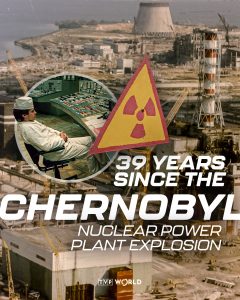
39th Chernobyl Anniversary: Radiation Warnings Still Apply

On April 26 1986, the no. 4 reactor of the Chernobyl Nuclear Power Plant exploded

The Belarusian Department for Nuclear and Radiation Safety said at a press conference on Earth Day that 39 years after the April 26, 1986, Chernobyl disaster, “60% of cesium-137 and 62% of strontium-90 have decayed.” Yekaterina Shmeleva, the Deputy Head of the Department, reported that the “area of radioactive contamination” includes about 12% of the country’s territory — some 9,600 square miles — an area bigger that either Vermont (9,249 sq mi), New Hampshire (8,969), Massachusetts (7,838) or New Jersey (7,419). Shmeleva reported that the 1,859 settlements in the “zones of radioactive contamination” have a population of about 930,000, including 181,000 children. Belta reported that Shmeleva “urged [the public] to carefully choose the places for summer foraging and to do radiation control of mushrooms and berries.” Left unsaid was that it takes thirty years for cesium-137 to decay by half, and that it will not decay completely for another 261 years — until the year 2286. In their 2006 study “The Other Chernobyl Report,” Ian Fairlie and David Sumner note that, “particularly large areas of Belarus, Ukraine and Russia were contaminated with high levels of radioactivity.” — Belarusian Telegraph Agency (Belta), April 22, 2025

Filed Under: Chernobyl, Newsletter Archives, Nuclear Power, Quarterly Newsletter

July 14, 2025 by Nukewatch Leave a Comment

Medical Journals Call for “Ending nuclear weapons, before they end us”

On May 13 The British Medical Journal and 133 other health and medical periodicals published a joint editorial confronting the leaders of nuclear weapons states, warning them that detonating a mere fraction of their nuclear arsenals could cause global famine and a mass extinction. The appeal further decried the fact that the group’s similar joint editorial in 2023 had been ignored. Some excerpts from the more recent appeal follow (with British spelling intact).

Two relatively small (by today’s standards) nuclear weapons unleashed a cataclysm of radioactive incineration on Hiroshima and Nagasaki. By the end of 1945, about 213,000 people were dead. Tens of thousands more have died from late effects of the bombings. …

In the words of [Nobel Prize] Committee Chair Jørgen Watne Frydnes, “It is naive to believe our civilisation can survive a world order in which global security depends on nuclear weapons. The world is not meant to be a prison in which we await collective annihilation.”

[There is] compelling evidence of the catastrophic consequences of nuclear war, its severe global climatic and famine consequences, and the impossibility of any effective humanitarian response.

Even a fraction of the current arsenal could decimate the biosphere in a severe mass extinction event. The global climate disruption caused by the smoke pouring from cities ignited by just 2% of the current arsenal could result in over two billion people starving.

Our joint editorial in 2023 … urged three immediate steps by nuclear armed states and their allies: adopt a “no first use” policy, take their nuclear weapons off hair trigger alert, and pledge unequivocally that they will not use nuclear weapons in any current conflicts they are involved in. It is an alarming failure of leadership that no progress has been made on these needed measures….

— The complete text is here: BMJ, 389 doi: https://doi.org/10.1136/bmj.r881

Filed Under: Newsletter Archives, Nuclear Weapons, Quarterly Newsletter

July 14, 2025 by Nukewatch Leave a Comment

UN to Renew Study of Nuclear Weapons Effect

By a vote of 136 to 3, the United Nations General Assembly, in December 2024, called for a new study to update established facts regarding the catastrophic large-scale, long-term human, environmental, ecological, economic, and societal impacts of nuclear weapons attacks. Then on May 26, the UN’s World Health Assembly (WHA) meeting in Geneva adopted a resolution directing the World Health Organization (WHO) to establish an independent scientific panel on the effects of nuclear war to examine “the physical effects and societal consequences of a nuclear war on a local, regional and planetary scale.”

The WHA resolution passed 86-14, with 28 abstentions. Britain’s UN delegate, reportedly speaking on behalf of 16 European member states, urged rejection of the resolution, saying, “No update to existing WHO studies could materially alter [the] established understanding of the devastation of nuclear war.”

In March 2020, the International Committee of the Red Cross convened an expert meeting on the impacts and risks of exploding nuclear weapons.
(See: https://www.icrc.org/en/document/humanitarian-impacts-and-risks-use-nuclear-weapons.) And earlier, three major intergovernmental conferences, convened in Oslo in March 2013, in Nayarit, Mexico in February 2014, and in Vienna in December 2014, produced comprehensive documentation of the devastating consequences of nuclear weapons detonations. (Key documents are here: https://peaceandhealthblog.com/hinw/) These findings were also snubbed by the world’s nuclear powers.

— Health Policy Watch, “WHO Mandated to Update of 30-Year-Old Review on Health Impacts of Nuclear War,” May 26, 2025; Princeton School of Public and International Affairs, “UN Approves Global Study of Nuclear War,” Jan. 23, 2025

Filed Under: Newsletter Archives, Nuclear Weapons, Quarterly Newsletter

July 14, 2025 by Nukewatch 1 Comment

Fukushima Radioactive Waste Problems Metastasize

The Tokyo Electric Power Company, Tepco, reported on March 21 that two specially designed and newly installed robots will need three years to remove about 3,000 sandbags from the basements of the three destroyed reactor buildings at Fukushima-Daiichi, in Japan.

The sandbags were used in the panic-driven initial days of the triple reactor meltdowns of March 2011, when highly radioactive water gushed into the reactor basements and had to be diverted. Interesting Engineering reports that the sandbags are in areas “with lethal radiation levels” too hazardous for manual work.

The robots will be operated remotely due to the sandbags’ fierce radioactivity, because of the large bulk of the bags which weigh a total of 41 tons, and because of the chaotic wreckage in the destroyed reactors’ basements, the project is expected to take at least until March 2028, according to Tepco.

News reports did not specify the sort of radioactive materials that contaminate the deadly sandbags, but the melted reactor No. 3 was using fuel made partially of plutonium, the most toxic material known to science, which is radioactively hazardous for 240,000 years. Deadly isotopes beyond plutonium that make the high radiation zones too hot for humans include strontium-90, cesium-137 and -134, iodine-131, cobalt-60, carbon-14, tritium, technetium, neptunium, and americium.

Tepco says the deadly sandbags will be “sealed in dedicated containers” and moved to a temporary storage site. The company’s plan for long-term containment of this radioactive waste was not outlined and Tepco was not compelled by the press or the government to explain its strategy.

In Tokyo, the Citizens Nuclear Information Center (CNIC) reports that the sandbags have deteriorated, and cannot be recovered with the bags intact, forcing engineers to consider pumping them out together with the basement’s stagnant water, and then enclosing it all in containers.

Slow decommissioning at risk from quakes

Until at least 2027, the sandbags in addition to tons of highly radioactive sludge produced by filtering contaminated cooling water has to be kept in an area still at risk of flooding from potential earthquakes and tsunamis, the CNIC reported.

A March 31 report by Japan’s Cabinet Office’s disaster management working group says that a long-predicted “mega-quake,” if it occurs as anticipated along the Nankai Trough off Japan’s southwest Pacific coast, would likely trigger huge tsunamis, destroy thousands of buildings, spawn mass fires, cost Japan $1.81 trillion, and potentially kill 300,000 people. Under the report’s worst-case scenario, a magnitude-9 earthquake could see 1.23 million evacuees fleeing the area, or about 10% of its total population.

The Nankai trough is where the Philippine Sea Plate is subducting under the Eurasian Plate and accumulating tectonic pressure that can snap. The magnitude 9.1 undersea tectonic eruption of March 11, 2011 — Japan’s worst ever recorded earthquake whose power smashed reactor foundations at Fukushima Daiichi and flooded the site with tsunami waves — moved the island of Honshu, Japan’s largest, an astounding eight feet eastward.

Japan is one of the earth’s most earthquake-prone areas, and because of Fukushima’s daily accumulation of contaminated cooling water, some 1.3 million tonnes of this highly radioactive liquid waste is held in 1,000 giant tanks near the coast. So the sludge containers, the sandbags, and the 1,000 wastewater tanks are all vulnerable to daily tremors and the dreaded mega-quake.

Filed Under: Fukushima, Newsletter Archives, Nuclear Power, Quarterly Newsletter

July 14, 2025 by Nukewatch Leave a Comment

Note to Congress: Stop Spending Our Tax Dollars on Nuclear Weapons

By Robert Dodge

We have the answer to realize significant cost savings, while simultaneously promoting sound fiscal policies that benefit us all and don’t threaten the survival of the human race.

In April our 2024 taxes were due in order to fund the fiscal year 2025 federal budget and thus our nation’s priorities. This year’s budget represents the final Joe Biden budget. It comes at a time when our country is in a deliberate state of chaos instituted by the current administration. Under the non-elected efforts of the Department of Government Efficiency and current cabinet, we find punitive and seemingly random disjointed cutting of essential services, vital programs, and international aid.

The U.S. Congress has just passed a budget resolution requiring $1.5 trillion in savings to be realized over the next 10 years. Ultimately, budgets are moral documents. How do the current cuts, in addition to planned cuts in entitlement programs such as Medicaid, Medicare, and Social Security, address our needs and follow a moral compass? How does funding nuclear weapons factor in when addressing our needs and priorities?

This year’s federal tax expenditure for all nuclear weapons programs will be $110.3 billion (including funding, environmental cleanup, and legacy issues). This figure was released on Tax Day by the Nuclear Weapons Community Cost Project. That amounts to $3,499 per second. This year will see an increase of roughly $15.8 billion over FY 2024. Congress prides itself on being fiscally responsible. Yet when cities like Detroit are spending over $114 million on nuclear weapons programs, Atlanta over $245 million, Chicago over $961 million, and the impoverished Navajo Nation of roughly 113,000 people are spending over $18 million, where is the rationale, fiscal responsibility, and sanity?

The continuation of this out-of-control escalation is fueled by the myth of deterrence with dramatic increases in weapons delivery systems and missile defeat and defense expenditures. The latter is the present-day version of former President Ronald Reagan’s “Strategic Defense Initiative” or “Star Wars.” Today’s version continues the elusive and easily outfoxed goal of hitting a bullet with a bullet to defend us coupled with a complex early detection system. With roughly 12,331 nuclear weapons in today’s global arsenals, the world remains closer to nuclear war than at any point in the past 80 years since the bombings of Hiroshima and Nagasaki.

The Bulletin of the Atomic Scientists puts our current risk at 89 seconds to midnight and nuclear Armageddon. That risk assessment comes from the current geopolitical turmoil; climate change; and evolving disruptive technologies that increase the risk of nuclear war either by intent, miscalculation, or accident presenting a very real and present danger. Everything and everyone we care about is threatened with the distinct possibility of annihilating the human race.

Unlike a nuclear missile that cannot be recalled after launch, the nuclear arms race and existing arsenals can be reversed and nuclear weapons can be eliminated. What is needed is the political will. The people need to speak, and when the people lead, the leaders will follow.

Fortunately, there is a U.S. grassroots campaign, Back From the Brink (BFTB), demanding elimination of nuclear weapons. BFTB calls on the United States to take a leadership role in bringing together the world’s nuclear powers to negotiate a time-bound, verifiable, and complete elimination of nuclear weapons. It includes four precautionary measures to safeguard against nuclear war until abolition is achieved: 1) renouncing the first use of nuclear weapons; 2) ending the sole, unchecked authority of U.S. presidents to launch a nuclear attack; 3) taking U.S. weapons off of hair-trigger alert; and 4) canceling plans to replace the U.S. nuclear arsenal with enhanced weapons.

Anyone can endorse this campaign. Presently 495 organizations, 78 municipalities and counties, eight state legislative bodies, 430 municipal and state officials, and 44 members of Congress have endorsed this campaign.

In April, Rep. Jim McGovern, D-Mass., introduced H.R. 317, which would reform U.S. nuclear weapons policy and promote a world free of nuclear weapons. In addition to supporting the policy points of BFTB, this resolution supports: the maintenance of a de facto global moratorium on nuclear testing, protecting communities and workers affected by nuclear weapons by fully remediating their deadly legacy of environmental contamination past and present, and peace conversion of the entire nuclear cycle without loss of jobs.

With life itself hanging in the balance, we must all demand a meeting with our legislative leaders, urging them to endorse this legislation. If they refuse, we must ask why they are willing to put everything at risk?

— Robert Dodge, a family physician, serves as President of Physicians for Social Responsibility-Los Angeles, & is a steering committee member of Back from the Brink.

Filed Under: Military Spending, Newsletter Archives, Nuclear Weapons, Quarterly Newsletter

  • « Previous Page
  • 1
  • …
  • 19
  • 20
  • 21
  • 22
  • 23
  • …
  • 222
  • Next Page »

Stay Connected

  • Facebook
  • Twitter

Subscribe

Donate

Categories

  • B61 Bombs in Europe
  • Chernobyl
  • Counterfeit Reactor Parts
  • Depleted Uranium
  • Direct Action
  • Environment
  • Environmental Justice
  • Fukushima
  • Lake Superior Barrels
  • Military Spending
  • Newsletter Archives
  • North Korea
  • Nuclear Power
  • Nuclear Weapons
  • Office News
  • On The Bright Side
  • Photo Gallery
  • Protect the Water Close Xcel's Monticello Reactor
  • Quarterly Newsletter
  • Radiation Exposure
  • Radioactive Waste
  • Renewable Energy
  • Social Issues
  • Sulfide Mining
  • Through the Prism of Nonviolence
  • Uncategorized
  • Uranium Mining
  • US Bombs Out of Germany
  • War
  • Weekly Column

Contact Us

(715) 472-4185
nukewatch1@lakeland.ws

Address:
740A Round Lake Road
Luck, Wisconsin 54853
USA

Donate To Nukewatch

News & Information on Nuclear Weapons,
Power, Waste & Nonviolent Resistance

Stay Connected

  • Facebook
  • Twitter

© 2026 · Nukewatch