Nukewatch

Working for a nuclear-free future since 1979

  • Issues
    • Direct Action
    • Environmental Justice
    • Nuclear Power
      • Chernobyl
      • Fukushima
    • Nuclear Weapons
    • On The Bright Side
    • Radiation Exposure
    • Radioactive Waste
    • Renewable Energy
    • Uranium Mining
    • US Bombs Out of Germany
  • Quarterly Newsletter
    • Quarterly Newsletter
    • Newsletter Archives
  • Resources
    • Nuclear Heartland Book
    • Fact Sheets
    • Reports, Studies & Publications
      • The New Nuclear Weapons: $1.74 Trillion for H-bomb Profiteers and Fake Cleanups
      • Nuclear Power: Dead In the Water It Poisoned
      • Thorium Fuel’s Advantages as Mythical as Thor
      • Greenpeace on Fukushima 2016
      • Drinking Water at Risk: Toxic Military Wastes Haunt Lake Superior
    • Nukewatch in the News
    • Links
    • Videos
  • About
    • About Nukewatch
    • Contact Us
  • Get Involved
    • Action Alerts!
    • Calendar
  • Donate

June 21, 2026 by Nukewatch Leave a Comment

Canada’s Reactor Safety Commission Slammed for Ignoring Offsite Emissions

The Canadian Coalition for Nuclear Responsibility (CCNR) has formally criticized the Canadian Nuclear Safety Commission regarding the inadequacy of its “Regulatory Oversight Report on Nuclear Power Generating Sites” for the year 2024.

CCNR’s President, Gordon Edwards, Ph.D., drafted the group’s critical submission to the Safety Commission, titled “Overlooking Offsite Impacts.”

The CCNR’s “intervention” includes a list of six proposed improvements that speak not just to Canada’s reactor operations, but to regulatory agencies everywhere that oversee permitted or accidental releases of radioactive materials to the air and water. Routine emissions of radioactive pollution from nuclear generating stations are permitted because governments have been convinced by nuclear power promoters that their pollution is not overly dangerous. Nuclear reactors cannot operate without releasing large volumes of contaminated water and gases, the venting of which helps to control the temperature, pressure, and coolant volume in operating systems.

We are sharing the paper’s six major recommendations ⸺ which follow ⸺ because they apply equally well to industry proposals and regulatory agencies anywhere in the world that are considering new nuclear reactor construction.Radioactive Pollution (Causes, Effects and Solutions) - Assignment Point

  Canadian Coalition for Nuclear Responsibility recommends:

* The Canadian Nuclear Safety Commission (CNSC), as an agency legally bound to disseminate objective scientific information to the public, should publicly set the record straight by saying quite simply that nuclear power is not altogether clean. Alternatively, CNSC should either cease describing itself as a science-based organization, or issue a clear science-based explanation of how one may logically reconcile large routine emissions of radioactive poisons into the environment with the notion of nuclear power as ‘clean energy’;

* The CNSC should require its nuclear generating station licensees to post on the internet real-time data on radioactive emissions from the plant as they occur, and to give advance warning when elevated emissions are likely to result from planned outages or other planned activities such as overnight tritium purges;

* The CNSC should require its nuclear generating station licensees to calculate the collective dose to the population within five miles of the plant, based on annual emissions;

* The CNSC should require its nuclear generating station licensees to work to reduce their annual environmental emissions of tritium, carbon-14, iodine-131, and particulates of alpha-emitting and beta-emitting radionuclides by several orders of magnitude;

*The CNSC should immediately adopt a provisional Relative Biological Effectiveness (RBE) of ‘2’ for tritium exposures, with the expectation that the RBE for tritium may be revised upwards as new evidence becomes available; and

* The CNSC should publish a science-based explanation and justification of the existing Canadian standard for the maximum permissible concentration of tritium in drinking water….

⸺ To read CCNR’s full written intervention, see: www.ccnr.org/CCNR_ROR_Report_2026.pdf

Filed Under: Environment, Newsletter Archives, Nuclear Power, Quarterly Newsletter, Radiation Exposure

June 21, 2026 by Nukewatch Leave a Comment

Radiation Rule Changes Would Increase Allowable Exposures

Among hundreds of Trump White House executive orders, EO No. 14300 directs the Nuclear Regulatory Commission (NRC) to weaken its long-standing radiation rule, “Standards for Protection Against Radiation.”

The EO calls for setting a radiation exposure “threshold” or level below which exposure would “not count” or would be considered never to have occurred.30 Years After Chernobyl, Locals Are Still Eating Radioactive Food ...

The EO’s exposure rules could be 5-100 times less protective than current law, and will likely be based on the archaic “Reference Man,” the grossly outdated radiation risk model. Reference Man represents a young adult male. The standard ignores and denies the greater impacts of a given radiation exposure to the fetus, to infants, to children, and to women.

The EO would impact people in thousands of communities surrounding the 94 operating nuclear reactors in the United States by allowing exposure to more radiation from routine offsite emissions: from reactors; from nuclear weapons facilities; from nuclear material transport systems; and from nuclear waste sites.

Vested interests in the nuclear industry want to save money by attacking the basis of NRC regulation, the “Linear No Threshold” or LNT risk model.

Decades of published peer-reviewed research support the LNT model, including the National Academy of Sciences report “Biological Effects of Ionizing Radiation, VII Phase 2” (BEIR VII), and many studies of nuclear industry workers.

One industry-sponsored “Petition for Rulemaking” to the NRC in 2015 triggered a formal review of the LNT model. The NRC soundly rejected the Petition in 2021. And the NRC re-affirmed the scientific basis and global consensus that no radiation exposure is so small that it carries no risk of harmful effects. Well-documented findings show that even exposures so small that they cannot be measured may, sometimes, result in fatal cancer. Reducing the risk to zero requires zero radiation exposure.

NRC Rulemaking is scheduled to issue its new rule June 8, 2026, marking the start of a 30-day Public Comment Period. Make sure to send a comment demanding more, not less, protection against radiation.

More information, including details and material for making comments to the NRC, is here: www.radiationproject.org/online; and here: www.nirs.org/radiation

Filed Under: Newsletter Archives, Nuclear Power, Quarterly Newsletter, Radiation Exposure

June 21, 2026 by Nukewatch Leave a Comment

Biggest Arms Dealers Break Sales Record

Anti-war protesters block access to Lockheed Martin subsidiary in St ...

In December 2025, the Stockholm International Peace Research Institute (SIPRI) issued its 2024 list of the biggest arms producers. SIPRI’s data shows that annual revenue from sales of weapons and military services by the 100 top war profiteers rose in 2024 to a record $679 billion, “the highest level ever recorded by SIPRI,” said Lorenzo Scarazzato of SIPRI’s Military Expenditure and Arms Production Program. In 2024, the combined arms revenues of 39 U.S. companies in the top 100 reached $334 billion. These weapons dealing giants include Lockheed Martin (F-35 jet fighter), Northrop Grumman (Sentinel intercontinental ballistic missiles), and General Dynamics (Columbia class ballistic missile submarines). The three Israeli arms companies in the ranking increased their combined arms revenues to $16.2 billion. “The growing backlash over Israel’s actions in Gaza seems to have had little impact on interest in Israeli weapons,” said Zubaida Karim, researcher with the SIPRI Military Expenditure and Arms Production Program. — The new data is available from SIPRI, www.sipri.org.

Filed Under: Military Spending, Newsletter Archives, Nuclear Weapons, Quarterly Newsletter

June 21, 2026 by Nukewatch Leave a Comment

China Reaffirms Nuclear No-First-Use Policy

Last November, China re-affirmed its policy of no-first-use of nuclear weapons and called on other nuclear-armed states to follow suit. Chinese Foreign Ministry spokesperson Lin Jian said in Beijing, “China firmly adheres to a no-first-use nuclear weapons policy and upholds a nuclear strategy of self-defense.”

How much China's economy has grown over the last 70 years

The Foreign Ministry issued a white paper in December also noting, “…China has always committed to its policy of no-first-use of nuclear weapons, firmly upheld a nuclear strategy of self-defense, and promoted the modernization of its nuclear forces to safeguard China’s own strategic security and overall global strategic stability.

“The adoption of a no-first-use policy is a practical move to reduce the role of nuclear weapons in national security policies and achieve the goal of nuclear disarmament. If the five nuclear-weapon states — China, France, Russia, the UK, and the U.S. — could reach a consensus on mutual no-first-use of nuclear weapons, it would be conducive to reducing strategic risks, avoiding nuclear arms races, and promoting global strategic balance and stability.”
— Reuters, Dec. 23; Chinese Ministry of Foreign Affairs, Nov. 27, 2025, and July 23, 2024

Filed Under: Newsletter Archives, Nuclear Weapons, Quarterly Newsletter

June 21, 2026 by Nukewatch Leave a Comment

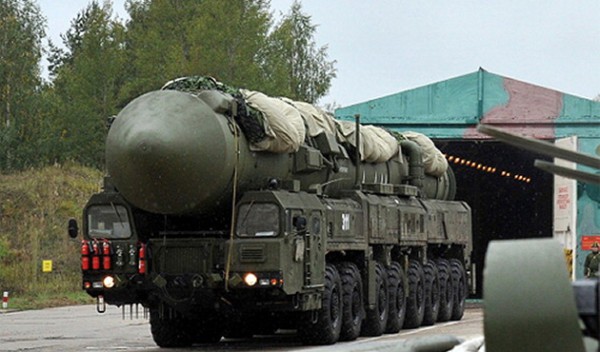
Russian Nuclear-capable Oreshnik Missiles in Belarus

The Russian Federation’s Defense Ministry confirmed Dec. 30, 2025 that Russian Oreshnik mobile intermediate-range ballistic missile systems have been deployed in the forests of Belarus, the Atlantic Council reported Jan. 11, 2026.Here's why Russia's humongous new missile is worth worrying about

Belarusian President Alexander Lukashenko said earlier in December that the missiles had arrived in the country. Lukashenko said that up to ten such missile systems will be stationed in Belarus, according to PBS Newshour. Russia previously deployed air-dropped nuclear weapons in Belarus, whose territory it used to launch a military invasion of Ukraine in February 2022. President Lukashenko has said that his country has several dozen Russian nuclear weapons, a “nuclear sharing” program similar to the U.S. stationing of about 100 thermonuclear gravity bombs at six NATO air bases in Europe. — Atlantic Council, Jan. 11, 2026; and PBS Newshour, Dec. 30, 2025

Filed Under: Newsletter Archives, Nuclear Weapons, Quarterly Newsletter, War

  • « Previous Page
  • 1
  • …
  • 5
  • 6
  • 7
  • 8
  • 9
  • …
  • 223
  • Next Page »

Stay Connected

  • Facebook
  • Twitter

Subscribe

Donate

Categories

  • B61 Bombs in Europe
  • Chernobyl
  • Counterfeit Reactor Parts
  • Depleted Uranium
  • Direct Action
  • Environment
  • Environmental Justice
  • Fukushima
  • Lake Superior Barrels
  • Military Spending
  • Newsletter Archives
  • North Korea
  • Nuclear Power
  • Nuclear Weapons
  • Office News
  • On The Bright Side
  • Photo Gallery
  • Protect the Water Close Xcel's Monticello Reactor
  • Quarterly Newsletter
  • Radiation Exposure
  • Radioactive Waste
  • Renewable Energy
  • Social Issues
  • Sulfide Mining
  • Through the Prism of Nonviolence
  • Uncategorized
  • Uranium Mining
  • US Bombs Out of Germany
  • War
  • Weekly Column

Contact Us

(715) 472-4185
nukewatch1@lakeland.ws

Address:
740A Round Lake Road
Luck, Wisconsin 54853
USA

Donate To Nukewatch

News & Information on Nuclear Weapons,
Power, Waste & Nonviolent Resistance

Stay Connected

  • Facebook
  • Twitter

© 2026 · Nukewatch