The NRC has approved the license amendment request of the Tennessee Valley Authority to increase the maximum number of “tritium producing burnable absorber rods” (TPBARs) to be irradiated in each of the two commercial Watts Bar reactors. The plan will increase production of TPBARs “per operating cycle” from 1,792 to 2,496. The increased tritium production means: 1) tritium leakage into the reactors’ cooling systems and discharge into the environment, including the Tennessee River, will increase; 2) production of fresh TPBARs at the dual use commercial-military Westinghouse fuel factory in Columbia, South Carolina will increase; 3) processing of irradiated TPBARs at the Savannah River Site will increase significantly, along with more onsite radioactive waste disposal; 4) SRS will be able to fill more reservoirs with a full tritium charge, to give the warheads maximum explosive capability; and 5) the government will continue to violate international non-proliferation norms by producing nuclear weapon materials in civilian nuclear power reactors. For more see the Nov. 2021 report, “Crossing the Line: South Carolina Nuclear Weapons Secrets Exposed.” — Tom Clements, Savannah River Site Watch, Apr. 23, 2024.
Climate Chaos Could Unleash Buried Rad Waste
The U.S. Government Accountability Office reported earlier this year that radioactive contamination in the Marshall Islands, Greenland, and Spain could be disturbed or unearthed as a result of climate change. In the Marshall Islands, where the U.S. tested 67 nuclear weapons, rising sea levels may flood the Runit Dome, where U.S. troops buried 3.1 million cubic feet of radioactive material in a crater left by one of 11 bomb tests done on the island, covering it with a cement lid. Congress ordered a remediation plan for the cracking cement dome — now threatened by rising sea levels — which was never produced. In Greenland, radioactive, chemical, and human waste, including polychlorinated biphenyls, were buried in the ice at Camp Century U.S. military base. The camp itself was a series of 21 tunnels carved into the ice and was powered by a nuclear reactor. As Arctic ice sheets melt, this contamination could enter the oceans, the water cycle, and the food chain.
— ZME Science, July 16; Grist, Feb. 26, 2024
Fukushima: Stumbling Through Deconstruction of Reactor Meltdowns
By John LaForge, Z Network. Originally published by Z. Feel free to share widely.
Melted fuel still vexing test extraction methods
Thirteen years on from the catastrophic triple explosions and reactor meltdowns at Fukushima-Daiichi in NE Japan, emergency responders are still trying to observe and examine the melted fuel under the reactors (sometimes called “corium”). Contractors from Tokyo Electric Power Co. (Tepco) have repeatedly failed in attempts to robotically collect a mere three-grams (one 10th of an ounce) of the corium from reactor 2, a project that started three years ago.
The company Amentum [1] working for Mitzubishi Heavy Industries, has built some robotic machinery to try and retrieve a smidgeon of corium to find out what state the meltdown is in [2] because, as National Public Radio reported, “the exact nature of the debris is currently unknown.” [3]
Amentum is trying to build an extraction tool that can function in a radiation zone so fierce that it wrecks most machinery. A 2015 attempt to look inside Unit 1 with a device built by Hitachi-GE Nuclear failed after three hours.[4] Amentum’s first attempt in reactor 2 was stalled August 22 after the long pipe system was found to have been mis-assembled. Then Sept. 18, video problems halted the second try. The AP reported that the probe is “maneuvered remotely by operators at another building because of the fatally high radiation emitted by the melted debris.” [5]
Still, teams of workers have to do15-minute rotating shifts — to limit their exposure to the wreckage’s radioactivity level — preparing the probe for another attempt. Industry slang for the team members is “sponges.” Recovering a mere 3 grams is scheduled to take two weeks because the slow-moving robotic plucker tends to get stuck in the tangled debris and takes a tortured path past meltdown-produced obstacles.
The mission of the 3-gram retrieval program is to determine whether if it’s possible to eventually retrieve and containerize all 880 metric tonnes — 300 tonnes per reactor — of what the Associated Press called “fatally radioactive” wreckage, to keep it out of the environment for eons. Some critics have said decommissioning the whole site could take 100 years.
The idea of covering the whole radioactive malignancy with a roof — like the shed that was installed over the Chernobyl reactor site — is unpopular because of the area’s continuous earthquake activity and the risk of another major quake and tsunami.
Plutonium on the Wind
Nuclear reactors at Fukushima and everywhere smash apart uranium atoms creating a lot of heat to boil water. This atom smashing inside reactors produces radioactive poisons like cesium, iodine, strontium and dozens of others — including plutonium. In addition to this reactor-borne plutonium at Fukushima, about 6% of the fuel in reactor No. 3 was made of plutonium itself. [6]
Some of this plutonium from inside the three destroyed reactors was released to the environment by the meltdowns and explosions of March 2011. On Nov. 15, 2020, the Journal Science of the Total Environment published the report, “Particulate plutonium released from the Fukushima Daiichi meltdowns” noting that plutonium-239 was dispersed widely disaster.[7]
Plutonium, the most toxic substance known to science, was dispersed “up to 230 km away” (142 miles) from the reactor site, the researchers found.
Long-distance dispersion of plutonium was the result of micro-particles being blown by the wind. Five isotopes of plutonium were released including Pu-238, -239, -240, -241, and -242. Some plutonium persists environmentally and contaminates the food chain for 240,000 years.
In 2023, the journal Chemosphere reported a study’s findings of large amounts of highly radioactive cesium-rich micro-particles (CsMPs) in an abandoned school building close to the Fukushima Daiichi site. [8]
Plumes of the microparticles penetrated the building during the meltdowns of March 2011. Phys.org reports that the contamination poses “a threat to human health if inhaled. The study shows that indoor CsMPs should be considered in safety assessments and in building clean-up efforts.”
Long-term Effects of Dumping Unknown, Scientist Warns
Japan hosted the 10th Pacific Island Leaders Meeting in Tokyo last July, which was attended by most leaders of the18-member Pacific Islands Forum.
A hot topic was Japan’s dumping of tens of thousands of tons of contaminated Fukushima wastewater into the Pacific Ocean. The dumping was protested by Pacific rim countries and many, including China and Russia have banned imports of seafood products from the region’s waters. Some 60,000 tons of the wastewater has been discharged by August 2024.
Prime Minister Fumio Kishida assured the island leaders gathering that the discharge of the wastewater was being done “in compliance with international safety standards and practices.” [9] Yet the controversial dumping continues to be criticized by scientists.
In Tokyo, director of the Kewalo Marine Laboratory at the University of Hawaii, Research Professor Robert Richmond, complained that questions remain regarding the effectiveness of the water filtration system, known as ALPS, and about the radioactive contents of the thousands of storage tanks of wastewater.
In October 2018, Tepco admitted that its wastewater filter system, had failed to remove dangerous elements and the company publicly apologized. [10] Tepco promising to re-filter the wastewater, noting that 84% of the 890,000 tonnes then held in tanks (today there are 1.3 million tonnes) still contained high concentrations of iodine-129, ruthenium-106, technetium-99, and cabon-14. Levels of strontium-90, a severe human health hazard, were detected in some tanks at 20,000 times the legal limit. Tepco for years has insisted, and most media still report, that its ALPS treatment process removes everything but tritium, including strontium and 61 other radioactive elements, from the contaminated water.
“The long-term effects of this discharge on Pacific marine ecosystems and those who depend on them are still unknown. Even small doses of radiation can cause cancer or genetic damage,” Prof. Richmond said in a statement to BenarNews after the gathering.
Richmond called Japan’s current radiation monitoring system as inadequate and poorly designed, and said it’s failing to protect ocean and human health.
“The discharge, planned to continue for decades, is irreversible. Radionuclides bioaccumulate in marine organisms and can be passed up the food web, affecting marine life and humans who consume affected seafood,” Richmond said.
The professor also raised concerns about additional hazards already harming the Pacific Ocean and marine life, such as pollution, overfishing, and climate change. He urged Japan to reconsider its approach. Building the contaminated water into cement structures like sea walls is one alternative.
You can hear Prof. Richardson explain the risks of tritium contamination in an NPR interview, here.
Water Treatment Leaves Highly Radioactive Sludge in Search of Containment
Tons of highly radioactive chemicals collected in the ALPS filters are collected as sludge and transferred to heavy plastic casks called “high integrity containers” or HICs, that moved to temporary storage.
The Japanese daily Asahi Shimbun, published a report on the wastewater August 24, 2024 that clearly outlines some problems with the sludge. [11] The end of article reads as follows:
In addition to the release of treated water, there are many other issues to be tackled.
The amount of highly radioactive sludge, or “slurry,” produced in the process of treating contaminated water continues to increase, but no effective treatment method has been decided upon.
The increasing amount of slurry is stored in tanks, but since there is still a risk of leakage when it is in liquid form, plans call for it to be dehydrated to reduce its volume and then process the substance into solid form.
In 2021, TEPCO filed an application to build a device for this purpose. But the Nuclear Regulation Authority pointed out the risk of radiation exposure to workers, and TEPCO was told to review the design.
As a result, the start of the dehydration process has been delayed from fiscal 2022 to fiscal 2026.
Furthermore, no concrete method has been decided on for solidifying the dehydrated slurry.
TEPCO is aiming to determine the solidification method by the end of fiscal 2025 and start solidification around fiscal 2035.
Advocates Demand Stricter Limits on Nuclear Poisons
The Fukushima Fallout Awareness Network in Japan is an alliance of parents, concerned citizens, and affiliated organizations. The group writes:
“The U.S. FDA has set a potentially hazardous level of ‘allowable’ radiation in food: 1,200 Becquerel (Bq) per kilogram (kg) of cesium-134 and cesium-137.” “Becquerels-per-kilogram” is a reference to the amount of highly radioactive cesium-137, which spewed in large quantities by the three burning reactor meltdowns and which persists in the environment for 300 years.
Alarmingly, this is merely a recommendation and holds no legal weight. Such a high threshold exposes a significant portion of the U.S. population, particularly children and women, to considerable health risks.
FFAN is urging the United States to lower its allowable cesium limit to five Bq/kg for food, nutritional supplements and pharmaceuticals, and that the government quickly institute widespread, transparent testing to ensure the limit. The demand aligns with a similar call by the International Physicians for the Prevention of Nuclear War in Germany, which promotes a European Union-wide standard of four to eight (4-to-8) Bq/kg. To sign FFAN’s petition see here.
Kimberly Roberson, Project Director for the Fukushima Fallout Awareness Network, commented on this scandal for Food Safety News, Sept. 4, 2024. [12]
Roberson wrote, “At 1,200 Becquerels per kilogram, FDA has among the highest DILs in the world.
“Standards limiting radiation in food in Japan are 12 times more protective for adults and 24 times more protective for children than U.S. standards. Food too radioactive to be sold to Japanese consumers is allowed to be sold to U.S. consumers and served to U.S. service members and their families on military bases overseas. FDA [limits] for radioactivity in food are non-binding and unenforceable.
“To confront and mitigate the growing public health threat of radioactive contamination in food, Congress should pass the Federal Food Administration Act, establish the FFA to focus like a laser beam on food safety, and empanel independent scientists and experts who understand radiation’s environmental and health effects to advise it.”
The IAEA: International Allowances for Environmental Assaults?
The International Atomic Energy Agency, which ignored its own guidelines in approving the dumping of Fukushima wastewater into the Pacific, has granted approval to Japan’s plan to use some of the 14 million tons of cesium-contaminated soil and debris collected after the Fukushima meltdowns in construction work. [13]
The government intends to get rid of roughly 75 percent of the radioactive soil — if it’s contaminated at or below 8,000 becquerels per kilogram — by using it in road embankments, railways, agricultural land, and land reclamation.
“We are extremely concerned. The IAEA has consistently stated in the past that radioactive waste should be stored centrally and we have supported that position,” said Hajime Matsukubo, the secretary general of the Nuclear Information Centre in Tokyo. He said the limit for soil contamination was previously set at just 100 becquerels per kilogram, and has now been lifted to 8,000 Bq/Kg. “But now they are going against their own recommendations,” he said, reported the South China Morning Post. “My fear is that once they relax this rule, they can then go on and ease all sorts of other rules,” he said. ###
— Originally at Znetwork.com. John LaForge, is Co-director of Nukewatch, and is co-editor with Arianne Peterson of Nuclear Heartland, Revised: A Guide to the 450 Land-Based Missiles of the United States.
Endnotes:
[1] Fukushima-MHI, September 29, 2024 [2] The Register online, September 11, 2024 [3] NPR, March 16, 2011, “Plutonium In Fuel Rods: Cause For Concern?” March 16, 2011 [4] The Guardian, April 13, 2015 [5] Associated Press, September 15, 2024 [6] NPR, Mar. 16, 2011, “Plutonium in Fuel Rods: Cause For Concern?” March 16, 2011 [7] “Particulate plutonium released from the Fukushima Daiichi meltdowns,” Science of The Total Environment, Vol. 743, Nov. 15, 2020; and “Particulate plutonium released from the Fukushima Daiichi meltdowns,” July 14, 2020, by University of Helsinki [8] Physics.org, May 29, 2023 [9] Radio New Zealand, RNZ Pacific, July 19, 2024 [10] “Fukushima nuclear plant owner apologizes for still-radioactive water”, Reuters, October 11, 2018 [11] “60,000 tons of treated water from nuclear site discharged so far,” The Asahi Shimbun, August 24, 2024 [12] Food Safety News, September 4, 2024, [13] South China Morning Post, September 12, 2024; and The Independent, September12, 2024Fukushima’s Endless Quagmire of Radiation Hazards
“The final issue that remains is how to deal with radioactive waste that continues to be produced even as decommissioning of the plant progresses.” — Tepco Representative, January 2024

By John LaForge
Japan’s Ocean Dumping Violates IAEA Rules
The International Atomic Energy Agency (IAEA) has given its stamp of approval to Japan’s ocean dumping of Fukushima wastewater, claiming that its effects would be “negligible” and declaring that the practice complies with international norms.
Arjun Makhijani is president of the Institute for Energy and Environmental Research and a member of the Pacific Islands Forum Independent Expert Panel on Tepco’s Fukushima radioactive water dumping proposals. In June 2023, Makhijani published a scathing critique of the IAEA’s approval of Japan’s dumping. The report discloses that Japan’s dumping of treated radioactive water violates essential provisions of the IAEA’s own General Safety Guide.
After describing Japan’s system of processing and diluting the radioactive wastewater, Makhijani reports, “At that point the water would contain mainly tritium, but also small concentrations of other radionuclides like carbon-14, strontium-90, cesium-137, and iodine-129.”
The IAEA’s statutory General Safety Requirements demand that: “Facilities and activities that give rise to radiation risks must yield an overall benefit.” Proof of “overall benefit” is required, Makhijani found, because, “There will be some radiation dose, even if small. … Tepco estimates that … the main radiation exposure is estimated to come from ingestion of fish.”
Yet there is no identifiable benefit to dumping 1.3 million metric tonnes of radioactive wastewater in the ocean. As Makhijani wrote, “Countries in the Pacific region, such as members of the Pacific Islands Forum, South Korea, China, and the Philippines, will receive no benefit from the proposed dumping.”
Because “radiation doses will not be zero,” and because “every increment of radiation dose produces an excess cancer risk with no threshold below which the risk is zero,” Makhijani wrote, “countries and people in the Pacific region will suffer some radiation harm. … Some of that harm will go on for decades (e.g., tritium), some for centuries (e.g., strontium-90 and cesium-137), and some essentially forever (iodine-129).
“As a result of the above considerations, the harm to Pacific region countries will outweigh the benefits; indeed, there are no benefits to them. This means that, from a transboundary perspective, the proposed Tepco dumping plan is not justified.”
The IAEA is also violating its binding mandate regarding the required “justification” for potentially harmful actions. Makhijani reported, “During the 8/9 June 2023 virtual meeting with the Pacific Islands Forum and its Expert Panel, at which [I] was present, the IAEA explicitly stated that ‘we are not involved in the justification’ and ‘we are not reviewing any justification.’
“By rejecting its responsibility for key parts of [General Safety Guides and General Safety Requirements] the IAEA is also rejecting the corresponding requirements … and the related fundamental safety principles … on justification.”
In his critique, Makhijani emphasizes: “The rejection means that the IAEA has effectively abandoned the safety and protection interests of the countries of the Pacific region, including the many IAEA member states in the region.
“The IAEA should declare officially that the Tepco plan does not meet key protection and safety requirements and therefore cannot be declared safe. [T]he IAEA has basically jettisoned the interests of Pacific region countries, including non-Japanese IAEA member countries, in favor of Tepco and the government of Japan.”
Earthquakes Routinely Threaten Reactor Site
The dumping of radioactive wastewater from the rubbished Fukushima nuclear reactor site was suspended for a day last March 15 after a 5.98-magnitude earthquake struck off the coast of Fukushima, the Malaysia Star and Arab News Japan report. Tepco said through a spokesperson that it halted operation of its liquid waste filtering system (“ALPS”), but that “no abnormalities were detected,” and no leak of radiation “was detected.” The comic choice of words implies that dumping of radiation-emitting wastewater into the Pacific Ocean is not abnormal and that its radioactive tritium, strontium, carbon, and cesium can’t be detected. The dumping system was restarted later the same day after Japan’s Meteorological Agency said there was no threat of a tsunami. The shutdown was the first time Tepco’s radioactive waste dispersal was interrupted by earthquake activity.
Radioactive Wastewater Leaks and Promises of Improvement
On Feb. 7, 2024, the faulty wastewater filtering system at Fukushima leaked more than 1.5 tons of highly radioactive cooling water. The worker-caused blunder forced Tepco to promise in April that it will install new piping and ventilation intended to direct any future wastewater spills to fall inside the building. The plan puts workers in danger, and the vent ports would release radioactive gases to the open air. Last October, an accident at the same liquid processing site sprayed five workers, directly exposing them to radioactive materials in the water likely including tritium, carbon-14, strontium, cesium, iodine, cobalt, and other deadly radionuclides. China’s Xinhjua News Agency reported: “Amid raging credibility and safety concerns among the Japanese public following a series of accidents at the crippled plant, Tepco and the Japanese government have been frequently challenged for the ocean discharge as the decommissioning process remains ambiguous.” — Xinhua News Agency, https://english.news.cn/20240407/25ce21ee4ba042f1bf4ab348bff8aca7/c.html
Extracting Melted Fuel and Wreckage from Radioactive Hellscape
Reactors 1, 2, and 3 at Fukushima-Daiichi in Japan — wrecked in 2011 by Japan’s worst-ever recorded earthquake, a devastating tsunami, and a string of explosions — have about 880 tons of melted fuel either burned into or through the three reactors’ foundations. Tepco and Japan’s government intend to remove this fiercely radioactive wreckage and abandon it somewhere else. The melted fuel and the surrounding irradiated structures are so ferociously hot and radioactive that remote-controlled robots have repeatedly broken down in the harsh, underwater environment. (Water is continually poured over the fuel melt to keep it from overheating further.) Last March, Japan’s Nuclear Damage Compensation and Decommissioning Facilitation Corporation came forward with three ideas for removing the wrecked fuel, etc., something never before attempted at a site smashed by the earthquake-tsunami-meltdown. Japan’s formal “wrecking crew” has recommended: 1) removing debris while exposed in the air, and 2) solidifying debris in place using a “filler” like concrete. The suggestions also included a plan to submerge entire reactor systems under water after constructing a giant pool-like structure around them. Robots would theoretically then approach, grasp, and withdraw the debris while the water partially shielded workers from radiation. — Arab News, 9 Mar 2024, https://www.arabnews.jp/en/japan/article_117203/
G-7 Leaders Offer Political Cover for Dumping
The Group of Seven colonial corporatist states (Canada, France, Germany, Italy, Japan, the U.K., and the U.S.) endorsed Japan’s dumping of radioactive water into the ocean at their summit in Italy on June 15, 2023, in an off-agenda move widely seen as a winking promise to protect the global nuclear reactor industry. “We support Japan’s safe, transparent, and science-based process to responsibly manage the discharge,” the G-7 statement said. Millions of people and more than 20 countries around the Pacific Rim have objected to Japan’s dumping over the next 40 years. The discharge is so patently unsafe, so shrouded in long-term unknowns, and so clearly in violation of the IAEA’s own scientific guidelines, that the G-7’s nod can be seen as industrial push-back against the protests in Japan, China, Russia, South Korea, and the Pacific Island Forum of 17 states. — Nippon News Agency, June 15, 2024, https://www.nippon.com/en/news/yjj2024061500119/
Landslide Threat Endangers Cooling Pool
Earthquakes routinely strike the Fukushima area, threatening 1,000 large tanks holding 1.3 million metric tonnes of contaminated wastewater, and endangering the structural integrity of cooling pools holding extremely radioactive used fuel rods (called “spent fuel” by the industry). In January 2024 alone, there were over 18 earthquakes in the Fukushima region with magnitudes of between 2.8 and 3.7. In February there were at least 23, with one measuring magnitude 6.1.
Quakes pose another threat to the devastated reactor site. According to Nuclear Engineering International, a landslide from a massive mountain slope could shut down the adjacent large waste fuel cooling pond. The pool holds 5,197 waste fuel assemblies, and Akira Ishiwatari, a geologist and federal Nuclear Regulation Authority commissioner, told the magazine, “A landslide could occur on the slope in the event of a minor earthquake or even without any tremor.” The authority “is concerned that if sediment from a landslide flowed into the pool, the nuclear fuel would no longer be cooled and, in the worst-case scenario, could eventually melt,” the magazine said.
Tepco said a landslide would not affect the cooling pond but, to avert the danger, announced plans to excavate 100,000 cubic meters from the slope over the next ten years. — Nuclear Engineering Int’l, 17 April 2024, https://www.neimagazine.com/news/newstepco-to-excavate-major-slope-near-fukushima-daiichis-used-fuel-pool-11688881
Far-Off Prefecture Wants Halt of Wild Food Shipments after Radioactive Cesium Found
Another prefecture in Japan has asked for a halt to shipments of a popular edible wild food after it was found contaminated with high levels of cesium-137, a radioactive toxin dispersed in large quantities by the triple Fukushima meltdowns of March 2011. Cesium-137 stays in the environment for 300 years and was spread long distances from the disaster site. Kitaibaraki village in Ibaraki prefecture is 134 miles from Fukushima, yet the government found cesium contamination in popular angelica tree shoots at twice the level allowed by Japanese authorities. Restrictions on shipping wild mushrooms and koshiabura, a species of edible flowering plant, are still enforced across wide areas of the prefecture. Cesium testing began after the meltdowns that followed the 2011 Great East Japan Earthquake and tsunami. In the Spring 2024 Quarterly we reported that edible foods up to 292 miles from Fukushima were still being found highly tainted with cesium. — Mainichi Japan, April 13, 2024, https://mainichi.jp/english/articles/20240413/p2a/00m/0na/002000c
— On Aug. 17 at 8pm Eastern/5pm Pacific, Nukewatch is co-sponsoring the “Don’t Nuke the Pacific, Protect Our Ocean” webinar to stop the Fukushima wastewater dumping. Register at mp-nuclear-free.com.
Nuclear Power: Ill-Advised
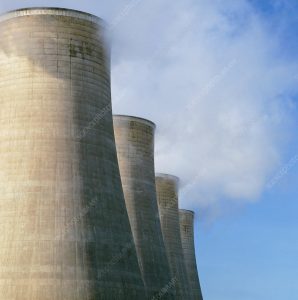
By George Crocker
Certain Minnesota legislators are interested in new nuclear power plants to address problems resulting from climate change.
Perhaps these politicians have recent and exciting new information about how to overcome the multitude of economic problems that cause new commercial reactors to be much too expensive. It would be good to find that out, because back in July 2018, for one example, Proceedings of the National Academy of Sciences concluded that nuclear fission power is just too expensive relative to the competition. A new reactor would start out costing about $13.61 million per megawatt and go up from there. New solar costs about $1 million per megawatt, with wind at about $2 million per megawatt, and wind and solar costs continue dropping.
Perhaps these politicians have also figured out how to manage high-level nuclear waste for the required 240,000 years, now that Yucca Mountain, the nation’s only proposed high-level nuclear waste repository has been shut down and abandoned for years, and U.S. federal courts recently stopped the nuclear industry from developing a dump to hold 100,000 metric tons of spent fuel on top of the Ogallala Aquifer in eastern New Mexico. These politicians probably also have a time machine to manage the fact that climate chaos is upon us as you read these words, but even in Nuclear Magic Land, if history teaches anything, new reactors will take upward of ten years to construct. There’s also the CO 2 from burning the coal to boil the uranium to refine nuclear fuel to acceptable levels of U-235.
If the Legislature were actually interested in combating climate chaos, it could pass legislation that enables the development of more than 8,000 megawatts in Minnesota of new renewable energy capacity, plus energy storage, that can be immediately installed and commissioned on the low-voltage side of virtually every load-serving substation in the state. Strategically sizing this new renewable energy capacity will allow it to come online immediately, because all the electricity will get consumed within the footprint of the substation and no new transmission would be needed.
— George Crocker is executive director of the North American Water Office. Letter originally published in Minneapolis Star Tribune on April 10, 2024.
- « Previous Page
- 1
- …
- 6
- 7
- 8
- 9
- 10
- …
- 69
- Next Page »