Nukewatch

Working for a nuclear-free future since 1979

  • Issues
    • Direct Action
    • Environmental Justice
    • Nuclear Power
      • Chernobyl
      • Fukushima
    • Nuclear Weapons
    • On The Bright Side
    • Radiation Exposure
    • Radioactive Waste
    • Renewable Energy
    • Uranium Mining
    • US Bombs Out of Germany
  • Quarterly Newsletter
    • Quarterly Newsletter
    • Newsletter Archives
  • Resources
    • Nuclear Heartland Book
    • Fact Sheets
    • Reports, Studies & Publications
      • The New Nuclear Weapons: $1.74 Trillion for H-bomb Profiteers and Fake Cleanups
      • Nuclear Power: Dead In the Water It Poisoned
      • Thorium Fuel’s Advantages as Mythical as Thor
      • Greenpeace on Fukushima 2016
      • Drinking Water at Risk: Toxic Military Wastes Haunt Lake Superior
    • Nukewatch in the News
    • Links
    • Videos
  • About
    • About Nukewatch
    • Contact Us
  • Get Involved
    • Action Alerts!
    • Calendar
  • Donate

August 6, 2024 by Nukewatch Leave a Comment

Weakening NRC Would be a Bad Move

By David Kraft

An article in the Bulletin of the Atomic Scientists by Dr. Allison Macfarlane, former chairwoman of the U.S. Nuclear Regulatory Commission (NRC), should ring alarm bells for officials — especially those promoting another round of nuclear building.

Macfarlane, no anti-nuclear ideologue, expressed shock that the heavily pro-nuclear Biden administration recently withdrew the re-nomination of NRC Commissioner Jeff Baran. His opponents in the nuclear industry and their political allies accused Baran of the heinous offense of — being too concerned about nuclear safety. That Sens. Joe Manchin and Kyrsten Sinema agree should send shivers down the spine of any state governor.

Simultaneous with this political capitulation, news accounts described efforts by certain members of Congress to reform the NRC, giving it a new mission — “fundamentally changing the NRC, in leadership and policy,” according to Politico. The goal is to “streamline regulations at the NRC and potentially adjust the agency’s mission statement” to speed up the development and propagation of new, experimental small modular nuclear reactors.
The universe sometimes has a very perverse sense of humor. On the same day the news of the proposed
Congressional “reform” broke, the nose landing gear of a Delta Air Lines jet collapsed on takeoff. What’s the connection?

Weak oversight leads to disasters

The Delta incident is the exclamation point to a litany of disasters that demonstrates the results of weakening regulatory oversight of critical industries, industries where huge numbers of lives might be at stake. What happens when watchdogs become lap dogs for the industries they’re supposed to regulate?

Two crashed Boeing 737-MAX airliners, result of industry self-regulation; death toll: 346.

The East Palestine Norfolk Southern train derailment, contaminating an entire community that is still feeling the health effects of the disaster and receiving little compensation, the result of lobbyists and grifting politicians preventing implementation of safety recommendations.

The in-flight blowout of an emergency exit door on a Boeing 737 airliner — no injuries but revelations that 1,800 reports of shoddy manufacture and maintenance went unheeded by federal regulators.

And now members of Congress are attempting to deregulate the NRC so that it would be easier to construct new reactors with unproven experimental designs. What could possibly go wrong?

Allowing the nuclear industry and its political allies to continually erode the regulatory framework turns the NRC into trade show promoters, not regulators. With a next-generation of reactors being ramrodded down the throats of Americans, [we] cannot afford any relaxation of nuclear regulation.

— David Kraft is director of Nuclear Energy Information Service, a 42-year-old nuclear power watchdog and safe energy advocacy organization. This piece is excerpted from an op-ed in the Chicago Sun Times, March 19, 2024.
Filed Under: Environmental Justice, Newsletter Archives, Nuclear Power, Quarterly Newsletter

August 6, 2024 by Nukewatch Leave a Comment

Nuclear Justice in Maohi Nui

By Hinamoeura Morgant-Cross

Part I of “Nuclear Justice in Maohi Nui” can be found at nukewatchinfo.org/nuclear-justice-in-maohi-nui and in the Spring 2024 Quarterly.

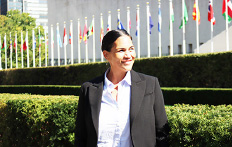
Hinamoeura Morgant-Cross, pictured in front of the United Nations, is a young French Polynesian whose realization that her own leukemia was a legacy of the French atomic tests in the South Pacific led her into activism. She works to pressure the French government to acknowledge responsibility and provide medical and financial support.


Morgant-Cross was elected to the Polynesian Assembly of Representatives in May 2023 and shepherded a unanimous Assembly vote supporting the Treaty on the Prohibition of Nuclear Weapons.My grandparents and parents were anti-nuclear activists, but it wasn’t a topic of family discussion during my childhood. There are several reasons for this. One was that they didn’t think they knew enough. There was also a clash in beliefs about the consequences of France’s nuclear testing in Maohi Nui, also known as its colonized name French Polynesia. There was the knowledge that the nuclear bomb had health consequences versus the powerful rhetoric of the French government, which emphatically stated that French nuclear tests were “clean.” You could sense that the elders didn’t want to talk about it because of the trauma it caused them. And finally, there was a fear of speaking out: a fear of reprisals if you talked about nuclear power and opposed the French government. Indeed, our population still bears the scars of the arrest and exile of Mr. Pouvana’a a O’opa, who advocated for independence from France. He was targeted by the French colonial justice system for “terrorist acts,” which were fabricated by agents of the French state.

French nuclear weapons testing continued until 1996 when I was seven years old. Between 1966 and 1996, France detonated 193 nuclear bombs on our islands in the South Pacific. Maohi Nui belongs to France as a collectivity, a status that compromises our sovereignty on nuclear and other issues.

As a collectivity, Maohi Nui has been forced to accept France’s policies regarding the effects of testing. In 1977, under the guise of giving Maohi Nui greater autonomy, France handed over responsibility for health, leaving the territory to bear the heavy financial burden of all the radiation-induced diseases. After repeating for decades that nuclear bombs were clean, it wasn’t until 2006 that France was forced to recognize that there had been radioactive contamination.

Since 2011, there has been a French compensation program for health affects related to the testing, but it’s very complex and not at all impartial. People have to assemble a multitude of medical documents. Some of these documents are inaccessible, under control of the French army since the time when the army managed medical care. The application procedure is biased because it’s the French who decide who is compensated, the same people who talk about “clean” nuclear testing. Many Polynesians are treated in Paris, 10,000 miles from their island, after a 24-hour plane journey. Those treated abroad are the luckiest, because Polynesia can pay for their travel.

With a medical system thirty years behind the U.S., Maohi Nui just can’t manage the health care for those suffering as a result of the radioactive contamination. There are some people that decide not to have kids because they don’t want them to end up with leukemia.

My own diagnosis of leukemia led me into activism. Despite oppression and misinformation, the grassroots anti-nuclear movement in Maohi Nui has gained some strength among the population. It started with the anti-nuclear association Moruroa e Tatou, founded in 2001. Other organizations are Association 193, which helps people put together compensation files, and the pro-independence movement, led by Mr. Oscar Temaru. In October 2018, Mr. Temaru filed a complaint against the French Republic before the International Criminal Court for crimes against humanity for the 193 nuclear bombs detonated on Polynesian territory. However, the ICC is only concerned with crimes committed after 2002 and, above all, complaints must be brought by a State, while French Polynesia is a collectivity. The complaint was therefore inadmissible.

The national and international anti-nuclear movement have led to some advances. I presented a motion in support of the United Nations Treaty on the Prohibition of Nuclear Weapons (TPNW) to the Polynesian Assembly of Representatives, which voted unanimously in favor of the resolution in September 2023. On a local level, the fight consists of properly educating the population about our nuclear history, which has been concealed by France and played down for too long. Internationally, the movement is denouncing the environmental and health consequences of France’s 193 nuclear weapons tests, in the hope that France will pay this debt and also with the wish to benefit from cooperation and aid from other states.

Filed Under: Environmental Justice, Newsletter Archives, Nuclear Weapons, Quarterly Newsletter, Radiation Exposure

August 6, 2024 by Nukewatch Leave a Comment

Hundreds of Groups for Climate Action Reject Nuclear Power

Excerpted from a press release by Climate Action Network Canada

More than 600 civil society groups across the globe working on climate action launched a declaration in Brussels, Belgium, stating that nuclear power expansion is not a solution to the climate crisis.

The groups made their declaration at the pro-nuclear Summit in Brussels where countries met to bolster the industry’s claim that investing in new nuclear must be a priority to save the climate. The International Atomic Energy Agency (IAEA), whose principle mandate is to promote nuclear expansion, co-hosted the event along with Belgium, which ironically passed a law in 2003 – still on the books – to phase out nuclear power completely.

Greenpeace activists blocked roads and
disrupted a pro-nuclear summit in Brussels,
Belgium in March, co-hosted by the IAEA.


Graphic by Greenpeace Nuclear Fairytales campaign, declaring nuclear energy a distraction and an illusion, not a climate crisis solution.

The global nuclear power industry has been in steep decline for the last quarter century. Cost overruns and lengthy delays have plagued the industry, whose contribution to global electricity supply has fallen from 17.5 percent in 1997 to only 9.2 percent today. Consequently, the nuclear industry has organized itself to grab as much money as it can from funds earmarked by governments to fight climate change.

At last year’s Climate Conference, COP-28, the resolution to triple renewable energy and double energy efficiency worldwide by 2030 was enthusiastically adopted by all parties, while a statement sponsored mainly by nuclear vendors, to triple nuclear power by 2050, was supported by only a small minority.

Brussels Summit Declaration, drafted by Climate Action Network Europe:

The international nuclear lobby, at the invitation of the IAEA and the Prime Minister of Belgium, will hold a nuclear energy summit in Brussels on 21 March 2024. The nuclear lobby camouflages itself beneath a climate-friendly facade, hoping to divert massive sums of money away from real climate solutions, at the expense of people and the planet. The world faces multiple social, environmental, and economic crises. People are worried about the cost of living, extreme weather events linked to climate change, and their energy bills. Lobbyists and politicians at the nuclear energy summit will present building new nuclear power plants as the answer, but this does not pass a basic reality check.

New nuclear power is too slow to tackle the climate emergency.

Nuclear power plants under development have been severely delayed and won’t be able to meaningfully contribute to cutting carbon emissions this decade. Whereas greenhouse gas emissions must be drastically cut by 2030 to limit global temperature rise to less than 1.5 degrees, any new nuclear plants announced today would not be connected to the grid until well past this deadline. New nuclear power plants are a distraction which slows down the energy transition. A rapid shift away from fossil fuels should instead focus on building a 100% renewable energy system coupled with energy efficiency and measures to avoid excessive energy use. Together, these steps can meet the world’s energy needs in a way that is fair, environmentally friendly, and achievable.

Nuclear energy is much more expensive than renewables.

While nuclear projects face huge budget overruns and cancellations due to sky-rocketing costs, renewables are cheaper than ever before, declining sharply in relative costs compared to nuclear. New nuclear power plants are up to nearly four times as expensive as wind power, according to the 2023 World Nuclear Industry Status Report. Governments need to invest in proven climate solutions, such as home insulation, public transport, and renewable energy, rather than expensive experiments like small modular reactors, which have no guarantees of actually delivering.

Nuclear power is dangerous.

From mining for uranium to radioactive waste, nuclear power production is a risk to people’s health, safety, and the environment. Nuclear power can be used as military targets and increase the risk of spreading nuclear weapons across the world, the use of depleted uranium, and atomic bombs. The climate crisis also increases the risks involved in nuclear power, as increased heatwaves, droughts, storms, and flooding all pose significant threats to the plants themselves and to the systems that aim to prevent nuclear accidents. We are living in a climate emergency. Time is precious, and too many governments are wasting it with nuclear energy fairy tales. What we demand is a just transition towards a safe, renewable, and affordable energy system that secures jobs and protects life on our planet.

Filed Under: Environment, Environmental Justice, Newsletter Archives, Nuclear Power, Quarterly Newsletter

August 6, 2024 by Nukewatch Leave a Comment

Monticello Draft EIS Ignores Climate Change, Federal Law

Xcel Energy’s Monticello Nuclear Reactor on the Mississippi River in Monticello, Minn.
By Nukewatch Staff

Reactor operations expert Paul Gunter at Beyond Nuclear, reports in written comments to the Nuclear Regulatory Commission (NRC) that its Draft Environmental Impact Statement (DEIS) regarding Xcel Energy’s license renewal application for its Monticello, Minn. reactor should be withdrawn because it ignores the likely impact of climate change on nuclear accident risks, particularly the chances of Mississippi River flooding. Ignoring climate issues in the DEIS, Gunter says, violates requirements of the U.S. National Environmental Policy Act (NEPA).

NEPA mandates that federal agencies take a “hard look” at environmental impacts for all major federal actions, but the NRC’s DEIS disregards climate risks saying they “are outside the scope of the NRC staff’s … environmental review.”

However, binding NRC regulations now require that, “If new information about changing environmental conditions (such as rising sea levels or potential flooding…) becomes available, the NRC will evaluate the new information.”

Such new information was presented on April 2, 2024, by the Government Accounting Office, an investigative arm of Congress, in its report, “Nuclear Power Plants: NRC Should Take Action to Fully Consider the Potential Impacts of Climate Change.” The report singles out Monticello in an appendix, finding that as the unit is located in the flood plain of the Mississippi River, the reactor’s “Exposure for Selected Natural Hazards” includes “Flood Hazard” which it rates as “High.”

Filed Under: Environment, Environmental Justice, Newsletter Archives, Nuclear Power, Protect the Water Close Xcel's Monticello Reactor, Quarterly Newsletter

August 6, 2024 by Nukewatch Leave a Comment

Environmental Group Issues Demands on Monticello License Extension Process

Trumpeter Swans on the Mississippi River in Monticello, Minn.
By Nukewatch Staff

In June, the Rainbow Warrior Collective filed a 16-page complaint to the Nuclear Regulatory Commission (NRC), Minnesota state regulatory agencies, Minnesota Attorney General Keith Ellison, and the Environmental Protection Agency. The Collective calls for the withdrawal of the NRC’s Draft Environmental Impact Statement (DEIS) for Xcel Energy’s Monticello reactor license extension, and for an investigation into the 829,000 gallon leak of cooling water. Authored by Kelsey Beaumaster, Vanessa Friedhoff, and John Miller, the comprehensive review of the NRC’s DEIS concludes with these specific demands:

[1] Given the extensive scope of information that needs to be considered and the substantial public interest, we urge the NRC to re-establish and extend the public comment period for the DEIS.

[2] Mandate the creation and enforcement of a legally binding agreement between Xcel and all relevant regulatory bodies to address past, present, and future contamination of drinking water, including a thorough assessment and remediation plan, transparent public reporting, funding for significant research, and independent oversight, with all costs borne by the polluter or the entity applying for a license extension.

[3] Investigate the allegations regarding the evaporation of tritiated water and disclose all relevant dose calculations and health risk assessments. Require funding of independent research to prove such operations are “as safe” as alleged by Xcel Energy.

[4] Ensure accountability for the manipulation of scientific data, silencing of public concerns, and the cover-up of environmental incidents, all of which constitute a deliberate deception of the public.

[5] Consider appointing a Special Prosecutor to handle the investigation into the tritium leak and nuclear moratorium matters, involving the public utilities commission. This ensures transparency and impartiality, aligning with legal protocols in Minnesota.

— For the full report contact nukewatch1@lakeland.ws.

Filed Under: Environment, Environmental Justice, Newsletter Archives, Nuclear Power, Protect the Water Close Xcel's Monticello Reactor, Quarterly Newsletter

  • « Previous Page
  • 1
  • …
  • 3
  • 4
  • 5
  • 6
  • 7
  • …
  • 24
  • Next Page »

Stay Connected

  • Facebook
  • Twitter

Subscribe

Donate

Categories

  • B61 Bombs in Europe
  • Chernobyl
  • Counterfeit Reactor Parts
  • Depleted Uranium
  • Direct Action
  • Environment
  • Environmental Justice
  • Fukushima
  • Lake Superior Barrels
  • Military Spending
  • Newsletter Archives
  • North Korea
  • Nuclear Power
  • Nuclear Weapons
  • Office News
  • On The Bright Side
  • Photo Gallery
  • Protect the Water Close Xcel's Monticello Reactor
  • Quarterly Newsletter
  • Radiation Exposure
  • Radioactive Waste
  • Renewable Energy
  • Social Issues
  • Sulfide Mining
  • Through the Prism of Nonviolence
  • Uncategorized
  • Uranium Mining
  • US Bombs Out of Germany
  • War
  • Weekly Column

Contact Us

(715) 472-4185
nukewatch1@lakeland.ws

Address:
740A Round Lake Road
Luck, Wisconsin 54853
USA

Donate To Nukewatch

News & Information on Nuclear Weapons,
Power, Waste & Nonviolent Resistance

Stay Connected

  • Facebook
  • Twitter

© 2026 · Nukewatch