Nukewatch

Working for a nuclear-free future since 1979

  • Issues
    • Direct Action
    • Environmental Justice
    • Nuclear Power
      • Chernobyl
      • Fukushima
    • Nuclear Weapons
    • On The Bright Side
    • Radiation Exposure
    • Radioactive Waste
    • Renewable Energy
    • Uranium Mining
    • US Bombs Out of Germany
  • Quarterly Newsletter
    • Quarterly Newsletter
    • Newsletter Archives
  • Resources
    • Nuclear Heartland Book
    • Fact Sheets
    • Reports, Studies & Publications
      • The New Nuclear Weapons: $1.74 Trillion for H-bomb Profiteers and Fake Cleanups
      • Nuclear Power: Dead In the Water It Poisoned
      • Thorium Fuel’s Advantages as Mythical as Thor
      • Greenpeace on Fukushima 2016
      • Drinking Water at Risk: Toxic Military Wastes Haunt Lake Superior
    • Nukewatch in the News
    • Links
    • Videos
  • About
    • About Nukewatch
    • Contact Us
  • Get Involved
    • Action Alerts!
    • Calendar
  • Donate

March 2, 2026 by Nukewatch Leave a Comment

Monticello Reactor is Down for Repairs Until at Least March 20

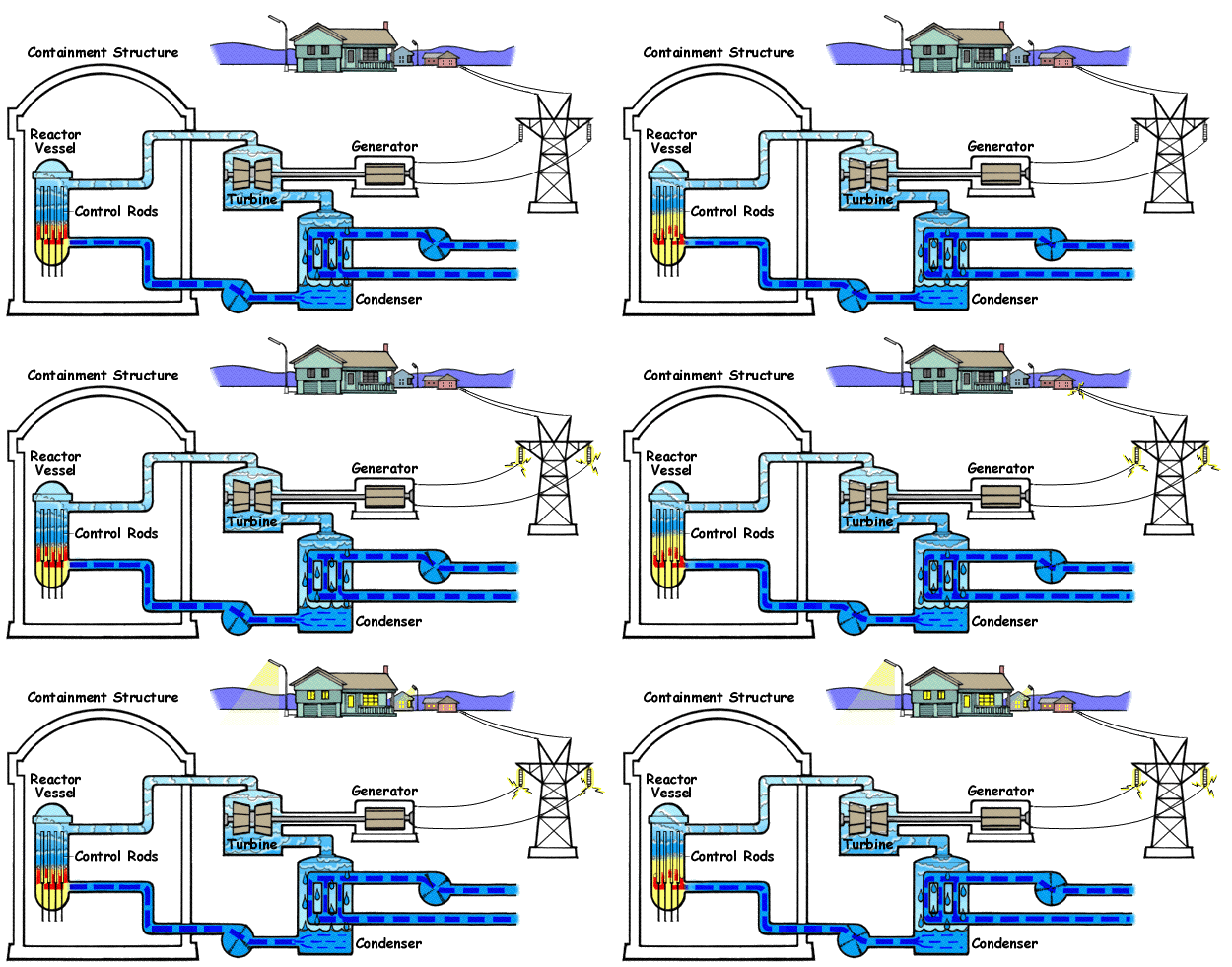
The Boiling Water Reactor (BWR) | Nuclear Regulatory Commission

The 55-year-old Monticello nuclear power reactor, a General Electric designed boiling water reactor like the melted and exploded Fukushima reactors in Japan, leaked almost 1-million gallons of highly radioactive cooling water into the ground under the reactor complex and some of the radioactive tritium reached the Mississippi River which is used for drinking water.

By John LaForge

The 55-year-old Monticello nuclear reactor owned by Xcel Energy was unexpectedly shut down Friday, Feb. 20, and the Monticello Times reports the reactor will be offline for at least 30 days, maybe more to “perform maintenance” and to “determine appropriate repairs.”

No regional or national news service made mention of Xcel’s reactor outage in spite of the “over 1 million users” that rely on its electricity, according to Xcel’s website. The reasons for the embarrassing outage were not made public by the company, which did not name the equipment that is in need of repair.

Further, the Nuclear Regulatory Commission made no announcement of the shutdown, and NRC Sr. Public Affairs Officer Viktoria Mitlyng wrote to Nukewatch Feb. 26 that, “The shutdown at Monticello was a planned maintenance shutdwon (sic) and did not require formal notifications. It’s a routine practice for nuclear plants.” The lack of an NRC notification might explain why not a single state-wide Minnesota news service made mention of the outage.

According to Xcel spokesperson Theo Keith, who spoke to editor Lauren Flaum of The Monticello Times, the shutdown “is not related to the tritium leak discovered at the facility in 2023.” Tritium is the radioactive form of hydrogen, and Mr. Keith’s reference is to the leak of nearly one-million gallons of highly radioactive coolant that contaminated groundwater under the reactor site, groundwater that reached the Mississippi River which is a drinking water source for Minneapolis and St. Paul.

Xcel explained to the press that the regional electrical power grid draws from multiple generators across the Midwest, and that the mix of providers allows uninterrupted service even when individual systems are taken offline.

Myths busted by Monticello shutdown

The shutdown debunks two principal myths endlessly repeated by the nuclear industry.

First, that nuclear reactors provide uninterrupted generation of electricity. The Nuclear Energy Institute’s website page-1 slogan is: “Only nuclear has the power to … deliver 24/7/365.” Let’s call BS. As the NRC’s Mitlyng said, “It’s a routine practice” for nuclear plants to shut down. Nuclear reactors are taken offline regularly and repeatedly by unplanned emergencies, by unexpected repair work, by refueling outages, and by emergencies and accidents that plague the youngest and the oldest reactors. Monticello is the sixth oldest in the United States.

Second: Promoters of commercial nuclear reactors say their electricity “is needed to keep the lights on.” This is BS again, as Xcel told the press that it “does not anticipate any impact to electric service while the plant is offline.”

Imagine a nuclear-free Mississippi River watershed. Xcel’s Monticello reactor isn’t needed to keep the lights on, and it’s so old that it can’t operate without major equipment repairs severe enough to gut Xcel’s profit-taking for thirty days. ###


Filed Under: Environment, Environmental Justice, Fukushima, Nuclear Power, Protect the Water Close Xcel's Monticello Reactor, Weekly Column

February 26, 2026 by Nukewatch Leave a Comment

No rationale for presidential war on Iran

uss gerald r. ford cvn-78 aircraft carrier cvw-8 oslo norway 2025 159

USS Gerald R Ford, the largest air craft carrier in the US Navy, now making bombing raids on Iran. [March 2, 2026]

By  John LaForge, February 24, 2026 

The president says Iran must not be allowed to possess nuclear weapons. In his February 24 speech to Congress, he said of Iran’s leaders, “They want to make a deal, but we haven’t heard those secret words: ‘We will never have a nuclear weapon.’”

This is untrue, as we have heard “those secret words” many times.

For decades Iran has declared that nuclear weapons production would violate principles of the Quran, the government’s holy book, that it is not pursuing a nuclear arsenal, and that its uranium enrichment is strictly for civilian uses. The enrichment of uranium for civil nuclear reactor fuel is permitted by the Treaty on the Non-Proliferation of Nuclear Weapons. Iran is a party to this treaty while the openly genocidal government of Israel, which possesses an arsenal of several hundred nuclear weapons, is not.

Speaking in Tehran on January 21, 2025, Ahmadreza Pourkhaghan, the head of Iran’s Armed Forces Judiciary, said, “The late Imam Khomeini did not allow the use of chemical weapons or any illegal and unconventional weapons, even against enemy forces,” and therefore, “it is based on this doctrine that the Supreme Leader [Ayatollah Ali Khamenei] does not permit the armed forces of the Islamic Republic to develop nuclear weapons.”

Dr. Saeid Golkar, at the University of Tennessee at Chattanooga, reported Feb. 11, 2025 that Iranian Foreign Minister Abbas Araghchi “reaffirmed Iran’s commitment to the Nuclear Non-Proliferation Treaty (NPT) and cited a religious decree, known as a fatwa, by Supreme Leader Ayatollah Ali Khamenei, which bans weapons of mass destruction as evidence of Iran’s peaceful nuclear program.”

In October 2003, Supreme Leader Ali Khamenei issued an oral fatwa, or a religious order, declaring that nuclear weapons are forbidden under Islamic law, and condemning nuclear weapons as “haram” (forbidden), and banning the production and use of weapons of mass destruction (WMD) in any form.

Ever since, Khamenei and other officials have repeatedly declared that Iran does not wish to produce nuclear weapons because Islamic law prohibits WMD.

For example, in 2021, the Washington Institute for Near East Policy reported that:

“Supreme Leader Ali Khamenei’s years-old fatwa banning nuclear weapons is again making headlines. The regime and its supporters, including former nuclear spokesman Hossein Mousavian, have long claimed that the fatwa is permanent and adduced it as proof that Iran is religiously forbidden from acquiring such weapons.”

In 2019, the radio broadcast The World reported that Ayatollah Ali Khamenei, “said that Iran was not looking to acquire nuclear weapons for a surprising reason — that they were illegal under Islamic law.”

In 2012, Farhad Shahabi Sirjani reported that:

“[A]longside the negotiations on Iran’s nuclear program, special media attention was paid to a Fatwa (religious decree) issued by Ayatollah Seyyed Ali Khamenei, Leader of the Islamic Revolution of Iran, banning all weapons of mass destruction, nuclear weapons in particular.”

With a vast armada of U.S. Navy warships now menacing Iran, the memory of undeclared, unlawful, and unconstitutional U.S. forever wars in Iraq and Afghanistan ought to echo in the minds of Pentagon brass and White House advisors. The world knows Iran has no WMD, and no propaganda campaign or ginned-up White Papers have even been unveiled as a pretext for another unprovoked U.S. war of aggression. The bombing of Iran last June, the bombing of Venezuela last January, the ongoing bombing of civilian speed boats may not yet have habituated the public to blindly gratuitous militarism.   ### [This comment was first published by PeaceVoice.org]

Filed Under: Military Spending, War, Weekly Column

February 24, 2026 by Nukewatch Leave a Comment

Illegal Orders and the Criminals Who Give Them

Jon Stewart to Sen. Mark Kelly: If Venezuela Boat Strikes Are Illegal, What  About Obama's Drone Strikes?

Arizona Senator Mark Kelly with John Stewart on The Daily Show Jan. 6, 2026

by John LaForge

The president and secretary of defense have failed in their effort to see to the execution of six members of Congress after the lawmakers urged members of the U.S. military to obey the law.

The six Democrats — Representatives Jason Crow of Colo., Maggie Goodlander and Chris Deluzio of New Hampshire, and Chrissy Houlahan of Pennsylvania, as well as Senators Mark Kelly of Ariz. and Elissa Slotkin of Mich. — aired a 90-second video last year reminding military personnel that they “must refuse illegal orders.”

When the video aired, President Trump called for the execution of all six. Then, Washington, DC prosecutors sought to charge all six with federal crimes, including treason, sedition, and subversive activities – some of which can carry the death penalty.

Of course, urging the rank and file to obey military law and the laws of war is not a criminal act or a violation of any law, so [on February  10] a grand jury refused to indict the lawmakers.

Senator Kelly is a former astronaut and commander of the Space Shuttle, and a retired Navy Captain with 25 years in the Marine Corps. Sen. Kelly spoke to John Stewart on The Daily Show about the video and reported, “We said, ‘don’t follow illegal orders.’ We stated the law. Donald Trump didn’t like that,” and he “called for me to be hanged.”

The president’s berserker reaction speaks volumes about the administration’s hair-raising criminality and its pursuit of police state impunity. (As when VP Vance claimed falsely that ICE agent Jonathan Ross, who murdered Renee Good in Minneapolis, is “protected by absolute immunity.”) Because the lawmakers’ video message directly implied that certain orders from today’s chain of command (headed by Hegseth and Trump) could be illegal — orders, say, to kill civilians in the open sea, in Venezuela, Iran, Yemen, in Nigeria, Minneapolis, or elsewhere — the two TV stars lost their heads.

At the time of the video’s airing, Hegseth hurried to the press and lied outright about the lawmakers’ message. He said Sen. Kelly had told military personnel “not to follow lawful orders” — knowing full well that his blistering falsehood would go viral and be reported as fact. The Pentagon’s formal Jan. 5 memo attacking Sen. Kelly corrected Hegseth’s lying and noted that the senator had said, “You can refuse illegal orders. You must refuse illegal orders.” To John Stewart, Sen. Kelly confirmed, “It’s what we said, and that’s the law.”

Leave it to the twice-impeached, convicted felon and sex predator Trump — and to Hegseth, who once doled out $50,000 to quash a sexual assault accusation — to be politically apoplectic by the video’s insinuation that the administration’s unconstitutional and undeclared acts of war around the world and across the United States might be criminal and require lawful military insubordination.

The gruesome irony of Mr. Trump’s “they should be hanged” outburst is that, after WWII, Nazi war criminals were hanged for following illegal orders. The defendants claimed “superior orders” as justification, but prosecutors at the Nuremberg Tribunals, led by U.S. Supreme Court Justice Robert H. Jackson, thundered in response: “Following orders” is no defense.

Legally, the same goes for U.S. military attacks on civilians in Iraq or Caracas, civilians in fast boats, or attacks on sovereign independent states, including Iran, Iraq, Afghanistan, and Syria that have not attacked the U.S. In opening the military tribunals in Germany, Justice Jackson spoke partly to the victorious Allied powers who presided, warning: “While this law is first applied against German aggressors, the law includes, and, if it is to serve a useful purpose, it must condemn aggression by any other nations, including those which sit here now in judgment. … [T]he record on which we judge these defendants today is the record on which history will judge us tomorrow.”

Recent U.S. military aggression in Iran, Nigeria, Venezuela, and on the High Seas seems to violate the laws of armed conflict and the Uniform Code of Military Justice, which is partly based on the Nuremberg Judgment. And at least Admiral Alvin Holsey, who was Commander of the U.S. Southern Command and in charge of missile attacks on civilian fast boats, seems to have seen the writing on the wall. Adm. Holsey offered to resign and left last December after reportedly questioning Pete “kill them all” Hegseth about the legality of the attacks. ###

John LaForge is a Co-director of Nukewatch, and edits its newsletter. This comment was first published at Counterpunch (https://www.counterpunch.org/2026/02/13/illegal-orders-and-the-criminals-who-give-them/)


Filed Under: On The Bright Side, Social Issues, War, Weekly Column

February 4, 2026 by Nukewatch Leave a Comment

Winter ’25-’26 Quarterly

Click the links below to access articles from the Winter 2025-26 Quarterly Newsletter. Page numbers take you to the pdf of each page as they appear in the print version. Individual articles are also tagged by issue category.

Page 1

Why a National Cancer Study Near U.S. Reactors Must be Conducted Before Any New Expansion of Nuclear Power

NATO’s Nuclear Attach Threats on Display in Europe

Declaration of Rights of Nuclear Victims Adopted in Hiroshima

Page 2

Radioactive Contamination of Shrimp, Cloves, Shoes, and Zinc

Page 3

Fukushima Reactor Disaster Ongoing

Bomb-Grade Plutonium Offered to Private Utilities for Reactor Fuel

Page 4 

Why a National Cancer Study Near U.S. Reactors Must be Conducted Before Any New Expansion of Nuclear Power (continued)

Page 5

The Double-Threat: New Nuclear Power and the Data Center Boom

Wisconsin: Ten Years without a Nuclear Moratorium

Page 6

Harvard Study Confirms Reactor Radionuclides in Soil and House Dust Near Pilgrim Reactor

Mystery Test of Submarine-Launched Missile Raises Questions

German Government to Weaken Criticism of Nuclear Power

$80 Billion U.S. Gov.’t Deal with Westinghouse for Ten New Reactors

Global Majority of Countries Now Signed onto UN Nuclear Ban Treaty

Wisconsin Reactors Approved to Run Until 80 Years Old

Plans for Unlawful New Mexico Radioactive Waste Dump Terminated

President Calls for Nuclear Weapons Tests, Energy Secretary Hits Breaks

First Nation Stall Planned Canadian Radioactive Waste Dump Near Ottawa River

Page 7

Missile Defense Fraud Goes Ballistic: Needles, Unworkable, Gold-Plated, Dangerous, & Corrupt, continued

NATO’s Nuclear Attach Threats on Display in Europe, continued

The Double-Threat: New Nuclear Power and the Data Center Boom, continued

Page 8

Missile Defense Fraud Goes Ballistic: Needles, Unworkable, Gold-Plated, Dangerous, & Corrupt


Filed Under: Newsletter Archives, Quarterly Newsletter

February 4, 2026 by Nukewatch Leave a Comment

Why a National Cancer Study Near U.S. Reactors Must be Conducted Before Any New Expansion of Nuclear Power

By Joseph Mangano and Robert Alvarez

Editor’s note: This article was published after the passing of Robert Alvarez. The draft manuscript was prepared by both authors. It was edited by and reprinted from the Bulletin of the Atomic Scientists.

Nuclear power reactors were introduced in the United States during the 1950s. Despite concerns about potential health hazards posed by routine radioactive emissions into the environment, few research articles have been published in professional journals. The only national study of cancer near reactors was conducted by federal researchers in the 1980s and found no association between proximity to reactors and cancer risk. But since then, articles on individual nuclear facilities have documented elevated cancer rates in local populations.

Current proposals to expand U.S. nuclear power, along with concerns about protracted exposures near aging reactors, make it imperative that an objective, current national study of cancer near existing reactors be conducted.

Members of the Coalition for a Nuclear-Free Mississippi River displayed this banner over Hwy I-94 on Nov. 20 near Monticello, Minnesota. The Coalition calls for the shutdown of the 54-year-old reactor licensed to run until 2050 despite a massive 2022 tritium leak that reached the Mississippi River.
Photo: Sarah Martin

Not required, not conducted.

The first U.S. commercial nuclear power reactor in Shippingport, near Pittsburgh, Pennsylvania, began operating in 1957. Eventually, 129 more reactors were built, 94 of which are still active today. From the outset, questions were raised about potential health hazards to people living near reactors, who were exposed to routine radioactive emissions into the air and water. Today, relatively little is known about the risk of cancer and other diseases from exposures to reactor emissions.

One explanation for this is the lack of regulations. Companies that operate nuclear reactors must measure and publicly report annual amounts of radioactive emissions into the environment, along with concentrations in air, water, and food. Keeping levels below “permissible limits” allows operators to retain their license. But no regulations have ever mandated that studies of local cancer rates be performed, or that cancer incidence or mortality does not exceed a particular rate.

The earliest analyses of cancer near U.S. reactors focused on nuclear weapons workers. In 1964, occupational health expert Thomas Mancuso received an Atomic Energy Commission (AEC) grant to study cancer in workers at five sites. When Mancuso published results showing that cancer death rates were higher than expected, even in workers exposed to low-level doses, the AEC terminated his grant, stating he had reached retirement age. (Mancuso had no plans to retire.)

In late 1974, Washington State’s Health Department compared the mortality of different occupations in the state and found that:

“Men who worked at the Atomic Energy Commission Hanford facility in Richland Washington showed increased mortality from cancer, especially in men under age 64 at death.” [1]

The state decided not to make these findings public after Hanford’s scientists quietly verified the state’s findings. The heavy-handed effort to suppress the work of Mancuso — and that of his colleagues, Alice Stewart and George Kneale — helped speed the removal of the AEC from the oversight of worker health studies.

In 1990, following an investigation by the Governmental Affairs Committee in which the Energy Department’s contractors destroyed 20 filing cabinets of Oak Ridge hospital records of exposed workers set aside by Mancuso, the Energy Department transferred funds and management to the National Institute for Occupational Safety and Health, the federal agency responsible for research and policy recommendations for the prevention of work-related health risks. By late 1999, in addition to Hanford, workers at 13 other nuclear facilities were found to be dying from cancers and other diseases following exposure to radiation and other hazardous substances. These data provided the evidence for the passage of the Energy Employees Occupational Illness Program Compensation Act in 2000. Currently, 109,000 nuclear workers have been awarded compensation for illnesses and deaths following exposure to ionizing radiation and other toxic substances.

Studies of nuclear weapons plant workers have continued. A 2023 journal article included 310,000 workers at American, British, and French nuclear weapons plants, tracking their health status for an average of 35 years. The article documented a significant association between protracted occupational exposures and the risk of dying of cancer, even among those with very low exposure levels — well below those who survived the atomic bombs at Hiroshima and Nagasaki.

Despite these findings, government officials have strongly resisted any evidence that radioactive exposures from nuclear reactors are associated with a higher risk of cancer. As a result, few academic-based researchers — many whose research funding was highly dependent on government grants — addressed the topic, fearful of professional repercussions. These factors denied the public knowledge about the accrued risk of cancer near nuclear power plants, even as more of them started operating.

Numerous studies have shown increased risk of cancer and death for those living near reactors. Photo: nuclearfreemississippi.wordpress.com

A single national study — and a cancelled one

One of the few independent research articles that analyzed cases of cancer near a U.S. nuclear plant was published in 1987 by Richard Clapp, a Boston University epidemiologist. The study documented elevated rates of leukemia among persons who lived near or worked at the Pilgrim nuclear power plant in Plymouth, Massachusetts. Results were reported in the media, and word reached Democratic Sen. Ted Kennedy of Massachusetts, who was chairing the Senate Committee on Labor and Human Resources.

In January 1988, Kennedy wrote James Wyngaarden, then-director of the National Institutes of Health (NIH). [2] Citing the 1979 partial reactor core meltdown at the Three Mile Island nuclear plant and Clapp’s recent Pilgrim study, Kennedy urged the NIH “to conduct an appropriate inquiry into this entire question” of whether releases from nuclear plants were a causal factor in cancer. Wyngaarden replied to Kennedy in January, stating the Pilgrim article and other such studies in the United Kingdom:

“has led us to initiate a large-scale evaluation of cancer deaths occurring among persons living near the over 100 reactors operating in the United States … from the 1950s through the early 1980s with reactor operations.” [3]

Wyngaarden’s assertion that the NIH had already initiated a comprehensive study probably surprised Kennedy, who just days earlier had called for such an effort to begin. Wyngaarden’s response also showed that he was skeptical about the possibility that reactor emissions could raise cancer risk:

“The most serious health impact of the Three Mile Island accident that can be identified with certainty is mental stress to those living closest to the plant, particularly pregnant women and those with teenagers and young children.”

The National Cancer Institute committee of researchers produced a report in July 1990. [4] It included cancer mortality data from 1950-1984 for home and adjacent counties near 10 weapons plants and 52 power plants, covering over 900,000 local cancer deaths.

The report’s introduction mentioned 31 peer-reviewed journal articles that had found elevated cancer rates near nuclear facilities — with only three from the United States: the Clapp study in The Lancet scientific journal, a follow-up letter to Lancet, and an article on the San Onofre plant in California. The National Cancer Institute committee concluded that “the survey has produced no evidence that an excess occurrence of cancer has resulted from living near nuclear facilities.”

The report, however, noted several limitations.

Many of the 62 plants had only been operating for a relatively small number of years, not enough time for the effects of radiogenic exposure to appear in workers and the nearby population. Moreover, cancer incidence data were only available for four plants, as most states did not have established cancer registries. Some cancers sensitive to radiation — such as childhood leukemia and thyroid cancer — have high survival rates, making incidence data more helpful than mortality.

In May 2009, the U.S. Nuclear Regulatory Commission (NRC) — a successor to the old AEC — issued a public announcement of its intention to conduct an updated analysis of cancer near US nuclear plants. Initially, the NRC selected the Oak Ridge Institute for Science and Education to conduct the study. But after concerns were raised with the selection, led by then-Democratic Rep. Ed Markey of Massachusetts, the NRC reassigned the project to the National Academy of Sciences.

The Academy held multiple meetings and heard testimony from scientists and citizens. It issued a first report recommending study designs and a feasibility study using seven nuclear plants. A second report addressed pilot planning and execution. But actual results were never produced, and in September 2015, the NRC cancelled the study, citing the $8 million required in federal funds and claiming that the levels of radioactive emissions were too low to raise cancer risk anyway:

“Continuing the work was impractical, given the significant amount of time and resources needed and the agency’s current budget constraints. The NRC continues to find U.S. nuclear power plants comply with strict requirements that limit radiation releases from routine operations. The NRC and state agencies regularly analyze environmental samples from near the plants. These analyses show the releases, when they occur, are too small to cause observable increases in cancer risk near the facilities.”

The abrupt halt of the study drew numerous comments opposing the move. A Boston Globe editorial stated that in killing the nuclear cancer study, the NRC acted “more like an industry booster than a watchdog.”

Studies on individual plants: Few in number, opposed by government.

Other than the 1990 National Cancer Institute study, little research on cancer near nuclear reactors has been published in scientific journals, and those studies that have been published often focused on a single plant. The most-studied plant was Three Mile Island, the site of a partial meltdown in 1979. But many journal articles on the meltdown’s health effects addressed stress-related illness and psychological suffering — not radiation-induced cancer.

It was not until 1990 that a peer-reviewed journal article was published on cancer near Three Mile Island. A Columbia University team reported that newly diagnosed cancer cases in the 10-mile radius around the plant had increased by 64 percent (1,722 to 2,831) in the five years after the meltdown. But the authors concluded there was no connection between these accrued cases of cancer and radioactive releases.

In 1997, a team from the University of North Carolina reanalyzed the data from the Columbia University study and did find an association between the meltdown’s releases and increased cancer risk. The Columbia University team blasted the University of North Carolina reanalysis, calling it “poor science … advocacy parading as science… full of misconceptions, misinterpretations, mistaken logic, and simple error.”

Since the late 1980s, the Radiation and Public Health Project research group — a New York-based nonprofit educational and scientific organization directed by one of the authors (Joseph Mangano) — published several dozen journal articles on radiation exposure and cancer, including trends and patterns in thyroid cancer near the Indian Point plant in New York, all cancers near the Salem plant in New Jersey, and childhood cancer near 14 plants in the Eastern United States. The research group also found a link between trends in child cancer and strontium-90 (a radioactive isotope produced during the fission of uranium-235 in reactors) in baby teeth near the Indian Point and Oyster Creek (New Jersey) plants. This is the only study to ever analyze in-body radioactivity levels in the population living near U.S. nuclear power plants.

In early 2024, Harvard University professor Petros Koutrakis and his research team launched two studies. The first study examined associations between cancer incidence in Massachusetts and proximity to nuclear power plants in New England. The second study involved collecting indoor dust particles and outdoor soil near the Pilgrim nuclear plant, where radioactive particles emitted by the facility were identified.

National study of cancer near reactors needed

Many plans for expanding U.S. nuclear power are now being proposed. The NRC has started granting life extension licenses for aging reactors for up to 80 years. Expansion plans also include restarting permanently closed reactors and building new reactors, including so-called “small modular” and “advanced” reactors. After the 2023 UN climate summit in Dubai, the United States and 21 other countries pledged to triple the global nuclear energy capacity by 2050. The federal government and some states have pledged billions of dollars in assistance to help achieve this goal.

These ambitious expansion plans are being proposed with little to no regard for the risks to human health from living and working near nuclear reactors. Many industry leaders and government officials proudly claim nuclear power to be an “emission-free” energy source, but they ignore the health risks that routine radioactive emissions from reactors pose to the public, including cancer and other diseases. To address these claims, a new national study of cancer trends around the 94 existing nuclear reactors (nearly half of which are now 45 years old or more) must be conducted before any further expansion of nuclear power in the United States.

Such a national study of the health risks posed by existing reactors should:

– At a minimum, update the findings from the 1990 National Cancer Institute study;

– Estimate the time and resources needed to produce the first findings in less than two years.

– Maximize the use of existing publicly available data sets; for instance, the Centers for Disease
Control and Prevention website includes county-specific mortality data from 1968 to 2024.

– Make results available to independent reviewers so they can reproduce the study;

– Be funded by the federal government, which regulates nuclear power reactors;

– Include only researchers who have no ties with the nuclear industry or the federal government, and are
experts on the health effects of reactor emissions, having published in peer-reviewed journals already;

– Make the results public by publishing them in peer-reviewed scientific journals and presenting them in public events alongside proposed plans for the expansion of nuclear power in the United States.

There can be no safe and publicly accepted expansion of nuclear power without an informed and transparent discussion over past and current health risks from U.S. reactors to the population.

For footnotes see https://thebulletin.org/2025/09/why-a-national-cancer-study-near-us-reactors-must-be-conducted-before-any-new-expansion-of-nuclear-power/

Filed Under: Newsletter Archives, Nuclear Power, Quarterly Newsletter, Radioactive Waste

  • « Previous Page
  • 1
  • …
  • 9
  • 10
  • 11
  • 12
  • 13
  • …
  • 266
  • Next Page »

Stay Connected

  • Facebook
  • Twitter

Subscribe

Donate

Categories

  • B61 Bombs in Europe
  • Chernobyl
  • Counterfeit Reactor Parts
  • Depleted Uranium
  • Direct Action
  • Environment
  • Environmental Justice
  • Fukushima
  • Lake Superior Barrels
  • Military Spending
  • Newsletter Archives
  • North Korea
  • Nuclear Power
  • Nuclear Weapons
  • Office News
  • On The Bright Side
  • Photo Gallery
  • Protect the Water Close Xcel's Monticello Reactor
  • Quarterly Newsletter
  • Radiation Exposure
  • Radioactive Waste
  • Renewable Energy
  • Social Issues
  • Sulfide Mining
  • Through the Prism of Nonviolence
  • Uncategorized
  • Uranium Mining
  • US Bombs Out of Germany
  • War
  • Weekly Column

Contact Us

(715) 472-4185
nukewatch1@lakeland.ws

Address:
740A Round Lake Road
Luck, Wisconsin 54853
USA

Donate To Nukewatch

News & Information on Nuclear Weapons,
Power, Waste & Nonviolent Resistance

Stay Connected

  • Facebook
  • Twitter

© 2026 · Nukewatch